



Victorian Christening Mug
A victorian christening mug marks an old family milestone in gleaming metal, offering a tactile keepsake that carries the weight of past generations.
Victorian Christening Mug
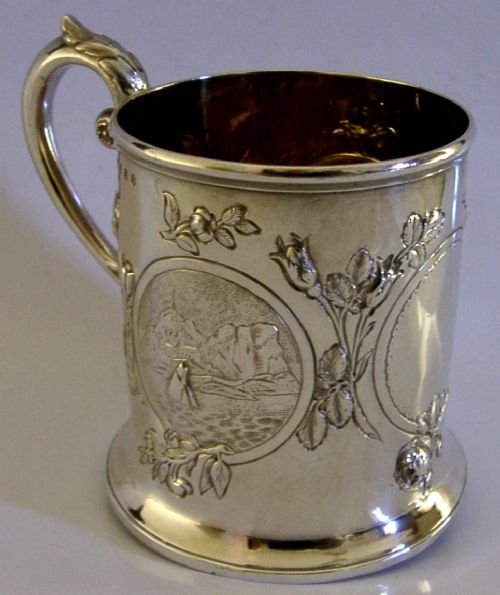
A victorian christening mug is a small vessel commissioned to celebrate a child's birth or baptism, taking the form of a miniature tankard or cylindrical cup. These pieces emerge predominantly in sterling silver, though silver-plated examples and gilt interiors also appear.
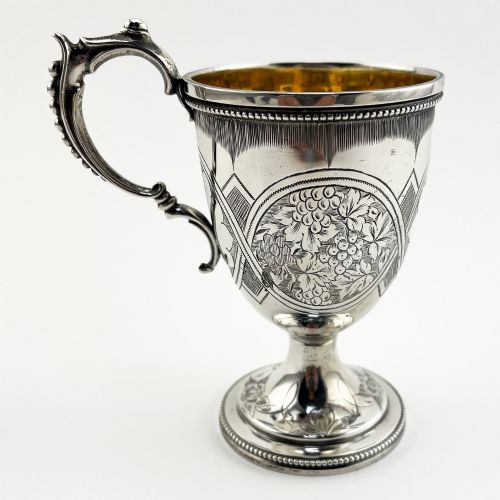
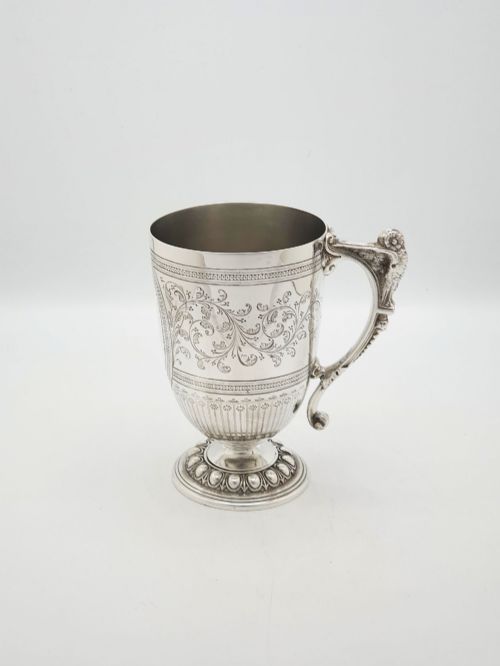
Makers shaped these vessels into baluster forms, barrel shapes, and octagonal profiles designed for small hands. The selection includes pieces featuring looped handles, Rococo scroll work, and distinctive novelty designs incorporating elements like owl handles.
Origins stretch across major British assay offices, including London, Birmingham, Sheffield, and Exeter, alongside occasional colonial examples from Australia. Stylistic influences shift from floral engravings and birds to Aesthetic Movement motifs and Art Nouveau lines.
Materials and Technique
Silversmiths utilised sterling silver and silver plate as the primary mediums for these vessels, often applying gold gilt to the interior surfaces to create a contrasting finish. Leather and velvet cases occasionally accompanied the finest examples to protect the metal.
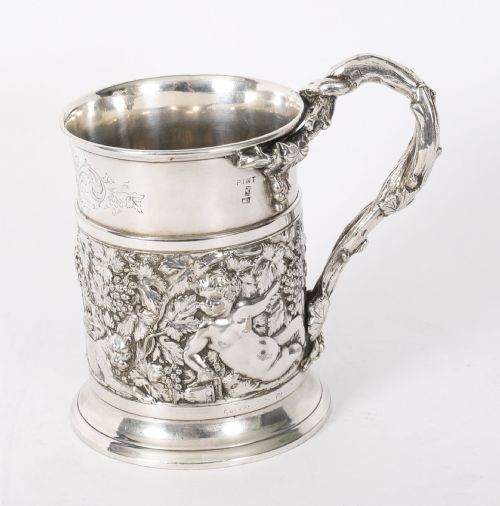
Workshops employed embossing and engraving techniques to cover the body in floral patterns, birds, and intricate vine motifs. Handles were cast separately in ornate shapes like scrolls or owls before being soldered securely to the main body of the mug.
Victorian Christening Mug Retail Price Guide 2026
Typical asking prices for victorian christening mug among the pieces listed under this phrase on Sellingantiques today, from the lower quarter to the upper quarter. They describe what is for sale here now, not the wider market.
Listings feature sterling silver and silver plate pieces spanning the Victorian and Edwardian periods, alongside Aesthetic Movement and Art Nouveau styles.
Judging the Workmanship
The weight of the metal dictates the baseline substance of the vessel, with heavier gauges providing a more substantial feel in the hand. Master silversmiths achieved superior results through crispness in the embossed foliage and deep, clean hand-engraving.
Design ambition separates standard cylindrical cups from artistic statements featuring figural handles or architectural baluster silhouettes. The clarity of the hallmarks stamped into the silver further establishes the origin and maker's standing.
G R Collis·Thomas Bradbury & Sons·George Unite·Atkin Bros·Thomas Prime & Son·Josiah Williams & Sons·Fenton Brothers
The Victorian Christening Mug Glossary
- Sterling silver
- An alloy comprising ninety-two point five percent silver and seven point five percent other metals, mostly copper. This standard composition provides the durability required for functional drinking vessels.
- Silver gilt
- Silver objects that have a thin layer of gold applied to their surface through chemical or electrochemical processes. This technique protects the interior from acidic liquids and adds a rich visual contrast.
- Baluster form
- A architectural profile characterised by a swelling lower portion tapering upward to a narrow neck. This shape is frequently seen on traditional drinking vessels from the nineteenth century.
- Hallmark
- A series of official marks stamped onto precious metal items to guarantee the purity of the material, the assay office, and the year of manufacture.
- Aesthetic Movement
- A late nineteenth-century design style that emphasised visual beauty over narrative meaning, often incorporating stylised natural motifs.
Victorian Christening Mug: Frequently Asked Questions
What were they used for?
These miniature vessels served as traditional gifts presented to infants during baptism ceremonies or birth celebrations. Families kept them as permanent keepsakes rather than everyday tableware.
Over time, many of these pieces transitioned into decorative display items or remained stored within protective leather and velvet cases to preserve their polished surfaces.
How do I date a mug?
Dating relies heavily on the official hallmarks stamped into the metal, which indicate the specific assay office and year of production. Stylistic shifts also offer clues, moving from early Victorian floral engravings to later Aesthetic Movement and Art Nouveau lines.
Comparing the form, such as octagonal profiles versus standard cylindrical shapes, helps narrow down the decade of manufacture alongside the recorded maker's working periods.
How should I display one?
Displaying these pieces benefits from stable shelf environments away from direct sunlight and excessive moisture to prevent rapid tarnishing. Placing them inside glass cabinets protects the embossed surfaces from dust accumulation.
Pairing a mug with its original leather or velvet case creates an engaging historical display that highlights its past as a presentation gift.