


Silver Embossed Mug
A silver embossed mug is a drinking vessel bearing raised ornamentation, offering tactile weight and historic craftsmanship that collectors prize.
Silver Embossed Mug
A silver embossed mug stands as a tangible piece of domestic history, frequently encountered in Victorian, Edwardian, and Georgian forms. These vessels include christening tankards and children's mugs alongside standard drinking vessels, appearing across the nineteenth century and into the twentieth.
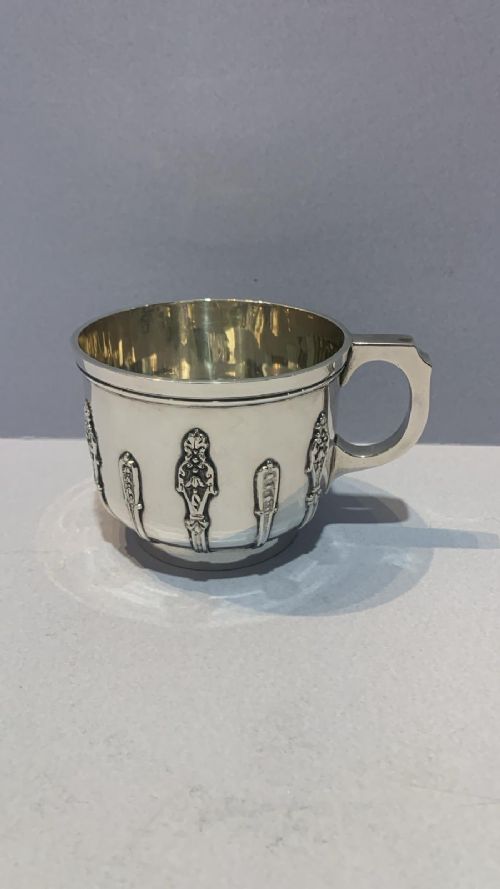
Most examples found here date from the 19th Century, particularly the Victorian era, alongside Edwardian and Georgian pieces. Materials range from solid sterling silver and silver plate to white metal, silver-gilt, and cut glass mounted with silver.
Materials and construction
Makers utilised sterling silver, silver plate, and electroplated nickel silver as bases, sometimes adding gold gilt or silver-gilt highlights. Cut glass appears in combination with silver for specific tankard designs from the period.
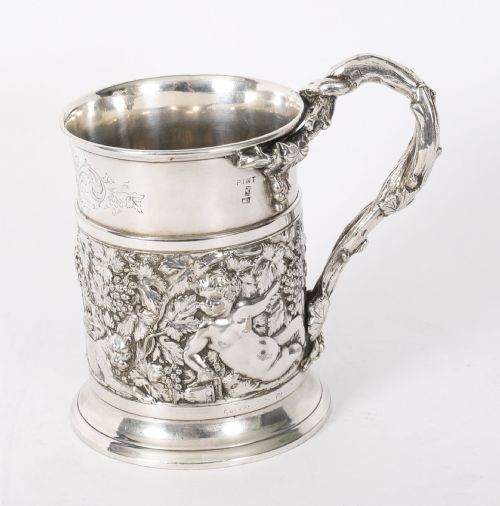
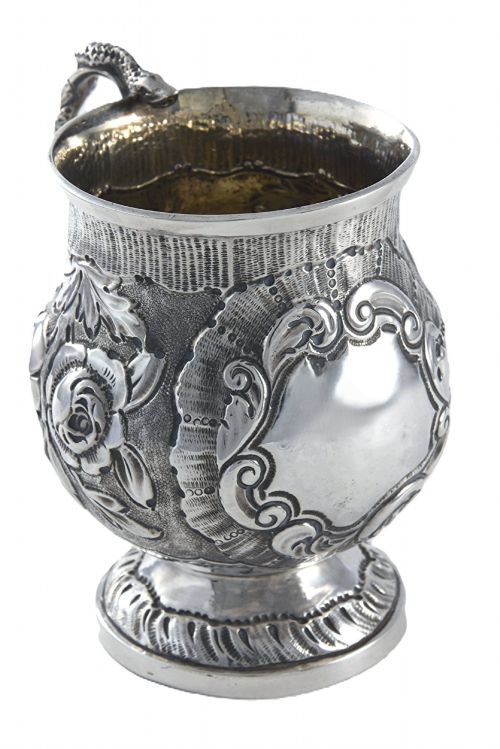
Craftsmen shaped the metal through hammering and casting before applying embossed and engraved ornamentation. Detail work includes chased foliage, figural scenes with children playing, or animal motifs such as dogs and rabbits.
A few mugs feature surprisingly fierce dogs and rabbits frothing out of the heavy Victorian relief work.
Assessing quality and execution
Depth and crispness of the relief work distinguish finer examples from simpler production. Deeply embossed scenes featuring animals or children show greater artisan skill than shallow pressed decoration.
The choice of material also marks the distinction between solid sterling silver and silver-plated or white metal alternatives. Integrated details, such as acanthus leaf handles and gilt interiors, elevate the execution of individual pieces.
G R Collis·Charles Price·Walker & Hall
The Silver Embossed Mug Glossary
- Embossed
- Decorated with raised designs hammered or pressed up from the reverse side. This technique gives the metal surface a three-dimensional texture.
- Sterling silver
- An alloy consisting of 92.5 percent silver by mass, alongside other metals for durability. It forms the primary standard for quality British silver.
- Silver-gilt
- Silver that has been coated with a thin layer of gold on its surface. This treatment provides a warm interior or highlight.
- Christening mug
- A small presentation cup traditionally given to infants on their naming day. Many surviving examples feature intricate repoussé decoration and handles shaped as leaves or scrolls.
Silver Embossed Mug: Frequently Asked Questions
What were silver embossed mugs used for?
These vessels served as functional drinking cups or as commemorative presentation pieces for children.
Many bear inscriptions or marks indicating their role as christening gifts for infants during the Georgian and Victorian periods.
How do I identify a Victorian silver mug?
Victorian examples often display hallmarks indicating assay offices like Chester, alongside distinct stylistic cues such as acanthus leaf handles or frosted finishes.
Makers active between 1837 and 1901 frequently employed heavy embossing depicting foliate patterns or children playing.
Are all silver mugs solid sterling?
No, the material varies between solid sterling silver, silver plate, electroplated nickel silver, and white metal.
Some pieces also combine cut glass bodies with silver rims and handles, reflecting different price points and manufacturing eras.
How should I clean my silver mug?
Gentle washing in warm soapy water with a soft cloth removes everyday dust and oils without harming the metal.
Avoid abrasive polishes that can wear down the delicate embossed and engraved details over time.