


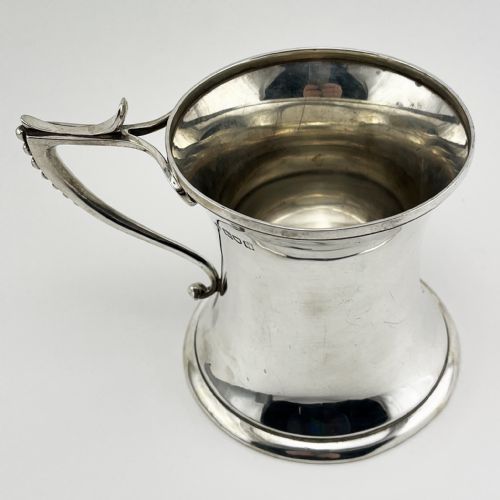


Engraved Silver Christening Cup
An engraved silver christening cup is a traditional gift of solid metal or plated ware, prized for its detailed surface decoration and enduring personal sentiment.
Engraved Silver Christening Cup
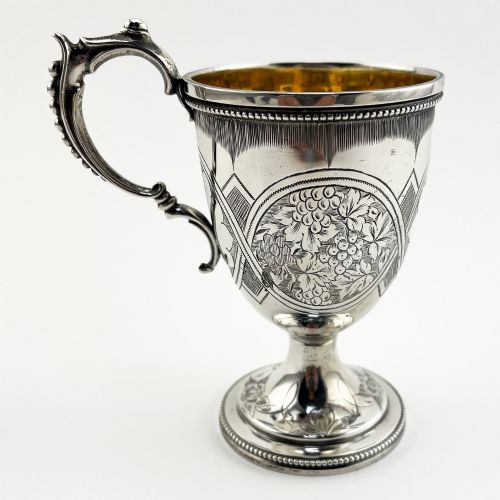
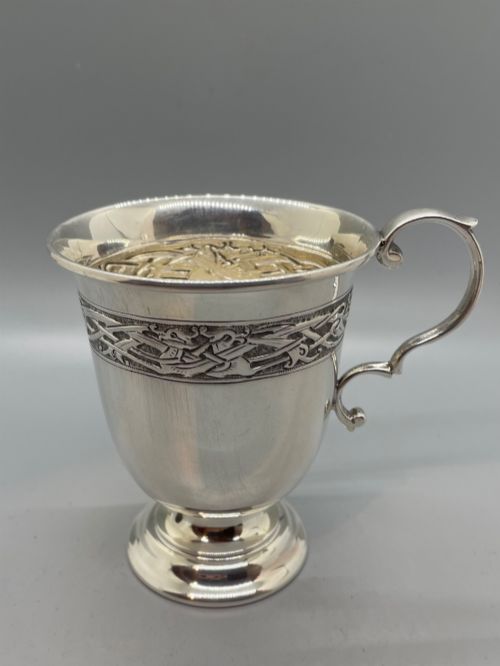
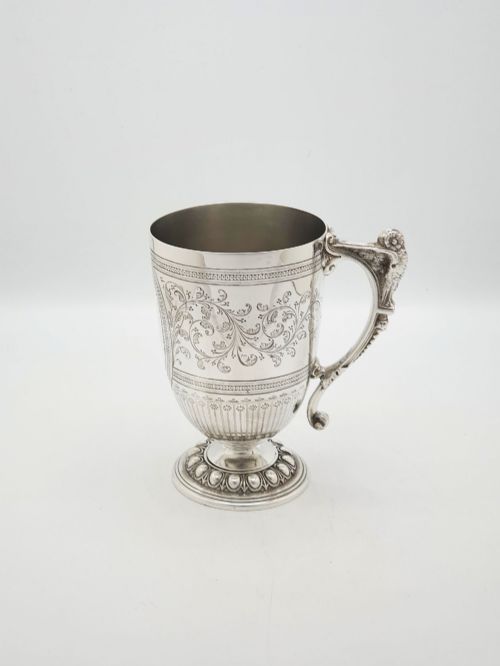
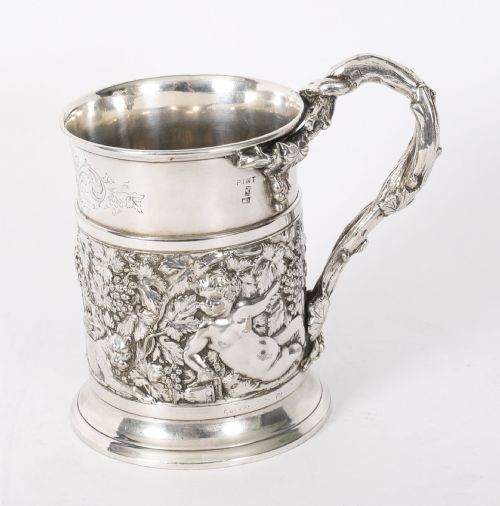
When you search for an engraved silver christening cup, you encounter small drinking vessels created to mark the birth or baptism of a child, predominantly originating from the nineteenth and early twentieth centuries. These diminutive tankards and mugs appear in diverse styles ranging from restrained George IV forms to ornate Victorian and Edwardian examples.
The most common pieces on this page are Victorian sterling silver mugs, often decorated with floral engraving, embossed motifs, or scroll handles. You also find silver plated variants, novelty designs with animal handles such as owls, and pieces reflecting Arts and Crafts or Aesthetic Movement sensibilities.
Origins span British assay offices in London, Birmingham, and Sheffield, alongside international pieces such as Australian colonial work. Forms vary from simple cylindrical tankards to pedestal cups and gilded interiors known as silver gilt.
Materials and technique
Makers shaped these vessels primarily from sterling silver or silver plate, utilising hammering, spinning, and casting techniques to form the main body and handle. Interior surfaces frequently received a thin layer of gold through fire gilding, producing the warm tone known as silver gilt.
Decoration relied on hand engraving and embossing, where artisans cut floral patterns, presentation inscriptions, or scrollwork directly into the metal surface. Handles were individually cast in shapes like C-scrolls or figural motifs and soldered securely to the body.
Distinctions in quality
Quality rests in the crispness of the hand engraving and the substantial weight of the metal used for the body. Superior examples display deep, sharp chasing and clean lines that remain distinct after a century or more of handling.
The sophistication of the design dictates the tier of the piece, moving from plain utilitarian vessels to sculptural novelty handles and complex Chinoiserie or Aesthetic Movement ornament by noted makers like R E Stone or William Bateman.
R E Stone·G R Collis·William Bateman
The Engraved Silver Christening Cup Glossary
- Sterling silver
- An alloy containing 92.5 percent silver by mass, with the remainder consisting of copper or other metals. This standard grade forms the material of the most durable and prized christening mugs.
- Silver gilt
- Sterling silver that has been coated with a thin layer of gold on the interior surface. This technique provided a hygienic lining resistant to acidic beverages and added a contrasting visual warmth.
- Assay office
- An official body responsible for testing the purity of precious metals and stamping them with hallmark symbols. British offices include London, Birmingham, and Sheffield.
- Chasing
- A metalworking technique where the artisan pushes and displaces metal from the front using hammers and punches to create raised surface decoration. It differs from engraving, which removes metal.
- Hallmark
- A series of official marks stamped onto precious metal items indicating the maker, metal purity, assay office, and year of manufacture. These small stamps provide the primary evidence for dating antique silver.
Engraved Silver Christening Cup: Frequently Asked Questions
Were these cups actually used for drinking?
These vessels were primarily commissioned as ceremonial or commemorative gifts rather than everyday tableware. Many served as display pieces on a nursery shelf or sideboard to record a child's name and birth date.
Over time, some families did use them for special occasions, while others kept them purely as keepsakes. The presence of a gilded interior on certain examples helped protect the silver from acidic liquids.
How do I know if a piece is sterling silver?
You identify sterling silver by examining the interior or base for official hallmarks stamped into the metal. These tiny marks typically include a lion passating for British sterling, alongside city symbols and date letters.
Items lacking these stamps are frequently silver plated, nickel silver, or white metal over a base metal core. Plated wares may show areas where the underlying metal peeks through from polishing.
What periods are most common for these mugs?
The majority of pieces date from the Victorian era, spanning the mid to late nineteenth century. You also encounter Edwardian and George V examples from the early twentieth century, alongside occasional Regency period items.
Victorian pieces often display heavier floral embossing, whereas Edwardian and later pieces might show cleaner Arts and Crafts or Mid-Century influences.