
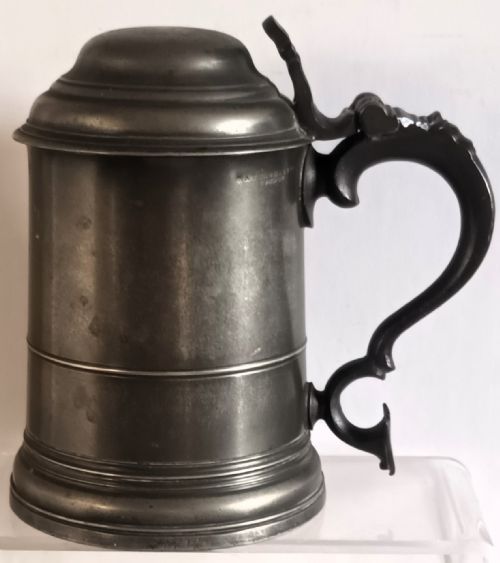


Pewter Beer Stein
These pewter beer stein pieces are drinking vessels shaped for hearty toast and honest ale, offering a tangible link to centuries of tavern custom.
Pewter Beer Stein
A pewter beer stein takes several forms across our records, appearing most frequently as English quart and pint tankards alongside German flagons and lidded jugs. The examples span periods from the eighteenth century through the Edwardian era, including Victorian designs and Arts and Crafts creations.
Makers and origins diversify the selection, ranging from English workshops to German potteries and Continental centres. Buyers encounter plain metal vessels as well as pieces decorated with relief work or combined with other materials like stoneware and glass.
The objects serve primarily as drinking vessels or display pieces, reflecting the drinking culture of their respective periods. Their forms vary from straightforward cylindrical bodies to elaborate vessels featuring hinged lids and decorative handles.
Judging quality in a pewter beer stein
Quality depends heavily on the crispness of casting detail and the weight of the metal used in the body. Thicker walls and robust handles indicate superior construction that resists denting during daily use.
The precision of the lid hinge and thumbpiece mechanism separates ordinary vessels from finer examples. Maker marks and touchmarks stamped into the metal provide evidence of origin and workshop standards.
Some nineteenth-century German beer vessels include hidden Masonic symbols etched into the base, offering a secret nod to fraternity members enjoying a pint.
Watts & Harton·Archibald Knox for Liberty & Co·Burgum & Catcott of Bristol·Mettlach
The Pewter Beer Stein Glossary
- Pewter
- A malleable metal alloy consisting primarily of tin combined with copper, antimony, or lead. It provides a durable, corrosion-resistant surface suited for tableware and drinking vessels.
- Tankard
- A tall, cylindrical drinking vessel featuring a single handle and often a hinged lid. They are commonly forged from metal or ceramics.
- Flagon
- A large vessel for drinks, typically featuring a handle and a spout or lid. These pieces are often larger than standard drinking mugs.
- Salt-Glazed Stoneware
- A ceramic pottery type finished by throwing common salt into the kiln during high-temperature firing. This process creates a distinctive textured glaze resembling orange peel.
- Old Sheffield Plate
- A composite material made by fusing a thin layer of silver to a thicker copper base. It was widely utilised before the invention of electroplating.
Pewter Beer Stein: Frequently Asked Questions
How do I clean an antique pewter beer stein?
Wash the vessel gently with warm water and mild soap, then dry it immediately with a soft cloth. Avoid harsh chemical cleaners or abrasive scouring pads that might damage the surface.
Leave the natural patina untouched, as collectors prefer metal that shows its age rather than a mirror-bright polish.
Can I still drink beer from these vessels?
Many older pieces contain small amounts of lead in the metal alloy, which can leach into acidic liquids like beer. Modern food safety standards advise against regular use for consumption.
Enjoy them primarily as decorative objects or display pieces rather than functional barware.
How do I identify the age of a tankard?
Look for maker marks, touchmarks, and guild stamps pressed into the underside or rim of the metal. These stamps often correspond to specific historical date ranges.
Examine the style of the handle, lid thumbpiece, and construction seams, as manufacturing methods shifted noticeably between the Georgian and Victorian periods.
What is the difference between a stein and a tankard?
A tankard traditionally describes a cylindrical drinking vessel made of metal or ceramic, usually featuring a flat hinged lid and a single handle. The term stein often refers specifically to German stoneware or earthenware drinking vessels.
Both categories overlap significantly in everyday antique terminology and serve similar historical purposes.