




Grey Pewter Mug
A grey pewter mug holds the weight of centuries in the hand, offering a direct tactile link to tavern life and domestic custom.
Grey Pewter Mug
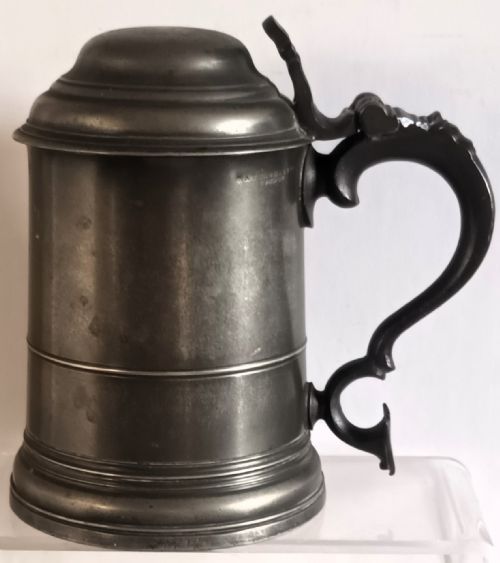
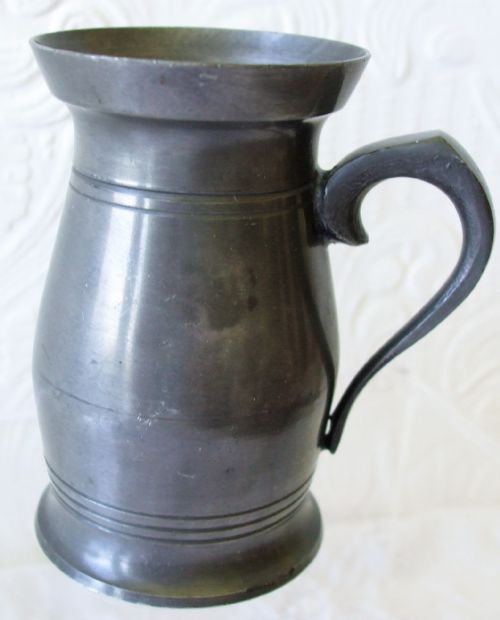
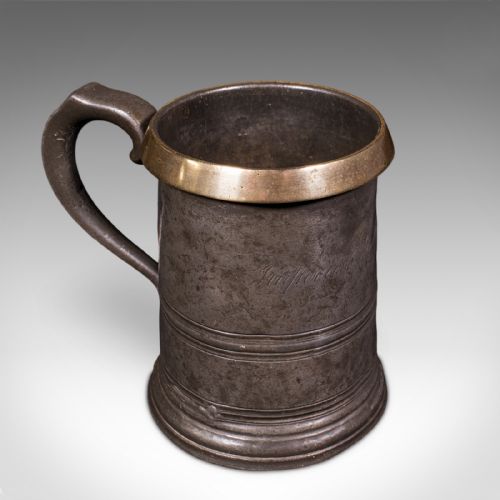
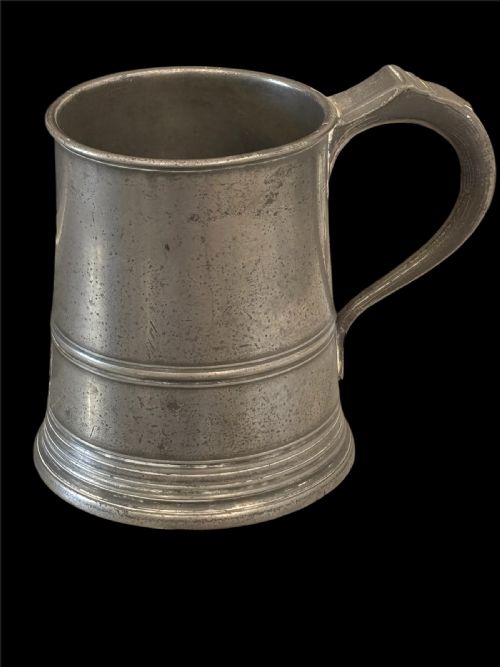
When you search for a grey pewter mug, you are looking at utilitarian drinking vessels fashioned from metal alloys that develop a soft, leaden patina over generations of use. These items encompass tavern measures, public house tankards, and lidded flagons originating predominantly from English, Irish, and German workshops. Most examples encountered here date from the eighteenth and nineteenth centuries, spanning Georgian and Victorian periods.
The forms range from modest half-pint lidded measures and gill sizes up to hefty quart tankards built for heavy service. Alongside traditional English tavern shapes, the selection includes pieces with distinct regional markers, such as those made for the Scottish market or featuring Celtic Arts & Crafts designs.
Vessels span from plain, sturdy workhorses stamped with touchmarks to more ornate German Masonic lidded tankards and stoneware Westerwald jugs mounted in metal. Each object carries the subtle dents and surface wear of its working past, rather than surviving as a pristine cabinet piece.
Materials and methods
The primary material is pewter, a malleable alloy of tin combined with lead, copper, or antimony to achieve durability. Makers cast these vessels in sections using moulds, subsequently soldering the body seams, handles, and bases together.
Surface finishing involved lathe-turning to smooth the exterior walls and applying touchmarks to verify capacity and maker identity. Stoneware components in related items were salt-glazed in kilns before receiving metal lids and mounts.
Listings feature 18th-century and 19th-century forms, including Georgian and Victorian tavern measures alongside Arts & Crafts designs.
Assessing quality and character
Quality rests in the crispness of the original casting and the integrity of the metal walls, where heavier gauges resist denting and distortion. Superior pieces retain clear maker stamps, verification verification marks, and unpolished surfaces that show genuine age.
Proportion and balance define the better tankards, ensuring the handle feels secure against the weight of a full measure. The distinction between a common tavern survivor and a finer workshop piece lies in the precision of the assembly and the survival of original lids and thumbpieces.
Watts & Harton·Frederic Sanders·Thomas Phillips I·Burgum & Catcott
The Grey Pewter Mug Glossary
- Pewter
- A malleable metal alloy consisting principally of tin, historically mixed with lead or copper to form tableware and drinking vessels. It acquires a soft grey patina over time.
- Tankard
- A tall, cylindrical drinking vessel with a single handle, frequently fitted with a hinged lid. They were standard in public houses for serving ale or beer.
- Flagon
- A large vessel with a handle and spout or lid, used for holding and pouring liquids. Eighteenth-century examples often featured flat lids.
- Measure
- A drinking vessel manufactured to precise legal capacities, such as a pint, half pint, or gill. These often bear verification stamps from local authorities.
- Touchmark
- An identifying stamp impressed into metal by a maker or guild member. These marks help attribute pieces to specific workshops and cities.
Grey Pewter Mug: Frequently Asked Questions
How do I clean a pewter mug?
Wash the vessel gently in warm water using mild soap, then dry it immediately with a soft cloth to prevent water spots. Avoid abrasive scourers or harsh chemical polishes that strip away the historic grey surface.
Leaving moisture on the metal can cause staining, so proper drying is essential. The soft patina is part of the object's history and should be preserved rather than scrubbed bright.
Can I drink from antique pewter?
Many older pieces contain lead in the alloy mix, which can leach into acidic beverages like beer or cider. Modern standards changed the composition, but historical tavern ware is best treated as decorative.
If you choose to use one, avoid storing liquids in the vessel for extended periods. Cold water is generally safer than alcohol or acidic drinks for occasional use.
What do touchmarks tell us?
Touchmarks act as a maker's signature, pressed into the soft metal before the piece left the workshop. They often include initials, symbols, or town names that link the vessel to a specific maker and era.
In addition to maker marks, you may find verification stamps indicating the vessel met local weights and measures standards. These stamps help historians trace the geographic path of the item.
Why do some tankards have lids?
Lidded tankards originated to keep insects and debris out of drinks in bustling public houses. They also helped maintain the temperature and carbonation of ale during busy tavern evenings.
The thumbpiece allows the drinker to flip the lid open with a single hand while holding the heavy handle. Over time, these lids evolved from flat tops to domed configurations.