



Victorian Lidded Tankard
A victorian lidded tankard is a robust drinking vessel built to hold ale, beer, or cider during the nineteenth century.
Victorian Lidded Tankard
When you search for a victorian lidded tankard, you encounter sturdy drinking vessels designed during the nineteenth century for daily use or formal gatherings. These pieces range from heavy tavern measures to decorative presentation pieces intended for the dining table or sideboard.
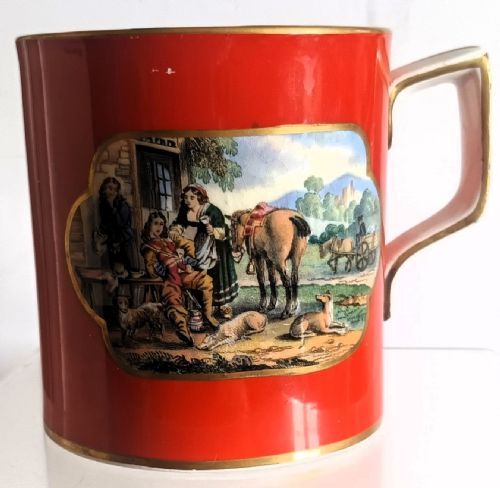
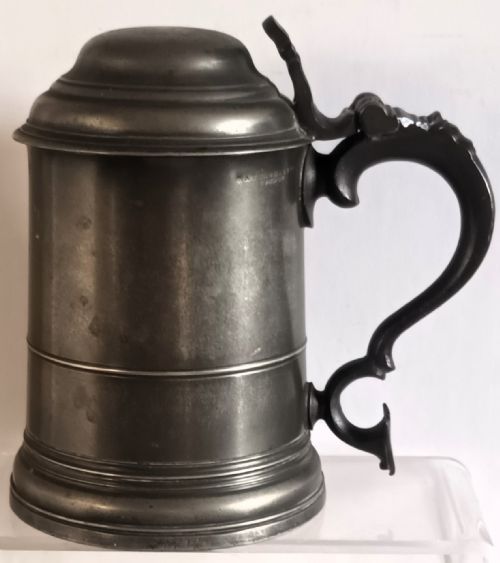
The versions most commonly met on this page include pewter tankards bearing capacity stamps alongside silver-plated and glass vessels featuring hinged lids. Makers applied various styles spanning standard Victorian designs to 19th-century German forms and Pratt-ware pottery mugs.
Forms extend beyond standard beer tankards to encompass pitchers, jugs, flagons, and water jugs fitted with secure covers. These objects reflect the heavy drinking culture of the period and the practical need to keep contents covered.
Materials and construction
Metal vessels on this page utilise pewter, silver plate, sterling silver, and Old Sheffield plate, often shaped into heavy bodies with soldered handles and hinged lids. Pewter examples frequently display touchmarks and capacity stamps, while silver-plated items rely on base metal cores coated in precious metal.
Glass and ceramic examples combine blown or moulded bodies with metal mounts, silver rims, or applied earthenware glazes. Pratt-ware pottery introduces colourful underglaze painting to earthenware bodies, while Mary Gregory pieces feature enamelled white glass decoration depicting figures in landscapes.
Assessing quality and craftsmanship
The distinction between ordinary tavern vessels and superior examples rests on the weight of the metal, the crispness of the casting, and the integration of the lid. Heavier gauge pewter and thick sterling silver maintain their structural integrity better over generations of use.
Finely executed hinges and thumbpieces demonstrate superior metalwork, ensuring the lid opens smoothly and closes flush against the rim. Decorative pieces achieve higher status through intricate engraving, applied ornamentation, or quality silver mounting on glass bodies.
Watts & Harton
The Victorian Lidded Tankard Glossary
- Pewter
- A malleable metal alloy composed principally of tin combined with copper and lead or antimony. It served as the primary material for durable tavern tankards.
- Old Sheffield Plate
- A composite material formed by fusing a thin sheet of silver to a thicker copper base. It predated modern electroplating and produced rich domestic wares.
- Pratt-ware
- A type of English earthenware decorated with low-relief moulding and coloured underglaze pigments. It frequently appeared on nineteenth-century mugs and jugs.
- Touchmark
- An official stamp or maker's mark impressed into pewter to guarantee alloy standards and identify the workshop. Watts & Harton used such marks.
- Hinged lid
- A cover attached to the handle by a pivot joint, designed to keep dust out of the drink. It represents a defining feature of a proper tankard.
Victorian Lidded Tankard: Frequently Asked Questions
What were lidded tankards used for?
These lidded vessels served primarily for consuming and serving ale, beer, cider, and water in domestic homes, taverns, and inns. The hinged lid kept pests and debris out of the drink during communal gatherings.
Larger quart and three-pint examples allowed hosts to pour multiple servings at the dining table. Smaller half-pint measures functioned as individual tavern portions.
How do I clean a pewter tankard?
Pewter requires gentle washing with warm soapy water and a soft cloth to preserve its historic surface and soft grey patina. Harsh metal polishes strip away the natural oxidation accumulated over centuries.
Dry the vessel thoroughly immediately after washing to prevent water spotting. Avoid placing antique metalware in modern dishwashers.
Are glass bottom tankards safe to drink from?
Glass bottom tankards feature a thick disc of glass set into the base, which allows the drinker to see who approaches behind them. Most historic examples remain structurally sound for occasional beverage use.
Inspect the seal where the glass meets the metal to ensure it remains watertight. Hand wash these pieces carefully to avoid loosening the rim mounts.
How can I tell pewter from silver plate?
Pewter exhibits a soft, muted grey tone and does not possess the bright reflective shine characteristic of silver plate. Silver-plated items may also show areas where the base metal beneath has begun to peek through.
Pewter feels heavy and lacks hallmarks associated with precious metals, instead bearing maker touchmarks or imperial capacity verification stamps.