


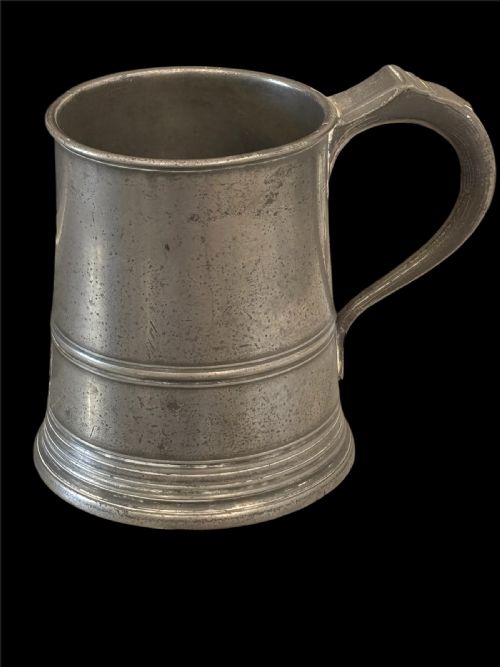


English Pewter Tankard
An english pewter tankard brings tactile weight and drinking history to the table, spanning simple tavern vessels to grand lidded flagons.
English Pewter Tankard
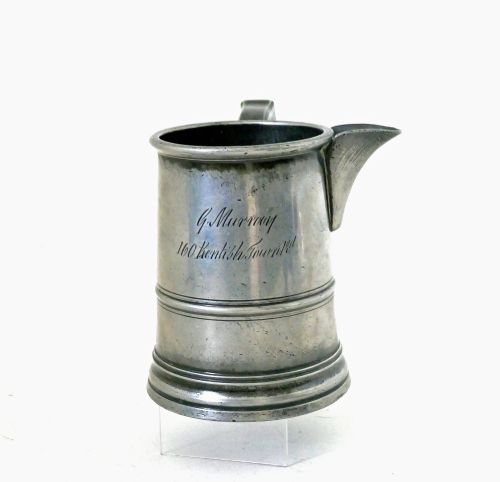
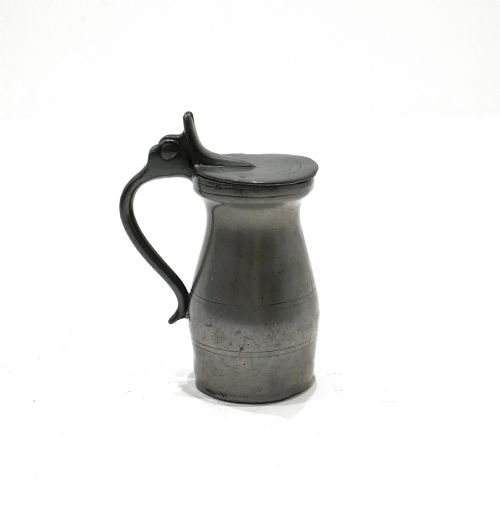
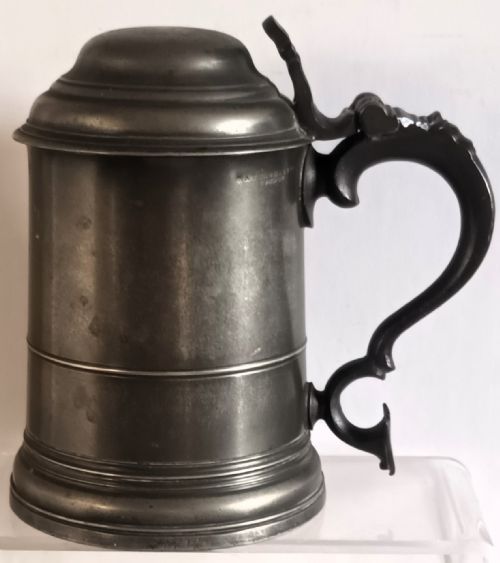
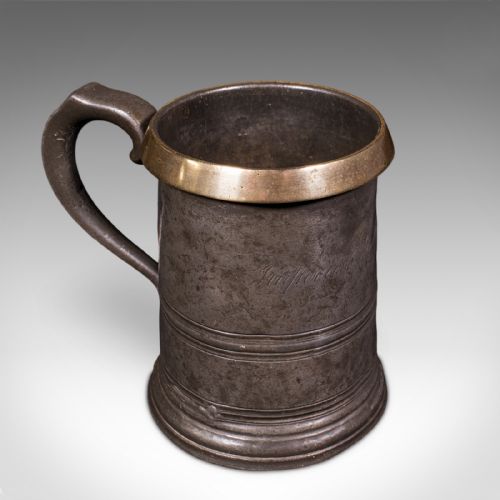
When searching for an english pewter tankard, buyers encounter drinking vessels and measures spanning the eighteenth and nineteenth centuries, including Georgian and Victorian periods. The forms range from flat lidded flagons and spire flagons to quart jugs, pint measures, and ale jugs.
Most examples found here represent utilitarian drinking vessels made for public houses, domestic use, or specific capacity standards like the Old English Wine Standard. They survive in various sizes, from half gills to half gallons, reflecting centuries of tavern and household service.
How they were made
These metalware pieces are cast primarily from pewter, an alloy traditionally composed of tin alloyed with copper, lead, or antimony, sometimes supplemented by brass fittings. Makers shaped the metal through casting and hammering to build sturdy bodies, applying applied handles and hinged flat or dome lids.
Makers often engraved names, tavern titles, or ownership inscriptions directly into the metal surface, alongside touchmarks stamped into the pewter to signify maker identity and capacity standards.
English Pewter Tankard Retail Price Guide 2026
Typical asking prices for english pewter tankard among the pieces listed under this phrase on Sellingantiques today, from the lower quarter to the upper quarter. They describe what is for sale here now, not the wider market.
Some measures were made specifically for the Scottish market, proving that even pewter needs a passport.
What varies in quality
Quality depends upon the clarity of touchmarks, the crispness of cast details such as lids and handles, and the survival of original surface patination. Pieces bearing clear maker attributions from known workshops command greater interest among collectors.
The integrity of the form, minimal distortion to the soft metal body, and legible contemporary engraving elevate certain examples above standard utilitarian tavern survivors.
Watts and Harton·Frederic Sanders·Thomas Phillips I·Robert Iles·Burgum and Catcott·Robert Bush·Richard Going II·Thomas Bankes·Allen Bright·John Curruthers Crane
The English Pewter Tankard Glossary
- Pewter
- A malleable metal alloy composed principally of tin, used historically for tableware and drinking vessels.
- Flagon
- A large drinking vessel with a handle and usually a lid, used for serving ale or wine.
- Measure
- A container holding a regulated capacity of liquid, commonly used in public houses to pour exact quantities.
- Touchmark
- An identifying stamp impressed into metalware by a maker or guild to indicate origin and standard.
- Flat lid
- A hinged cover lacking the raised dome profile seen on later tankard designs.
English Pewter Tankard: Frequently Asked Questions
How do I clean an old pewter tankard?
Old pewter requires minimal intervention to preserve its historic surface and soft grey patina. Gentle washing with warm soapy water and thorough drying is sufficient for maintenance.
Avoid abrasive polishes or modern metal cleaners, which remove the aged skin and historical touchmarks that define the piece.
Can I still drink from these tankards?
Many historic vessels contain lead within the pewter alloy, making modern consumption inadvisable. Display and historical appreciation remain the primary uses for these items.
Those intending functional use should check the alloy composition and ensure the vessel meets contemporary safety standards for food contact.
What is the difference between a tankard and a measure?
A tankard is generally designed as a personal drinking vessel equipped with a handle and often a lid. Measures were strictly calibrated containers utilised in taverns to dispense accurate volumes of ale or wine into smaller cups.
Measures frequently feature verification stamps or capacity inscriptions such as pint, quart, or imperial marks.
How can I tell the age of a pewter tankard?
Dating relies on lid styles, handle shapes, capacity marks, and maker touchmarks registered with trade guilds. Flat lids and spired profiles typically indicate eighteenth-century manufacture, while later nineteenth-century pieces often display standardised capacity stamps.
Comparing touchmarks against historical maker records provides the most reliable window of production.