


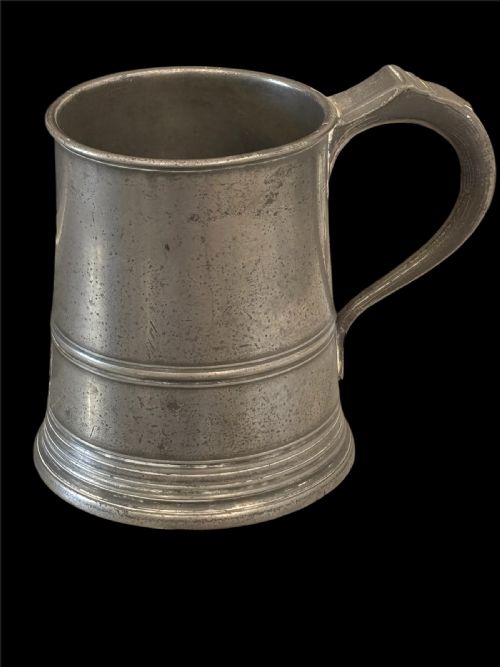


Vintage Pewter Tankard
A vintage pewter tankard brings tactile history to the table, offering a sturdy drinking vessel shaped by centuries of tavern and domestic life.
Vintage Pewter Tankard
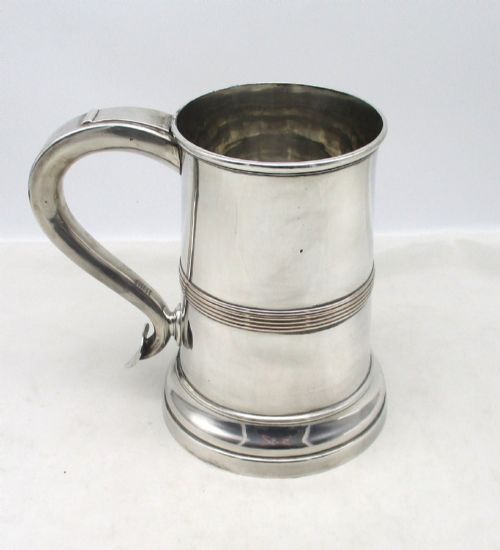
A vintage pewter tankard takes various functional forms, including heavy quart jugs, bell-shaped vessels, and lidded flagons designed for ale and beer. Buyers examining these listings encounter English public house measures alongside German beer flagons and Scottish tappit hens.
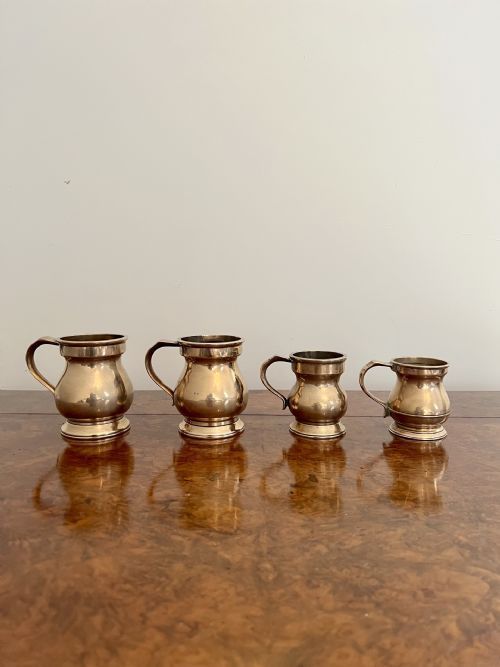
The pieces span multiple eras, drawing heavily from the eighteenth and nineteenth centuries, with Victorian examples and Georgian heavy quart tankards appearing frequently. Alongside standard metalware, related barware pieces like glass-bottomed tankards and tavern measures populate the selection.
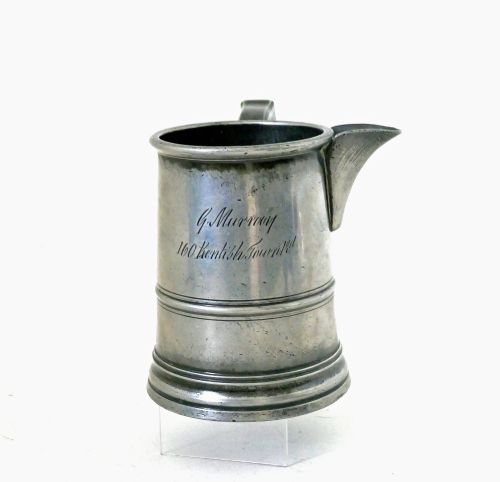
Makers and capacity marks anchor many of these items in practical history, showing ownership inscriptions, VR verification stamps, and regional capacities. These vessels range from simple public house workhorses to grander commemorative flagons with intricate hop decorations.
Materials and construction
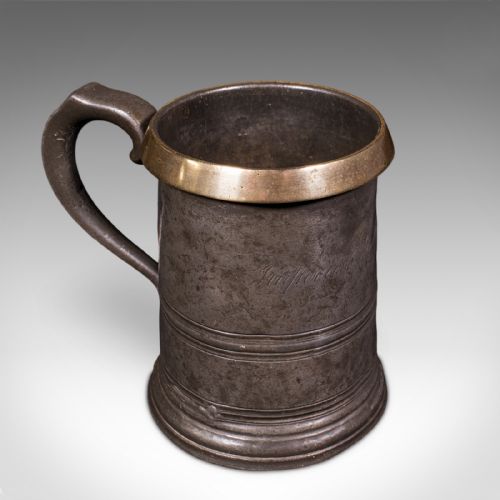
The primary metal is pewter, an alloy traditionally composed of tin combined with copper, lead, or antimony, which yields a dull grey lustre and a substantial weight in the hand. Master metalworkers cast these bodies in moulds, shaping flat-lid flagons and spire vessels with soldered handles and hinges.
Makers occasionally combined pewter with other substances, incorporating glass bases into silver-plated tankards or producing related items in tin-glazed earthenware and faience. Engraving tools added names, crests, and tavern addresses directly onto the metal surface.
The listings on this site span the eighteenth and nineteenth centuries, encompassing both British pewter tavern measures and German faience steins.
Factors of quality
The integrity of the original form and the weight of the metal distinguish superior examples, as heavier alloy proportions prevent denting and distortion over decades of use. Crispness in touchmarks, maker stamps, and royal verification marks adds historical value and confirms authenticity.
Surface preservation plays a significant role, with untouched patinas, legible owner engravings, and intact lids commanding greater interest among collectors than heavily polished or structurally altered bodies.
Frederic Sanders·Watts and Harton
The Vintage Pewter Tankard Glossary
- Pewter
- A malleable metal alloy primarily made of tin that provides the durable, dull-grey foundation for these drinking vessels. It develops a soft dark patina over centuries.
- Flagon
- A large drinking vessel with a handle and usually a lid, used historically for serving ale or wine. Many examples include flat lids or decorative spire tops.
- Tappit Hen
- A traditional Scottish capacity measure and drinking vessel featuring a distinctive lid shape resembling a sitting hen. These heavy pewter pieces hold specific historic liquid volumes.
- Touchmark
- An identifying stamp impressed into metalware by a maker or guild to certify quality and origin. These small marks help attribute pieces to specific workshops.
- Quart
- A historic liquid capacity measurement frequently stamped onto public house tankards. It denotes a volume equal to two pints of ale.
Vintage Pewter Tankard: Frequently Asked Questions
How do I clean an old pewter tankard?
Wash the vessel gently using warm water and mild washing-up liquid with a soft cloth to protect the metal surface.
Avoid aggressive scrubbing and modern metal polishes that strip away the authentic historic patina built up over generations.
Can I still drink from a vintage tankard?
Many vintage and antique pewter vessels can hold cold beverages safely, provided the alloy composition contains no harmful levels of lead.
It is wise to check the interior for corrosion or repairs before using any historic drinking vessel for consumption.
What do the VR stamps mean?
Stamps marked VR stand for Victoria Regina, indicating that an inspector verified the vessel's capacity during the reign of Queen Victoria.
Public houses required these official verification marks to ensure customers received accurate measures of ale.
How do I identify a Georgian tankard?
Georgian tankards typically display heavy, thick-walled pewter construction with simple functional handles and understated forms suited for busy taverns.
Stylistic cues, touchmarks, and baseline proportions help separate these eighteenth-century pieces from later Victorian reproductions.