




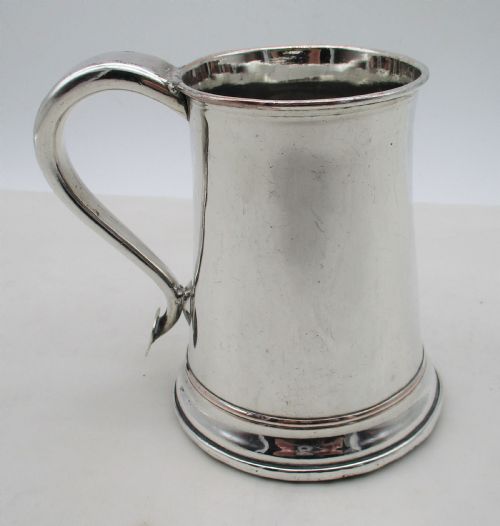
Antique Pewter Ale Mug
These antique pewter ale mug examples bring solid tavern history straight to the table, offering sturdy craftsmanship and authentic period weight.

Antique Pewter Ale Mug
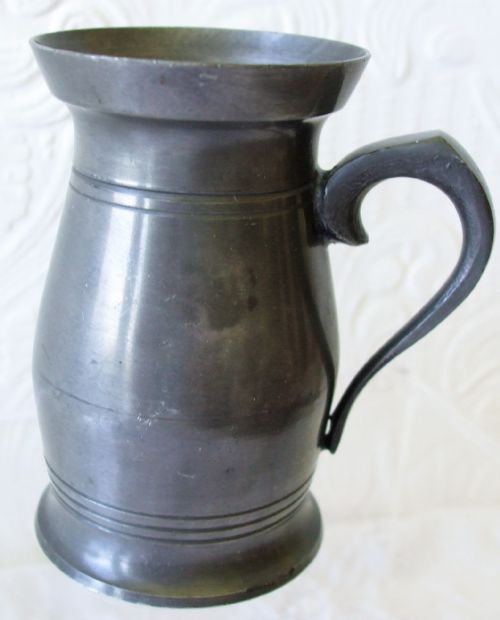
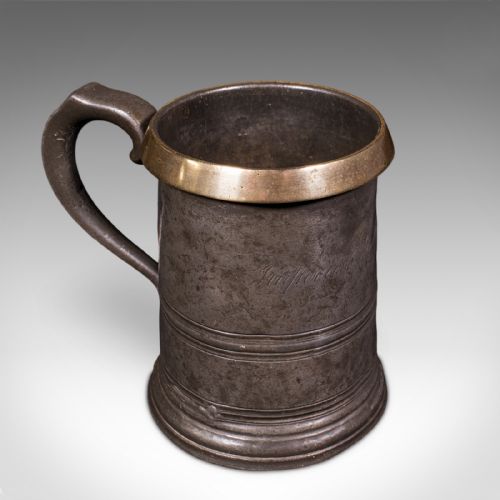
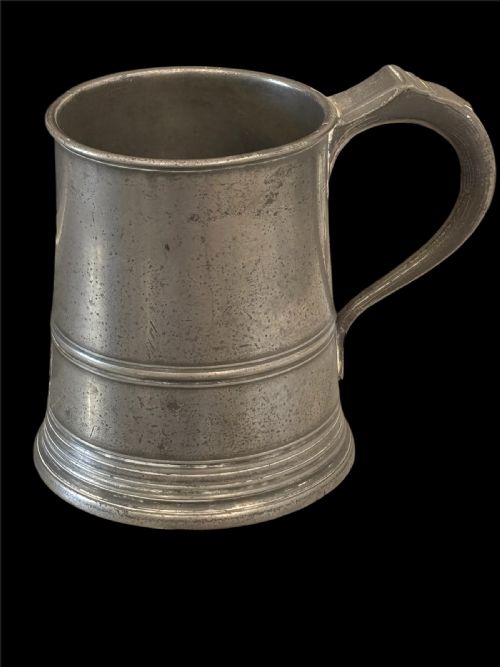
An antique pewter ale mug represents the traditional drinking vessel of British public houses and domestic households, shaped to hold reliable measures of ale and beer. The examples found here span the eighteenth and nineteenth centuries, including Georgian and Victorian periods, along with related tavern measures and tankards.
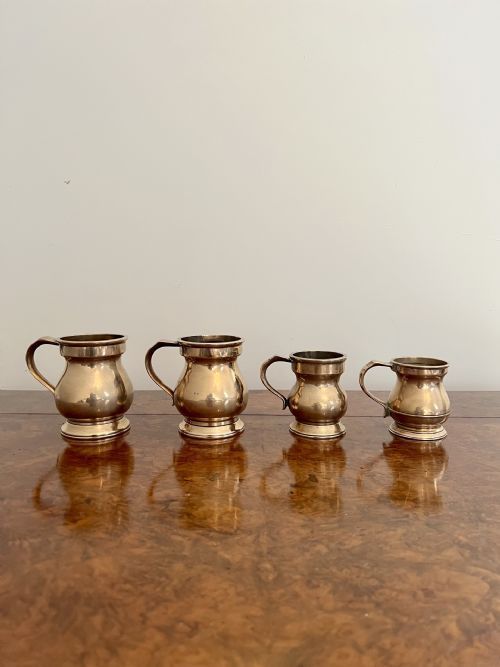
Buyers will encounter various forms ranging from simple pint and quart tankards to bell-shaped vessels and marked pub measures. Most pieces originate from English workshops, though German and Irish pieces occasionally appear alongside silver-plated and earthenware drinking vessels.
Materials and manufacture
Pewter forms the primary material of these vessels, combining tin with copper and lead to create a durable metal suitable for daily tavern use. Metalsmiths shaped the alloy through casting and hammering, often soldering handles securely to the body.
Alternative materials in the selection include Old Sheffield Plate and tin-glazed earthenware, demonstrating how makers adapted drinking vessels to different social settings while maintaining functional forms.
Some pub measures bear the marks of specific village inns, carrying the invisible ghost of countless pints poured centuries ago.
Distinctions in quality
Quality rests upon the crispness of touchmarks, the balance of the handle against the heavy body, and the integrity of the metal walls. Thicker gauge metal provides a substantial weight that distinguishes superior vessels from lighter, utilitarian counterparts.
Legible maker stamps, verification marks, and uncompromised solder joints elevate a piece from a standard tavern survivor to a notable collector's item.
Richard Morton·Frederic Sanders·Thomas Phillips I·Watts and Harton
The Antique Pewter Ale Mug Glossary
- Pewter
- A malleable metal alloy consisting primarily of tin, historically used for domestic tableware and drinking vessels.
- Quart
- A traditional liquid capacity measure equivalent to two pints, frequently stamped on large tavern tankards.
- Old Sheffield Plate
- A composite material made by fusing a thin sheet of silver to a thicker copper base, popular for fine tableware.
- Touchmark
- An identifying stamp struck by a pewterer or guild onto metalware to certify origin and standard.
- Tankard
- A tall drinking vessel featuring a single handle and often a lid, designed for ale and beer.
Antique Pewter Ale Mug: Frequently Asked Questions
How do I know the capacity of an old mug?
Many tavern vessels carry official capacity stamps, such as quart or pint marks, punched directly into the rim or body by inspectors. These verification marks indicate the legal measure of ale the container held.
Heavier vessels often display verification stamps from specific counties or public houses, helping to confirm their working origins.
Can I still drink ale from these vessels?
Older pewter formulations sometimes contained lead, which means modern use requires careful testing to ensure food safety standards are met. Most collectors prefer to display these historical pieces rather than use them for daily dining.
If you choose to use your vessel, stick to cool beverages and clean it gently with mild soap and warm water without harsh abrasives.
How do I clean antique pewter?
Pewter develops a dark grey patina over decades of exposure to air and handling, which forms part of the historical character of the piece. Vigorous polishing to a bright silver finish is generally discouraged by collectors.
Dust the surface softly with a dry cloth and wash only when necessary, avoiding chemical metal polishes that strip away the aged skin.
What is the difference between a tankard and a measure?
Tankards are typically designed as drinking vessels featuring handles and straight or slightly tapered sides meant for direct consumption. Measures function primarily as standardised units for pouring ale into smaller cups within a public house.
Measures often display precise rim stamps or verification lines to guarantee accurate volumes for customers.