




Antique Pewter Pint Mug
An antique pewter pint mug brings heavy tavern history to a desk or shelf, shaped by decades of service in public houses.

Antique Pewter Pint Mug
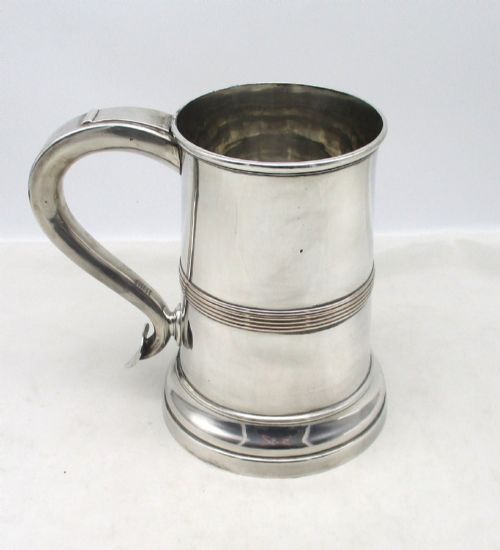
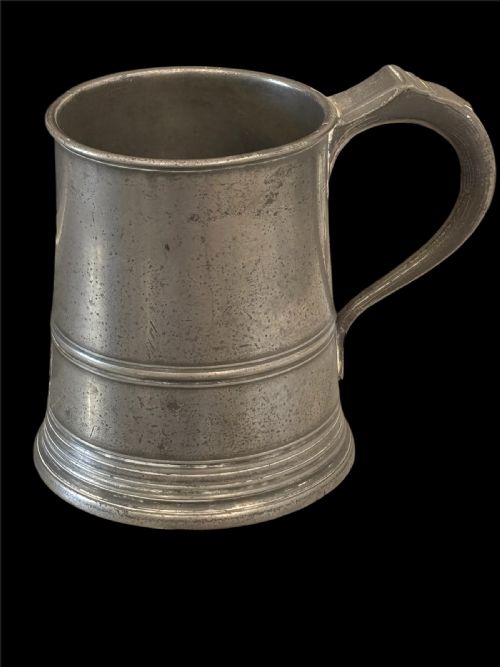
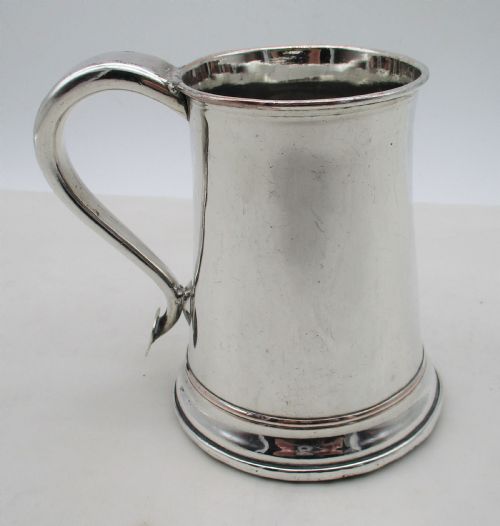
An antique pewter pint mug is a heavy metal drinking vessel designed to hold a precise imperial measure of liquid, commonly found across the eighteenth and nineteenth centuries. These pieces span Georgian and Victorian periods, often bearing touchmarks from makers working in London, Birmingham, Bristol, and provincial towns such as Glasgow and Cork.
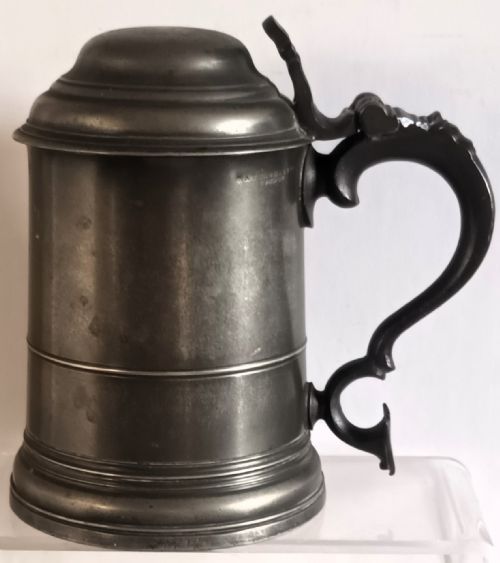
The version most often encountered on this page is the plain-bodied tavern mug or lidded measure, cast in tin alloy with a sturdy handle and flat or dome-shaped lid. Many carry tavern names, capacity stamps, or verification marks, showing their original working life in public houses before passing into collections.
Materials and construction
These vessels are primarily formed from pewter, a malleable alloy of tin combined with lead, copper, or antimony to provide structural strength. Metalworkers shaped the bodies by casting sections in moulds or hammering sheets over stakes before soldering the components together.
Handles and thumbpieces were cast separately and joined firmly to the body, while touchmarks and verification stamps were struck directly into the soft metal using hardened steel punches.
Several mugs bear the names of old coaching inns and village public houses, having survived centuries of boisterous tavern life.
Factors of quality and survival
The distinction between standard domestic items and superior pieces rests on the crispness of touchmarks and the integrity of the original metal surface. Makers who stamped their marks deeply left a permanent record of authorship that survives centuries of handling.
Proportion and weight also dictate worth, as sturdier walls and well-balanced handles indicate a vessel made for heavy commercial use rather than lighter domestic service. Wear from constant polishing and tavern use alters the surface texture, leaving a soft lustre that signals age.
Watts & Harton·Frederic Sanders·Thomas Phillips I·Burgum & Catcott·Thomas Dean Alderson·Susannah Cocks·Joseph Austen·Villers & Wilkes·James Yates·Yates & Birch
The Antique Pewter Pint Mug Glossary
- Pewter
- A traditional metal alloy composed chiefly of tin, mixed with small quantities of copper, lead, or bismuth. It provides a dull grey metallic lustre that mellows with age.
- Touchmark
- An official stamp struck by a pewterer into the metal to certify identity and standard. These marks often include initials, names, or symbols registered with the trade guilds.
- Imperial measure
- A standardised volume system introduced in nineteenth-century Britain. Pint and quart measures were stamped by local authorities to guarantee trading accuracy in taverns.
- Dome lid
- A convex cover fitted to the top of a drinking vessel, hinged to keep contents secure. Such lids were commonly cast in pewter during the eighteenth century.
- Flat-lid flagon
- A large drinking or pouring vessel featuring a straight-sided body and a flat hinged top. These early forms are frequently associated with Georgian tavern and church use.
Antique Pewter Pint Mug: Frequently Asked Questions
How do I know if my pint mug is genuinely old?
Authentic age shows in the dull, soft oxidation of the metal and the presence of faint maker touchmarks near the rim or handle. Tool marks and historical ownership stamps further support a period origin.
Examine the weight and construction methods, as nineteenth-century tavern pieces feature thick walls and soldered seams distinct from modern reproductions.
Were these mugs used only in pubs?
Most surviving examples served in inns, taverns, and public houses as standard drinking vessels or legal measures for ale and beer. Verification stamps often name specific establishments or regions where they were deployed.
Some lighter domestic versions were kept in private homes, though the presence of capacity marks usually points to commercial hospitality use.
Can I safely drink from an antique pewter mug?
Older pewter formulations frequently contained lead, which can leach into acidic liquids or warm beverages over time. Modern collectors generally treat these pieces as display objects rather than functional tableware.
If the alloy is suspected of containing lead, avoid using the vessel for consumption to prevent any health risks.
What is the difference between a mug and a tankard?
In historical tavern terminology, tankards typically feature hinged lids and sturdy thumbpieces designed for covered drinking. Mugs are generally open-topped cylindrical vessels without lids.
Both forms served identical practical functions in dispensing and drinking ale across the Georgian and Victorian eras.