

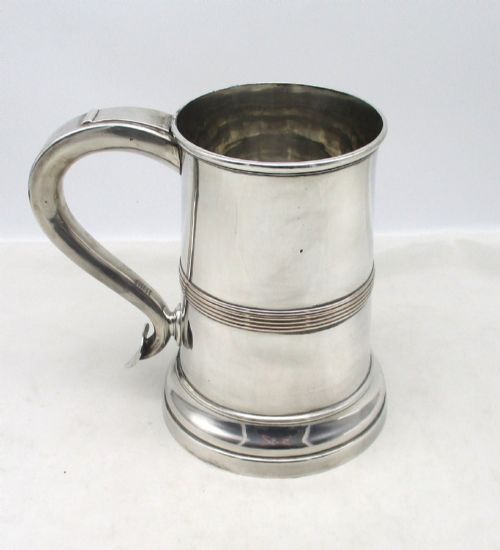
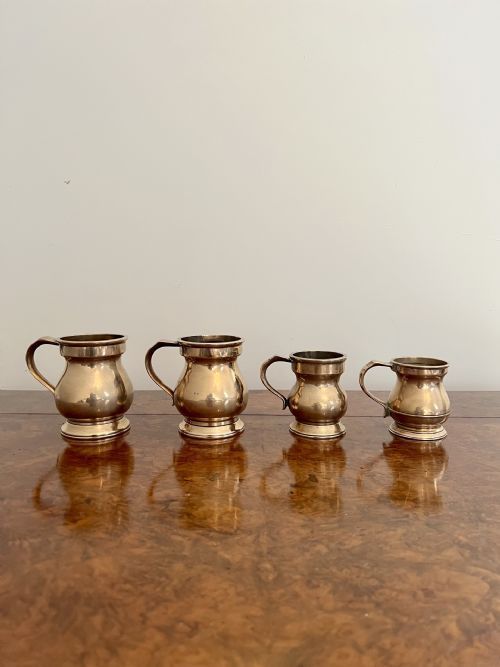


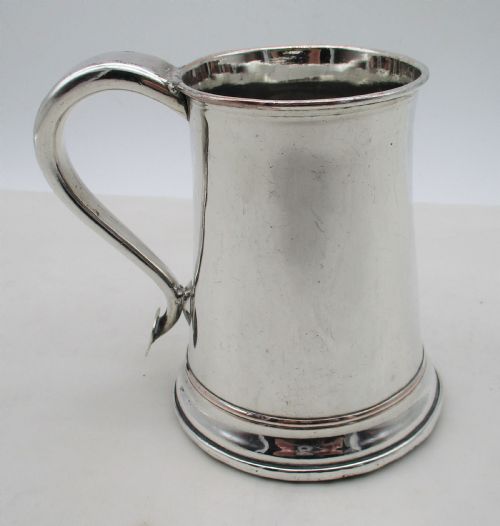


Antique Pewter Drinkware
Antique pewter drinkware spans stout tavern measures and heavy flagons designed for daily service through Georgian and Victorian centuries.
Antique Pewter Drinkware
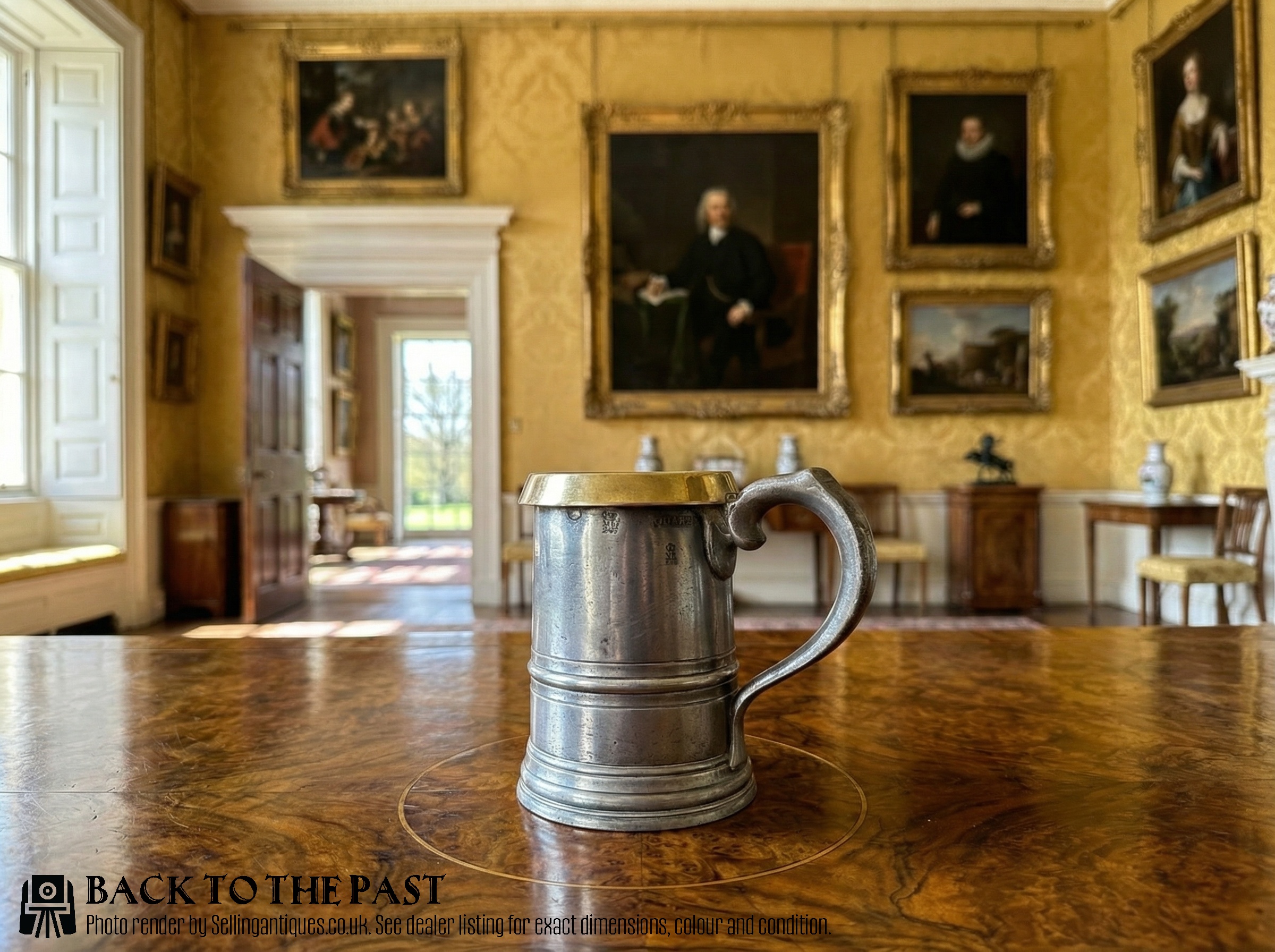
When you search for antique pewter drinkware, you encounter robust vessels intended for ale and spirits, including substantial tankards and quart measures. The selection leans heavily towards English tavern pieces alongside continental flagons decorated with natural motifs.
Most examples date from the Georgian and Victorian eras, reflecting a period when metal drinking vessels formed a staple of domestic and public house hospitality. These items range from simple pint measures to large commemorative flagons.
Forms follow strict capacity standards, such as the quart measure, designed to ensure honest pouring. Surviving items retain the marks of hard service in domestic settings or busy taverns.
How they were made
Pewter vessels are shaped from an alloy of tin combined with lead, copper, or antimony, giving the metal a dark, muted lustre. Makers cast components in moulds before soldering the body seams and attaching sturdy handles.
Surface finishing involves turning on a lathe to smooth the exterior walls and applying touchmarks to stamp the maker's identity. Many pieces display simple linear bands or cast relief decoration such as hops.
Related drinkware utilises Old Sheffield Plate, fusing a thin layer of silver onto a copper base, which brings a brighter metallic contrast to the material mix.
Antique Pewter Drinkware Retail Price Guide 2026
Typical asking prices for pewter drinkware among the pieces listed under this phrase on Sellingantiques today, from the lower quarter to the upper quarter. They describe what is for sale here now, not the wider market.
Listings feature items spanning the eighteenth and nineteenth centuries, incorporating both utilitarian pewter tavern measures and decorative German Art Nouveau flagons.
What varies in quality
Quality rests in the weight of the metal and the crispness of the cast details, as thinner walls lose their structural integrity over decades of use. Superior vessels retain thick, balanced walls that feel substantial in the hand.
Maker attribution elevates a piece, particularly when touchmarks remain clear and legible on the base or rim. The retention of original surface texture without excessive polishing distinguishes a well-preserved survivor.
Richard Morton·Watts & Harton
The Antique Pewter Drinkware Glossary
- Quart measure
- A capacity vessel holding two pints, frequently stamped with verification marks for tavern use. These robust items saw heavy daily service.
- Flagon
- A large drinking vessel with a handle and lid, often used for serving ale at communal tables. Continental examples frequently display elaborate cast decoration.
- Tankard
- A cylindrical drinking cup featuring a single handle, sometimes fitted with a hinged lid. They are the most common form in this category.
- Touchmark
- A small stamp impressed into the metal by the maker to guarantee the alloy standard. Finding a crisp mark aids identification.
- Old Sheffield Plate
- A composite material formed by fusing silver to a copper core, used for high-status tankards. It predates electroplating.
Antique Pewter Drinkware: Frequently Asked Questions
How do I clean antique pewter?
Wash pewter gently in warm soapy water and dry it immediately with a soft cloth to protect the surface. Avoid harsh abrasive metal polishes that strip away the dark historical patina.
Leaving the natural grey oxidation intact preserves the character and age of the metal. Aggressive scrubbing diminishes the tactile history gathered over centuries of use.
Are these tankards safe for drinking?
Older pewter formulations often contain high levels of lead, which can leach into acidic beverages or alcohol. For this reason, historical drinking vessels are best kept for display rather than daily dining.
Modern pewter alloys are lead-free, but antique tavern pieces belong strictly to the realm of collection and decorative display.
What is a quart measure?
A quart measure is a standardised vessel holding two pints of liquid, built with thick walls to withstand the rigours of a busy taproom. They formed the backbone of pub service before glass took over.
Their heavy construction ensured they survived decades of washing and rough handling on wooden tavern tables.
Why do some pieces have touchmarks?
Touchmarks acted as a maker's signature and a guarantee of the alloy quality governed by guild standards. Guild wardens inspected workshops to ensure the tin content met strict rules.
Locating a clear touchmark allows collectors to trace the workshop origins and date the vessel more accurately.