



Victorian Tavern Measure
These Victorian tavern measures are robust metal vessels forged to pour and verify drink in nineteenth-century public houses.
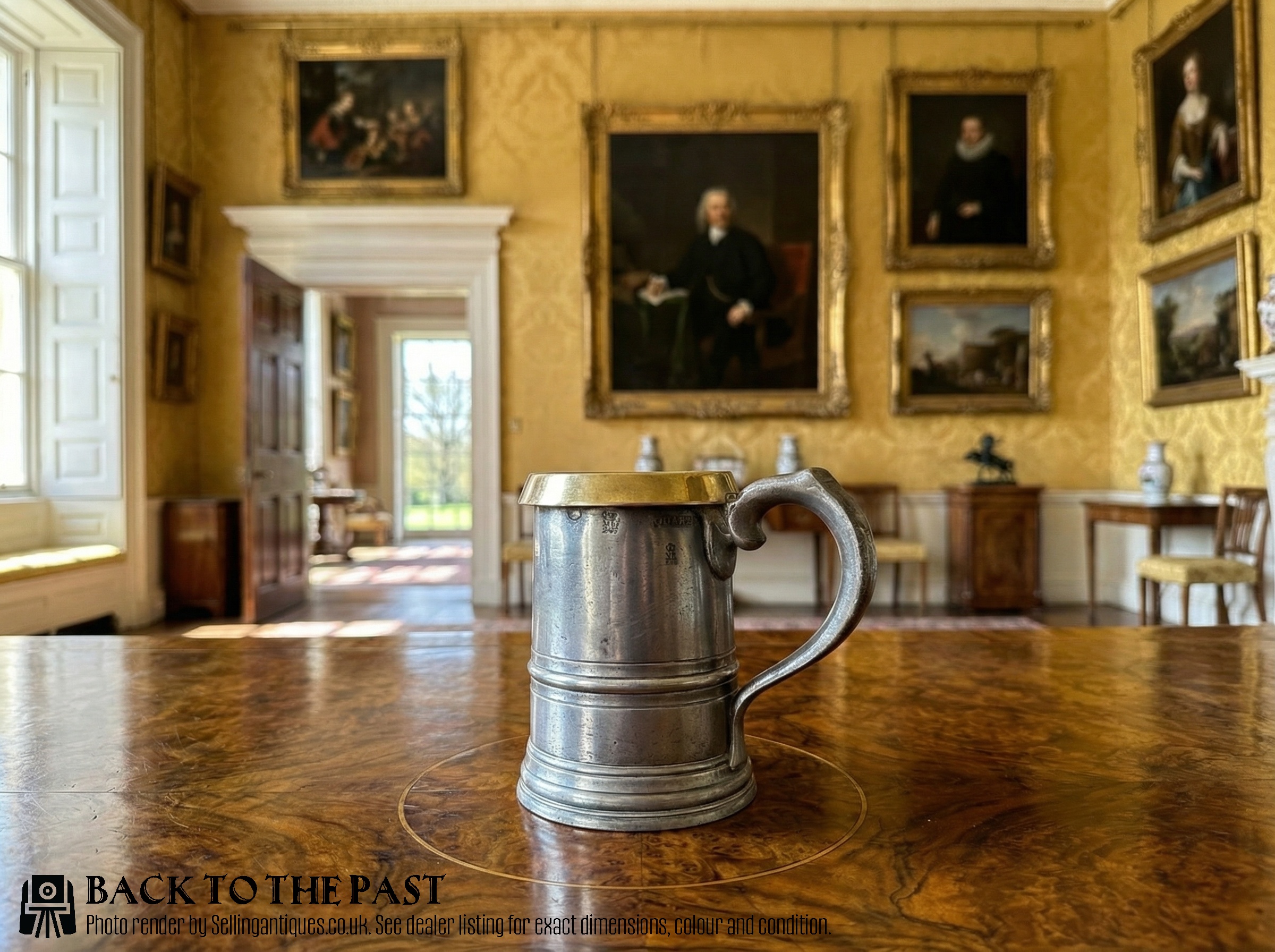
Victorian Tavern Measure
A victorian tavern measure is a heavy metal container designed for serving and gauging ale, spirits, or wine in nineteenth-century public houses. These utility pieces survive in forms ranging from standard pint tankards to large multi-gallon copper flagons and graduated sets.
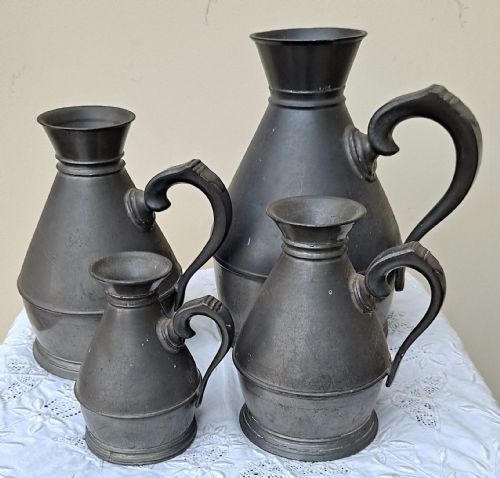
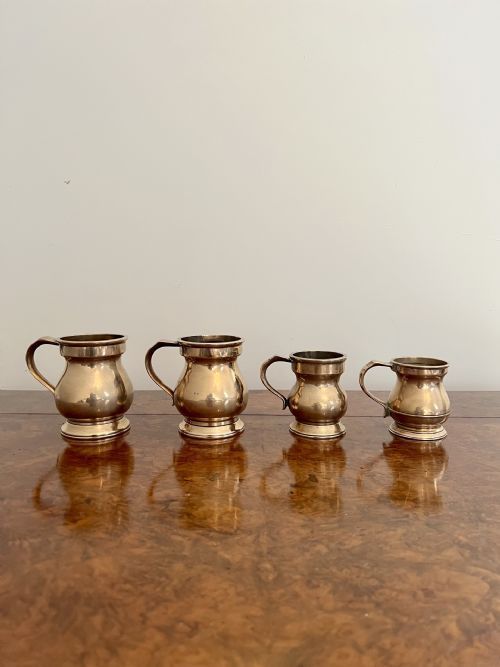
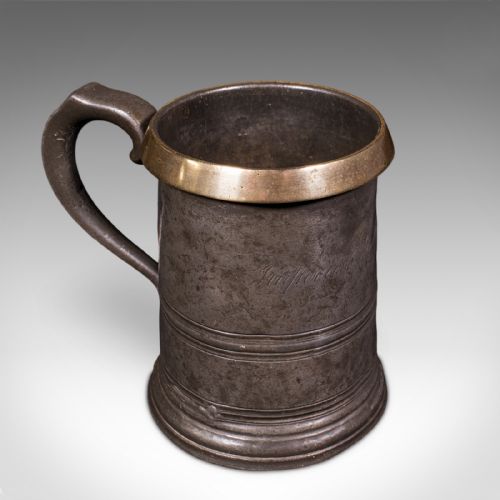
Most examples you encounter here belong to the Victorian era, appearing as bell-shaped vessels, lidded half-pint tankards, or tall Irish haystack forms. Makers shaped them primarily for practical trade use behind the bar rather than display in the parlour.
Individual listings encompass copper, brass, bronze, and pewter constructions, frequently stamped with verification marks such as the royal cypher. You will find both single vessels and matching graduated sets of three or four pieces.
Materials and construction
Metalworkers fabricated these tavern measures using durable alloys and base metals, principally pewter, copper, brass, and bronze. Pewter provided a malleable surface for casting and soldering, while copper and brass offered greater rigidity for large flagons and multi-piece sets.
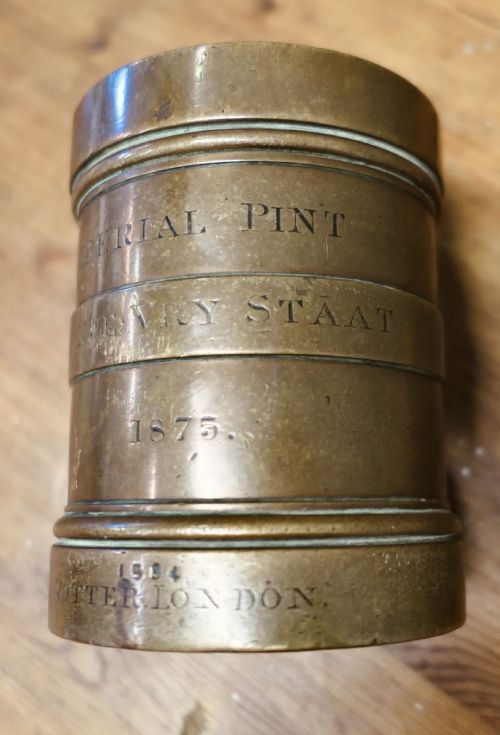
Craftsmen formed the bodies by spinning or hammering sheet metal around moulds, then attaching sturdy handles and pouring lips. Workshops often applied touchmarks, capacity stamps, and tavern names directly onto the exterior walls using punch dies.
One tavern measure bears the specific address of the Yew Tree Inn in Felstead.
Judging quality and character
Quality rests upon the clarity of original touchmarks, maker stamps, and government verification cyphers punched into the metal. Faint or missing markings reduce historical interest, whereas crisp maker attribution to known foundries elevates a piece considerably.
Surface preservation and structural integrity distinguish finer examples from heavily worn tavern tools. Vessels retaining their original patination, straight rims, and securely soldered handles demonstrate careful handling throughout their working life.
Potter of London·J. Bower·Frederic Sanders
The Victorian Tavern Measure Glossary
- Haystack measure
- An Irish provincial pewter measure featuring a bulbous body tapering toward the top, resembling a traditional stack of hay.
- Imperial standard
- A legal capacity measurement introduced in nineteenth-century Britain to standardise trade volumes across public houses.
- Bell shaped tankard
- A drinking vessel with a curved profile widening toward the base, commonly produced in matched sets during the Victorian period.
- Touchmark
- A stamped maker mark pressed into pewter or metalware to certify the workshop of origin and metal standard.
- Breweriana
- Collectable artefacts associated with the brewing and serving of beer, including public house measures and tavern jugs.
Victorian Tavern Measure: Frequently Asked Questions
What were tavern measures used for?
Publicans utilised these metal vessels to measure and serve exact quantities of ale, spirits, and other liquids to customers.
They functioned as legal trade tools behind the bar before pre-packaged bottles and automated dispensing systems became standard practice.
How do I identify a Victorian measure?
Examine the piece for nineteenth-century manufacturing traits such as cast metal handles, verification stamps, and traditional forms like bell shapes or haystack profiles.
Many examples also bear royal cyphers or specific capacity designations that anchor them firmly in the Victorian era.
Why do some measures come in sets?
Foundries produced graduated sets of three or four vessels so publicans could nest smaller measures inside larger ones for convenient storage.
These nested sets allowed bartenders to quickly access different standard volumes, ranging from half-pints up to multiple gallons.
How should I display metal measures?
Position them on sturdy shelving or tabletops where their metallic patinas and historical forms can be appreciated without risk of knocks.
Avoid abrasive cleaning agents that strip away the aged surface character accumulated over a century of service.