





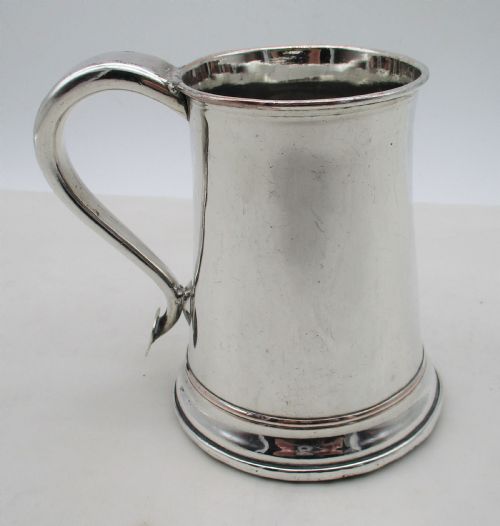
18th Century Pewter Tankard
These pieces of 18th century pewter tankard bring functional drinking vessels and church flagons from the Georgian era into modern interiors.
18th Century Pewter Tankard
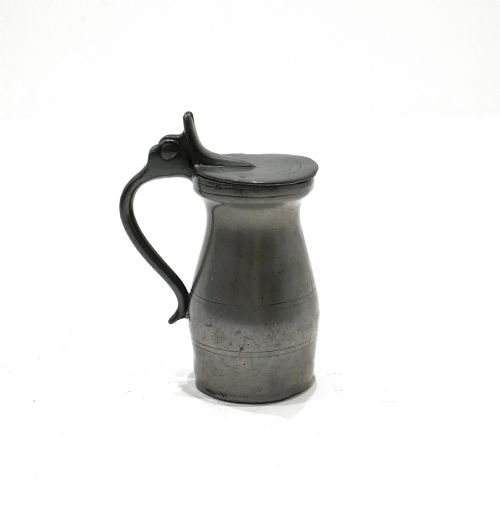
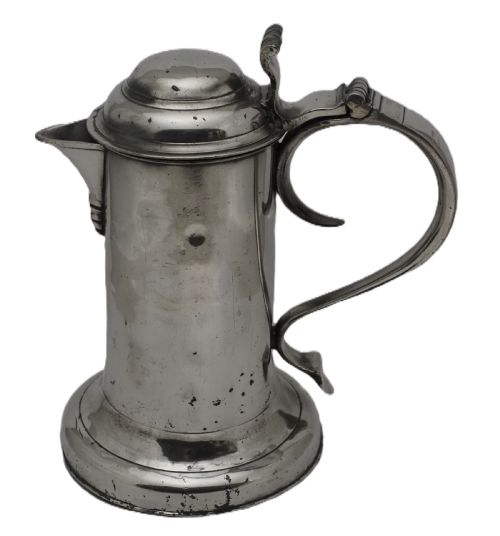
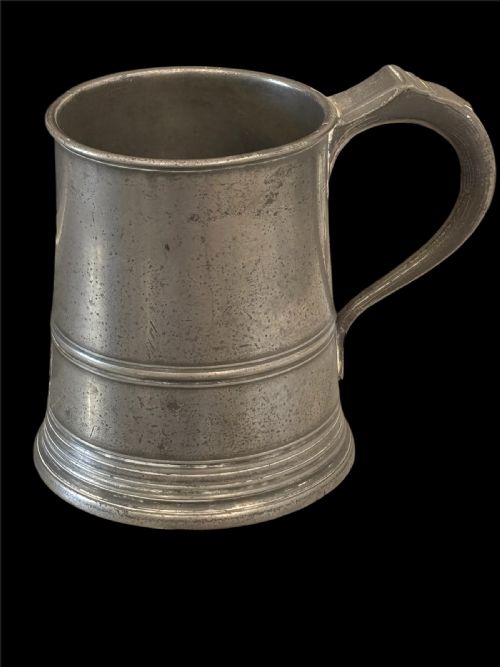
An 18th century pewter tankard encompasses heavy drinking vessels, flat-lidded flagons, and spired church vessels shaped during the Georgian period. Buyers encounter forms ranging from small half-gill spirit measures to substantial quart tankards and half-gallon capacity spire flagons.
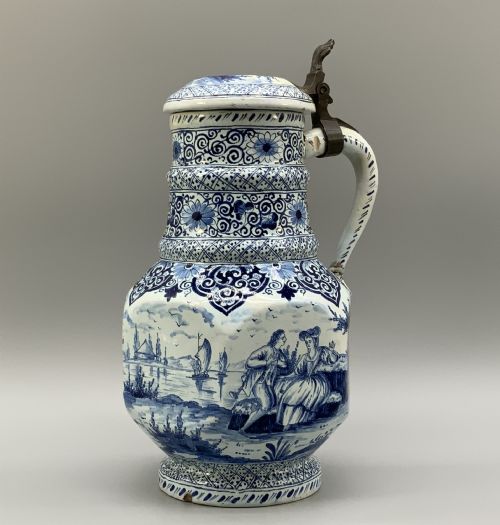
The material palette extends beyond pure metal to include related objects in Old Sheffield Plate, Dutch Delftware, and salt-glazed Westerwald stoneware. English examples dominate the selection, alongside items made for the Scottish market and pieces originating from Irish workshops.
Materials and Construction
Pewter vessels rely on metal casting techniques using tin alloys shaped into flat lids, dome lids, and heavy bodies. Silversmiths working with Old Sheffield Plate fuse silver to copper substrates to create bright pint tankards.
Ceramic equivalents employ tin-glazed earthenware and salt-glazed stoneware, painted in cobalt blue or left in natural grey tones with incised decoration.
Half gill spirit measures offer a glimpse into tiny Georgian tavern pours that make modern measures look generous.
Assessing Craftsmanship
Quality rests upon the weight of the metal and the crispness of the cast hinges and handle attachments. Superior examples retain maker marks, capacity stamps, and clean solder joints that survive centuries of use.
Subtleties in lid closure, metal thickness, and surface patination divide standard utilitarian vessels from church flagons and marked maker pieces.
John Heaney·Richard Morton·Robert Iles·Burgum & Catcott
The 18th Century Pewter Tankard Glossary
- Flagon
- A large drinking vessel or church vessel, often featuring a lid and a handle. These pieces frequently hold larger capacities than standard drinking mugs.
- Spirit Measure
- A small metal vessel designed to hold precise volumes of alcohol. These range down to half gill capacities for commercial or domestic dispensing.
- Spire Flagon
- A tall church vessel topped by a pointed spire lid. These tall pieces were utilised for ecclesiastical services.
- Old Sheffield Plate
- A fused composite material combining a thin layer of silver over a copper base. This technique allowed makers to produce plate vessels with the appearance of solid silver.
- Westerwald
- A German ceramic region known for salt-glazed stoneware tankards. These feature grey bodies decorated with cobalt blue incisions.
18th Century Pewter Tankard: Frequently Asked Questions
What capacities do these vessels hold?
Capacities span small half gill measures and one pint tankards up to heavy quart vessels and half gallon church flagons.
Buyers find these sizes suited to both display and historical study.
How do I identify a church flagon?
Church flagons typically present as tall spire flagons or heavy vessels commissioned for ecclesiastical use.
Many bear marks linking them to specific parishes or makers.
Are all these pieces made of pewter?
While pewter is the primary metal, the selection includes related items in Old Sheffield Plate, copper, tin-glazed earthenware, and salt-glazed stoneware.
Each material reflects the broader drinkware production of the Georgian century.
Where were these items manufactured?
Origin points include English workshops in London and Bristol, Irish centres in Dublin, and German kilns producing Westerwald stoneware.
Certain English pieces were specifically made for the Scottish market.