
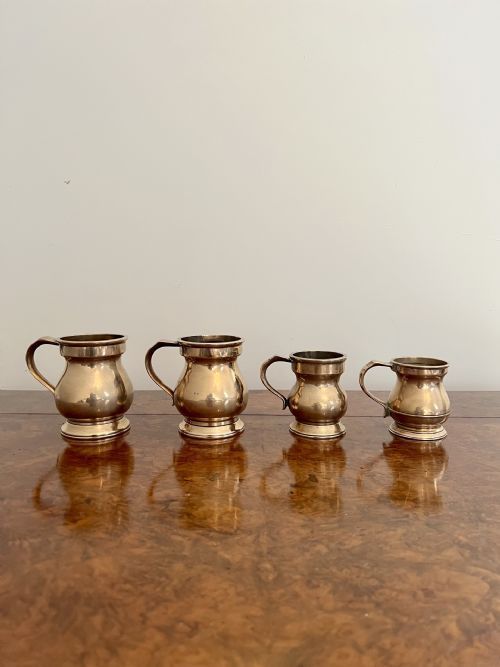


Antique Metal Measure Set
These antique metal measure sets combine honest utility and solid craftsmanship, offering practical charm and historic character for any interior.
Antique Metal Measure Set
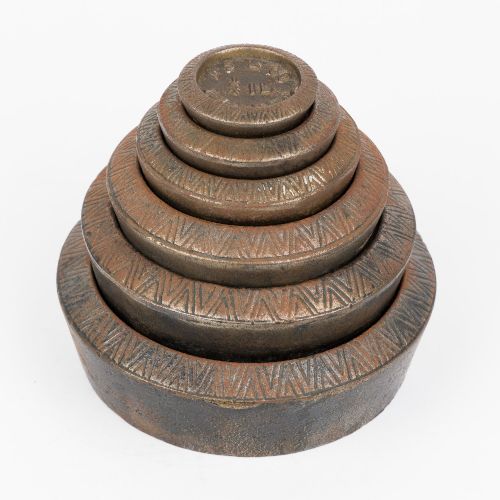
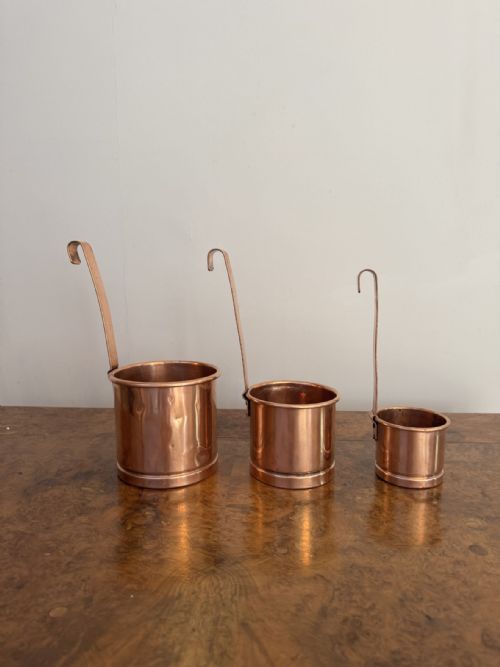
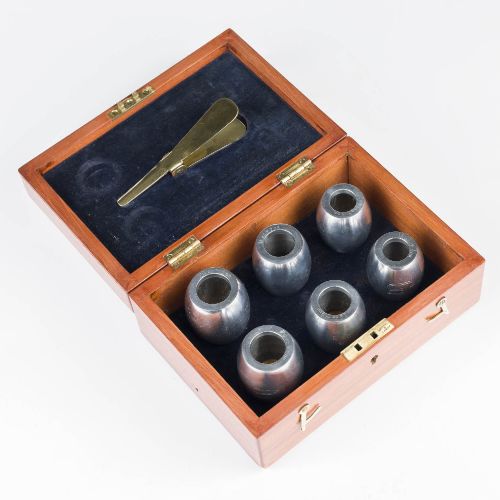
When you search for an antique metal measure set, you encounter graduated groupings of vessels, tankards, and standard weights designed for trade or household use. These collections span the Victorian and Georgian eras up to the mid-twentieth century, featuring multiple pieces that nest or stack together neatly.
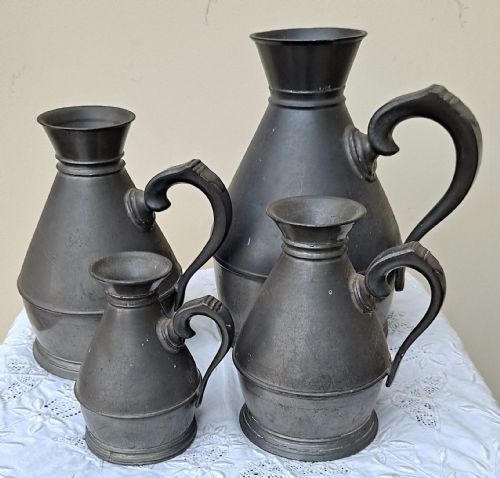
The most common forms on this page include copper and brass vessels alongside pewter haystack measures and imperial stacking weights. Originating from distinct regions and boroughs, these sets frequently bear official stamps, regional verification marks, or municipal inscriptions.
Many of these objects served in taverns, scientific contexts, or kitchens, reflecting rigorous historical standards of volume and mass. You will find sets ranging from small groupings of three or four pieces up to extensive collections of sixteen standard weights.
Materials and construction
Makers utilised durable metals such as copper, brass, pewter, and cast iron to withstand daily commercial demands. Copper measures often feature folded seams, brazed joints, and contrasting brass rims, while pewter pieces display characteristic soft patinas and rounded contours.
Casting and hammering shaped the heavier bronze and iron standard weights, which frequently incorporated lead plugs for adjustment. Many vessels incorporate applied handles and turned details, showcasing traditional metalworking techniques from British and Irish workshops.
Floor plaques once embedded in government offices now serve as heavy, unexpected doorstops in modern hallways.
Assessing quality and authenticity
The distinction between ordinary utility items and superior examples lies in the crispness of maker stamps and the completeness of the graduated set. Original verification marks and municipal engravings add historical depth, whereas worn or illegible stamps reduce documentary interest.
Surface preservation significantly influences the character of the piece, with untouched patinas generally outranking aggressive modern polishing. A complete, unbroken progression of sizes within a matched grouping distinguishes a well-preserved set from pieced-together gatherings.
De Grave Short & Co·W&T Avery
The Antique Metal Measure Set Glossary
- Haystack measure
- A traditional Irish pewter vessel shape featuring a bulbous body and narrow neck, resembling a stacked pile of hay. These distinctive containers were widely used for liquid capacity.
- Standard weight
- A certified mass used by inspectors to verify commercial scales and marketplace balances. They often carry municipal stamps and specific regional inscriptions.
- Imperial standard
- A system of weights and measures officially established in Britain during the nineteenth century. Sets conforming to this standard ensure uniform commercial transactions.
- Graduated set
- A collection of vessels or weights designed to nest or stack in proportional sizes. Each smaller piece fits inside or matches the geometric progression of the larger ones.
- Pewter
- A malleable alloy composed primarily of tin, combined with copper and antimony. It produces a subdued metallic lustre suited to both tavern tankards and domestic measures.
Antique Metal Measure Set: Frequently Asked Questions
What were antique metal measure sets used for?
These sets served precise commercial and domestic roles, measuring liquid volumes in taverns or verifying dry goods in markets. Official standards ensured traders maintained honesty in daily commerce.
Over time, many of these utilitarian tools transitioned into decorative display items, appreciated for their robust construction and historical resonance within traditional interiors.
How do I care for antique copper and pewter?
Maintain these metal surfaces with minimal intervention, using a soft dry cloth to remove dust. Avoid harsh chemical cleaners that strip away historic patinas and aged surfaces.
Store them in stable environmental conditions away from dampness to prevent active corrosion or pitting on the copper, brass, and pewter components.
How can I tell Victorian measures from Georgian ones?
Georgian examples often display simpler hand-beaten characteristics and earlier forms of touchmarks or capacity stamps. Victorian pieces frequently incorporate more standardised imperial markings and official verification ciphers.
Examining the manufacturing seams and stylistic proportions helps differentiate between the distinct periods represented across these groupings.
Why do some measures have multiple stamps?
Official verification stamps indicate that a local government inspector tested and approved the vessel for trade use. Additional municipal marks or owner initials accumulated as the object moved between different boroughs.
These varied markings provide a traceable administrative history, documenting the geographical path and active working life of the measure.