


Antique Copper Measure
These antique copper measure pieces are utilitarian vessels of capacity, prized for their heavy warm metal and honest vernacular history.
What an antique copper measure is
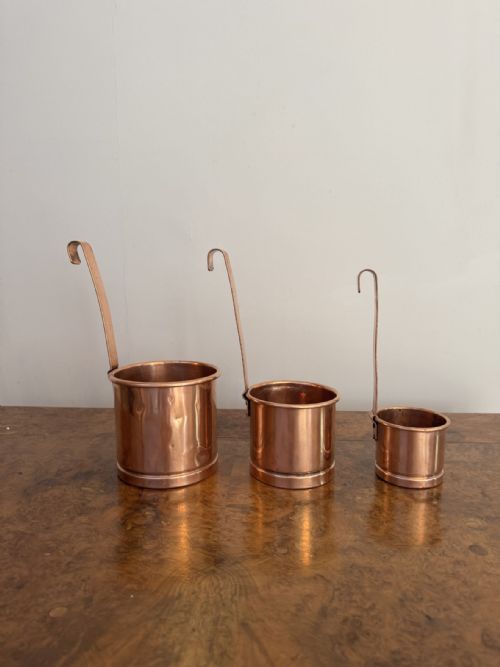
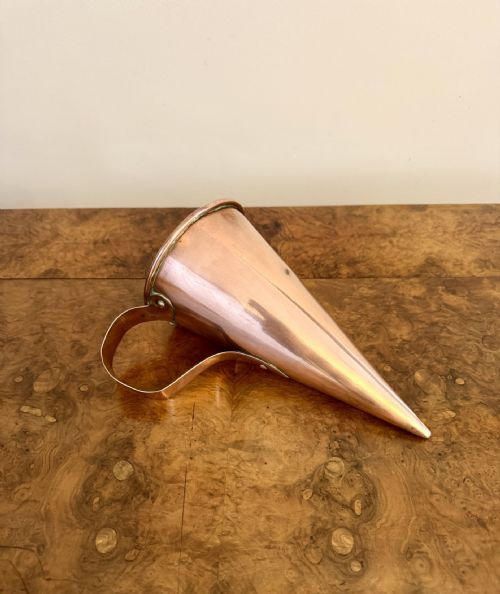
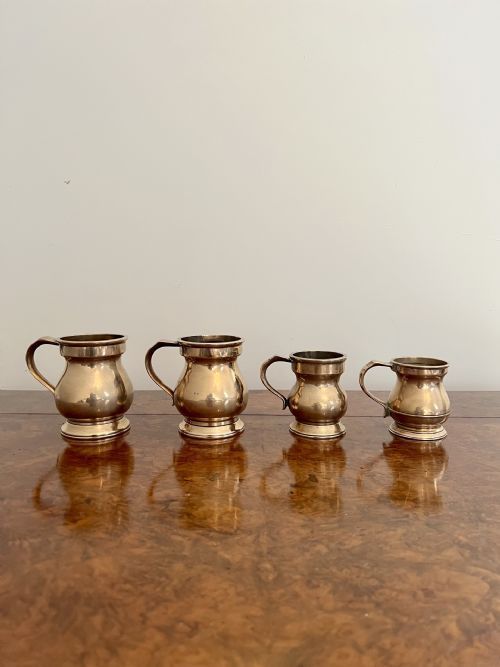
An antique copper measure is a vessel designed to hold and dispense liquids by volume, spanning capacities from a single gill to several gallons. You encounter these across domestic and commercial forms, including flagons, harvest jugs, and graduated sets.
The pieces listed on this page appear predominantly from the Victorian period, with dates centred around the mid to late nineteenth century. These items include both Scottish and English regional variants, showing standard imperial sizing and verification marks.
Forms range from small spirit measures shaped like thistles to large four and five gallon harvest jugs used in agriculture. The surviving examples demonstrate the heavy duty nature of nineteenth century trade and tavern equipment.
How they were made
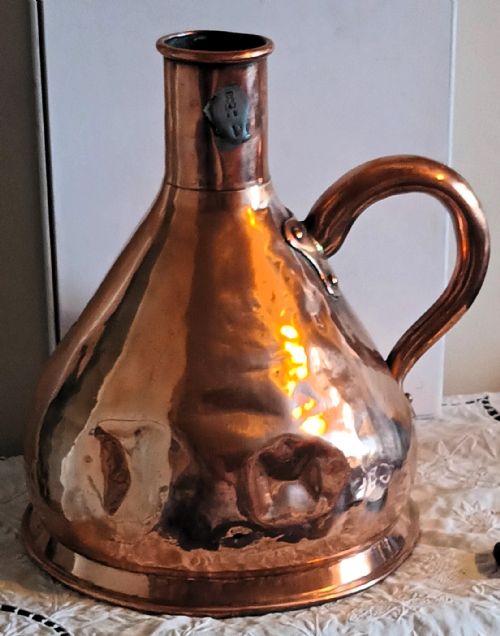
Many examples incorporate touchmarks, crown stamps, and VR cyphers struck directly into the metal to signify official capacity and state inspection. Surface finishes develop a natural patina over time, reflecting decades of use and polishing.
Retail Price Guide 2026
Typical UK retail prices for copper measure, calculated from the Sellingantiques database of over a million retail prices indexed since 2003. This retail price guide relies exclusively on Sellingantiques data; no external sources or auction records are used, so the figures do not describe the wider market.
Listings for this phrase focus heavily on the nineteenth century, featuring Victorian flagons and harvest jugs made from copper and brass.
What varies in quality
Quality rests in the weight of the copper sheet and the integrity of the seaming, where thicker gauge metal resists denting and holds a truer form. Superior pieces retain crisp maker stamps or royal verification marks without excessive distortion from heavy commercial use.
The balance of the brass handle and the precision of the flared rim distinguish finer workshop output from standard utility grade vessels. Aesthetic appeal also depends on how evenly the warm copper tone ages across the body of the jug.
Hy. Timms of Liverpool
The Antique Copper Measure Glossary
- Gill
- A traditional unit of capacity equal to a quarter of a pint. Spirit measures in this size are often styled as thistle cups.
- Flagon
- A large drinking vessel with a handle and spout, used for holding ale or wine. These pieces often feature sturdy pedestals.
- Harvest measure
- A large capacity vessel, frequently holding one or more gallons, utilised during seasonal agricultural work. They are among the heaviest pieces found.
- VR Mark
- A royal cypher standing for Victoria Regina, stamped onto measures to certify legal compliance. These verification marks aid dating.
- Haystack measure
- A distinctive regional shape of ale measure with a bulbous lower body tapering towards the top. This profile resembles a traditional hayrick.
Frequently Asked Questions
What were antique copper measures used for?
These vessels served to measure and pour liquids such as ale, spirits, and milk in domestic households, taverns, and agricultural settings. Their precise capacities ensured fair trade before automated packaging existed.
Over time, many transitioned from working tavern equipment to decorative objects displayed in homes and country houses. Their robust construction allowed them to withstand daily handling for generations.
How do I date an antique copper measure?
Dating relies on stylistic clues, construction methods, and official government verification marks stamped into the metal. Victorian pieces often display crown stamps and monarchical ciphers that narrow down the period of use.
Earlier nineteenth century examples may feature regional forms or maker stamps associated with specific towns. The transition from hand-beaten seams to machine rolled sheet metal also indicates the approximate era of production.
How do I clean antique copper?
Maintenance generally involves gentle dusting and occasional cleaning with a mild, non abrasive metal polish if you prefer a bright finish. Many collectors choose to preserve the dark, natural patina that builds up over centuries of handling.
Harsh chemical cleaners should be avoided because they strip away the historic surface character and can pit the soft copper. Soft cloths help maintain the integrity of the brass rims and handles without scratching.
Are these measures still accurate for liquid?
While many historical vessels retain their structural integrity and watertight seals, they are primarily collected as decorative antiques rather than precision kitchen tools. Dents, historical repairs, and wear to the base can alter the exact internal volume.
Displaying them on shelves or using them for dried botanicals protects the antique metal from unnecessary moisture and potential corrosion. Their primary appeal lies in their sculptural form and industrial history.