



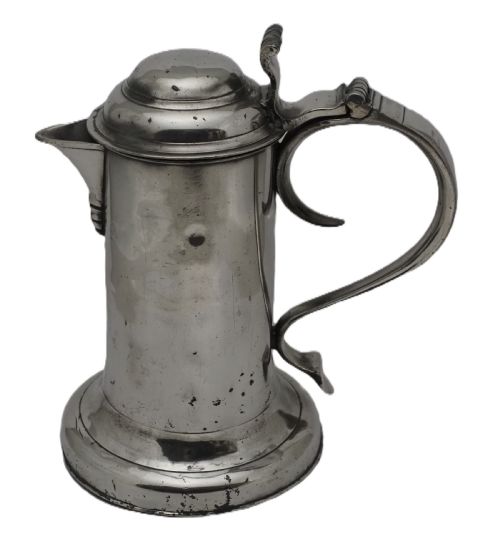


Antique Pewter Flagon
An antique pewter flagon brings heavy, tactile metalwork into a room, offering centuries of domestic and ecclesiastical history in a single vessel.
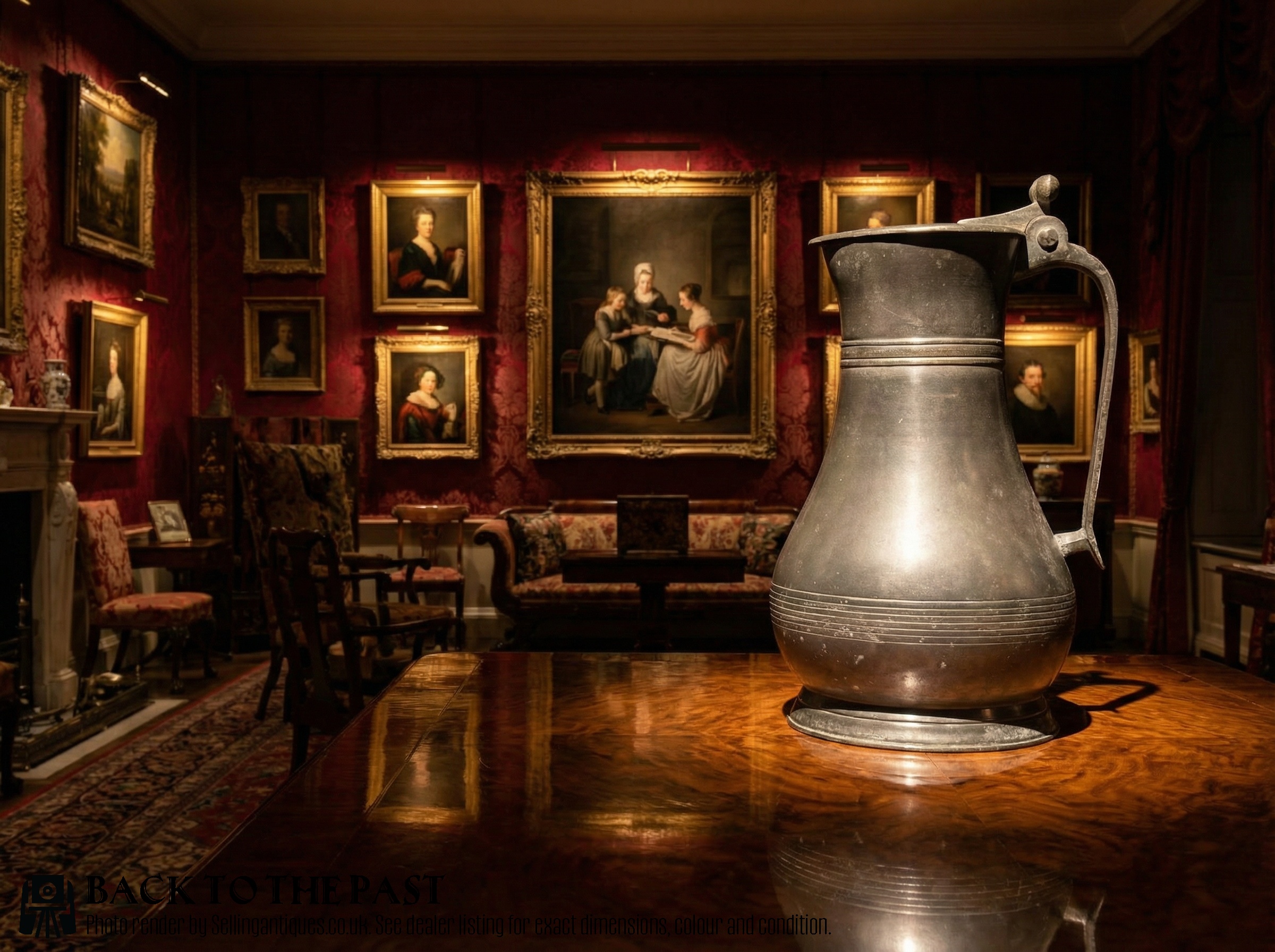
Antique Pewter Flagon
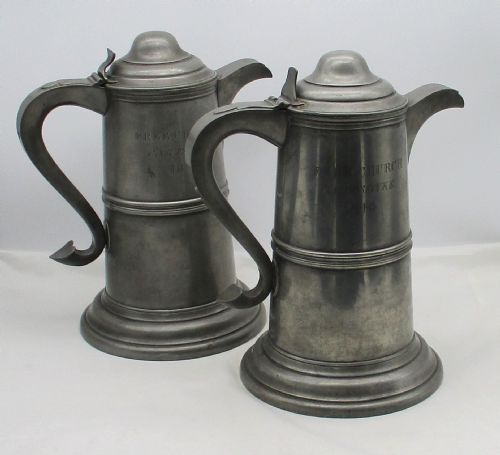
When you search for an antique pewter flagon, you encounter substantial lidded vessels designed for church services, taverns, and large households. The selection includes tall spire flagons, crested tappit hens, and heavy measures from English, Irish, Scottish, and Channel Islands makers.
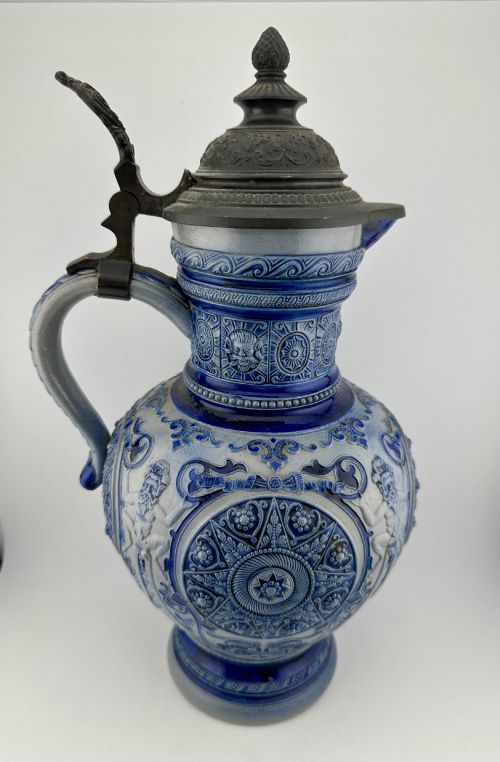
The dominant forms span the eighteenth and nineteenth centuries, featuring flat lids, thumbpieces, and capacious bodies intended to hold ale, wine, or church water. Alongside traditional British and Irish church plate, the listings encompass German Art Nouveau beer flagons decorated with hops and figural motifs.
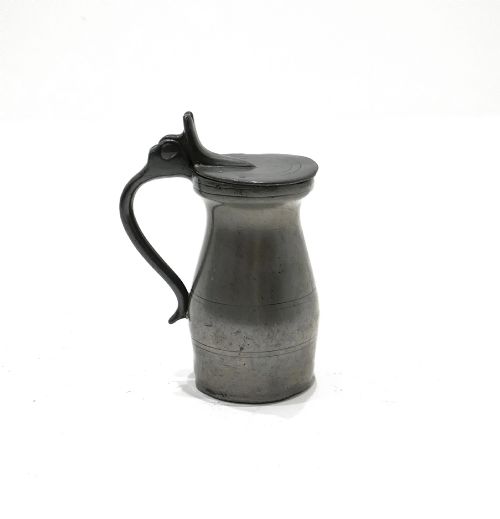
Domestic variants include spirit measures and ale jugs, reflecting how everyday liquid volumes were dispensed before strict metric standardisation. These pieces combine utilitarian strength with the subtle patina of aged metal.
How they were made
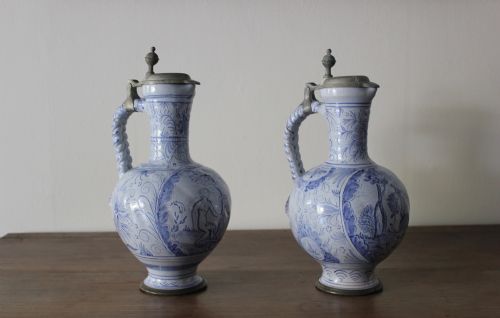
These vessels are cast in metal alloys, principally pewter, sometimes accompanied by silvered finishes, glass, or earthenware elements. Makers poured the molten alloy into multi-part moulds, then turned the solidified bodies on a lathe to smooth the walls and sharpen the profiles.
Handles, spouts, and thumbpieces were cast separately and soldered or pinned to the main body, while lids were fitted with hinge mechanisms designed for frequent, robust use. Engraved crests, ownership initials, and maker touchmarks were added by hand after the primary construction was complete.
Antique Pewter Flagon Retail Price Guide 2026
Typical asking prices for pewter flagon among the pieces listed under this phrase on Sellingantiques today, from the lower quarter to the upper quarter. They describe what is for sale here now, not the wider market.
Scottish drinkers of the past relied on the capacity known picturesquely as a tappit hen to keep their ale flowing.
What varies in quality
Quality rests in the crispness of the original casting and the survival of distinct touchmarks left by the maker. Vessels that retain their original flat lids, authentic thumbpieces, and balanced proportions without excessive reshaping stand at the upper end of the scale.
The weight of the metal and the integrity of the soldered joints also define the standard, as heavy-gauge walls resist denting and distortion over centuries of handling. Pieces bearing named attribution to known regional makers carry superior documentary interest.
John Heaney of Dublin·Robert Iles of London·John de St Croix·WMF
The Antique Pewter Flagon Glossary
- Flagon
- A large lidded drinking vessel with a handle, traditionally used for wine, ale, or ecclesiastical purposes. Most examples seen here feature secure hinged lids and robust thumbpieces.
- Tappit Hen
- A traditional Scottish form of pewter measure with a distinctive lid resembling a nesting hen and a tap or spigot provision. These heavy vessels usually denote specific Scottish liquid capacities.
- Spire Flagon
- A tall vessel characterised by a steeply tapering lid resembling a church spire. They were frequently utilised in ecclesiastical settings during the eighteenth century.
- Touchmark
- An official stamp or hallmark impressed into the metal by a pewterer or guild to certify the alloy standard and identify the maker. Finding a clear touchmark greatly aids attribution.
- Thumbpiece
- The small lever attached to the lid of a flagon or measure that allows the user to lift the lid with a single thumb while holding the handle.
Antique Pewter Flagon: Frequently Asked Questions
What were antique pewter flagons used for?
These vessels served primarily to store and pour liquids in both domestic and ecclesiastical environments. Large capacity flagons supplied wine for church communion or ale for household gatherings.
Smaller variants functioned as measures for spirits and ale in taverns. Their sturdy construction allowed them to withstand daily commercial use.
How do I clean an antique pewter flagon?
Pewter requires very little intervention to maintain its stability and historic character. Gentle washing with warm water and mild soap, followed by immediate drying with a soft cloth, removes dust without harming the surface.
Harsh metal polishes and abrasive pads must be avoided because they strip away the soft oxidation and dark patina accumulated over centuries.
How can I tell the age of a pewter flagon?
Dating relies on stylistic evolution, such as the transition from flat lids in the early eighteenth century to domed covers and spire profiles later on. Maker touchmarks, capacity stamps, and regional casting traits also anchor pieces to specific decades.
Comparing the thickness of the metal and the form of the handle provides further clues to the period of manufacture.
How should I display pewter flagons at home?
Pewter sits well on wooden sideboards, open dresser shelves, or within cabinet displays where the soft grey metal contrasts against natural textures. Keeping them away from damp environments ensures the alloy remains stable.
Grouping different forms, such as pairing a tall spire flagon with smaller lidded measures, highlights the variety of historic capacities.