



Antique Pewter Pitcher
An antique pewter pitcher brings honest tactile weight and centuries of utilitarian design to a modern interior.
Identifying an antique pewter pitcher
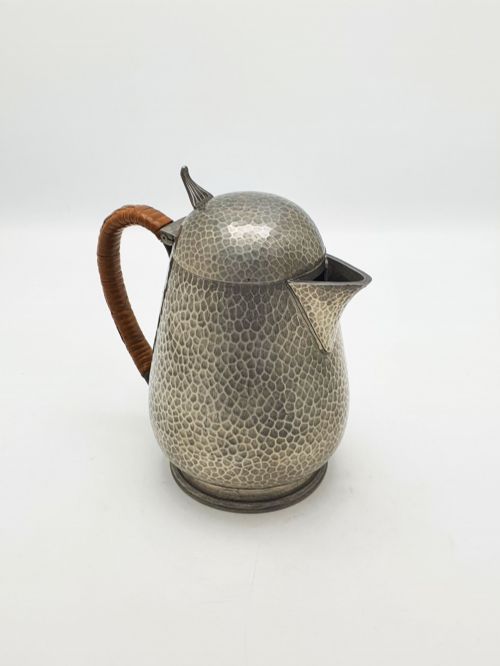
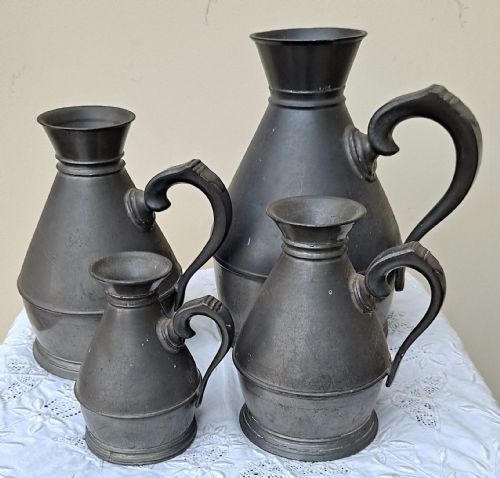
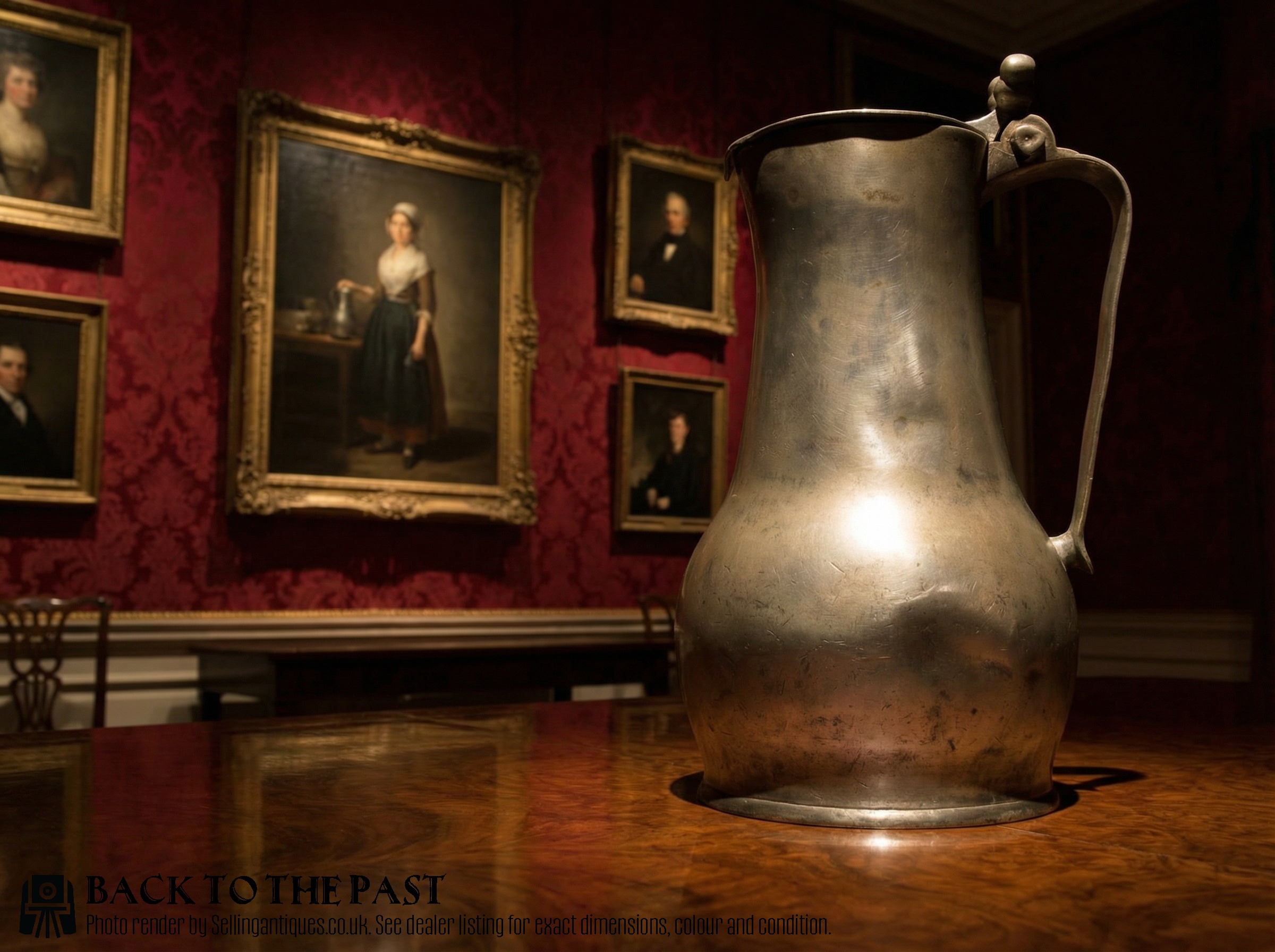
When searching for an antique pewter pitcher, collectors encounter a diverse array of domestic and tavern drinking vessels spanning the Georgian and Victorian eras. These containers range from lidless measures and tall flagons to capacity-marked ale jugs originating from England, Scotland, Ireland, and the Channel Islands.
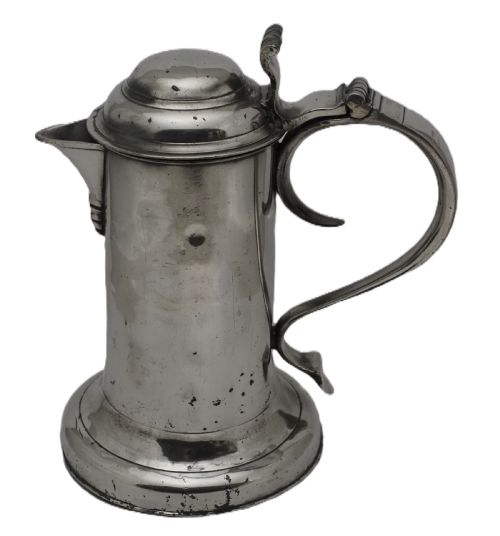
The specimens most frequently met on this page include Channel Islands forms such as Jersey measures and Guernsey flagons, alongside robust English flat-lid flagons and Scottish tappit hens. Their utilitarian origins mean each piece carried liquid measures for daily trade or household use long before entering a cabinet.
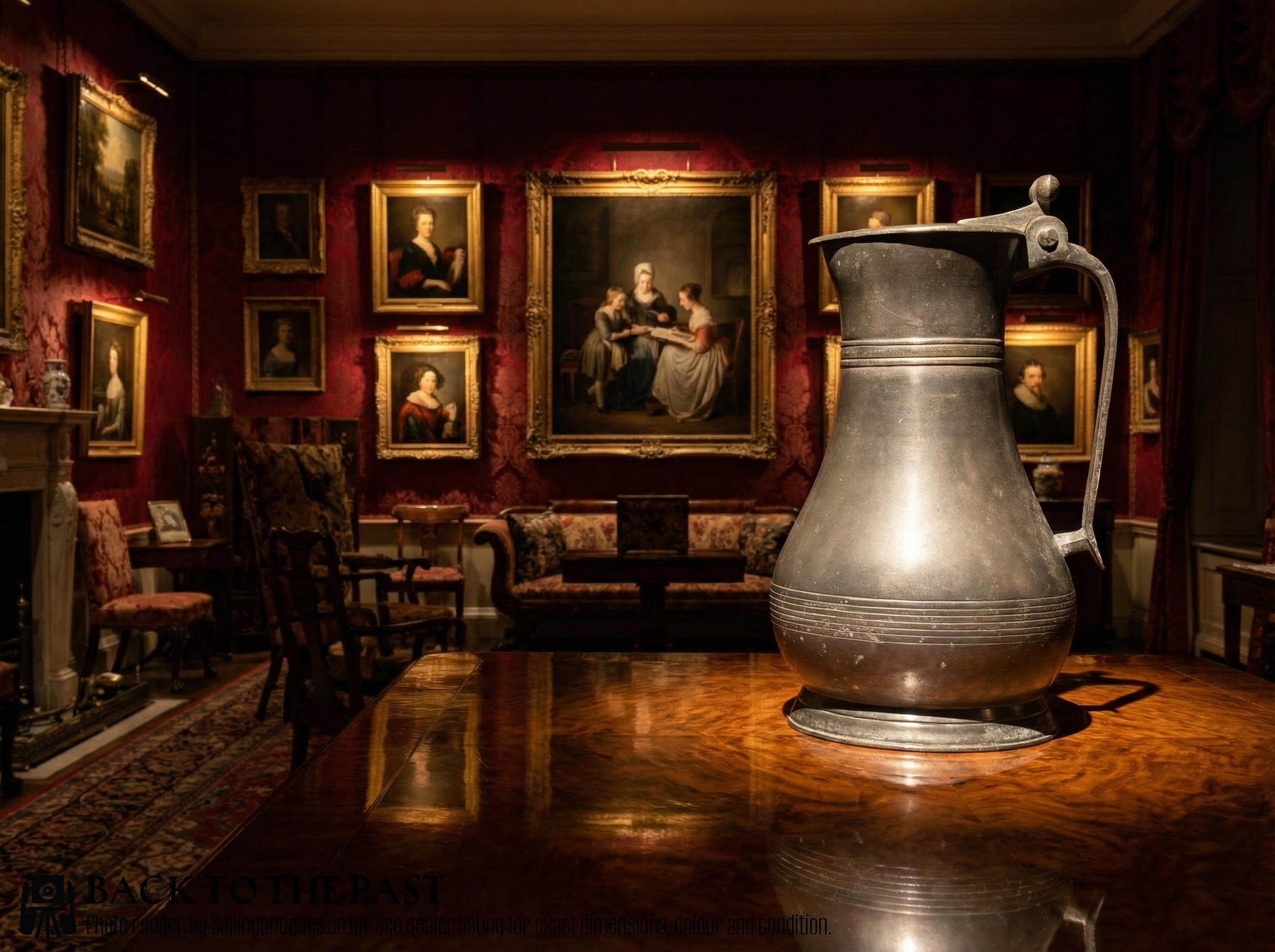
Materials and construction
Every piece listed in this category relies entirely upon pewter, an alloy traditionally composed of tin combined with smaller quantities of lead, copper, or antimony to achieve stability. Makers shaped these metal sheets and castings using foundational foundry and hammering techniques appropriate to the period.
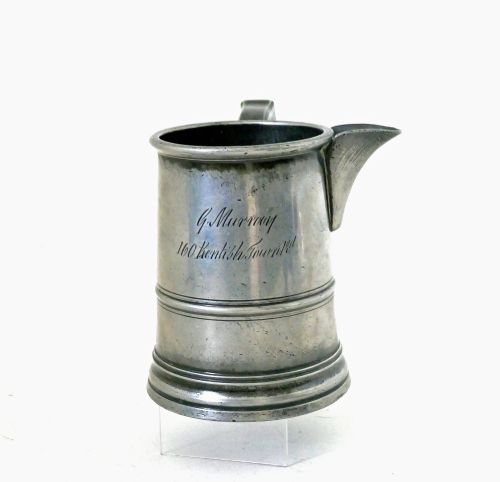
Vessels display structural joints soldered with matching metal, alongside cast handles, lids, and thumbpieces attached securely to the body. Engraved details such as owner names or tavern locations appear crisp against the dull grey patina of the metal surface.
Retail Price Guide 2026
Typical UK retail prices for pewter pitcher, calculated from the Sellingantiques database of over a million retail prices indexed since 2003. This retail price guide relies exclusively on Sellingantiques data; no external sources or auction records are used, so the figures do not describe the wider market.
Some measures still bear the faint scratched initials of thirsty eighteenth-century tavern patrons who clearly wanted to mark their territory.
Gradations of quality
The distinction between standard domestic vessels and superior examples rests upon regional rarity, maker attribution, and the crispness of capacity marks or crests. Items bearing clear stamps from known workshops or specific geographic origins command greater attention from discerning collectors.
Proportion and surface integrity also dictate standing within the range, as heavier gauge metal resists denting and preserves cleaner lines over centuries of handling. Retaining original lids, thumbpieces, and legible capacity nomenclature elevates a piece above heavily altered counterparts.
John De St Croix·G. Murrouy
The Antique Pewter Pitcher Glossary
- Pewter
- A malleable metal alloy primarily formed from tin, historically utilised for domestic vessels and tableware. Its soft nature allows for graceful casting but requires careful handling to prevent deep indentations.
- Flagon
- A large drinking vessel featuring a handle and frequently a lid, designed for serving ale or wine. Early examples often incorporate flat lids and thumbpieces.
- Measure
- A standardised container utilised in taverns and households to dispense exact volumes of liquid. Capacity designations include noggin, pint, quart, and gallon.
- Tappit hen
- A traditional Scottish form of pewter drinking vessel featuring a distinct lid and tapered body. This specific silhouette is closely associated with Scottish tavern life.
- Patina
- The natural surface oxidation and mellow sheen acquired by metal over centuries of exposure to air and touch. This layer serves as a primary indicator of genuine age.
Frequently Asked Questions
What is a tappit hen?
A tappit hen is a traditional Scottish pewter drinking vessel featuring a distinctive lid and tapered body design. These pieces were utilised for serving large quantities of ale in taverns.
Collectors prize them for their sculptural silhouette and strong regional association with Scotland during the eighteenth century.
How do I clean antique pewter?
Cleaning antique pewter requires nothing more than gentle washing with warm soapy water and immediate drying with a soft cloth. Avoid commercial metal polishes that strip away the historic surface layer.
Preserving the dull grey patina protects the character of the metal and maintains the integrity of the piece over time.
What are haystack measures?
Haystack measures are distinctive nineteenth-century Irish pewter vessels shaped with a wide base tapering toward the top. They derived their name from their resemblance to agricultural haystacks.
These measures served practical tavern functions while displaying the regional stylistic preferences of Irish metalworkers.
How were capacity marks used?
Capacity marks stamped onto pewter jugs and measures guaranteed accurate volume for trade and public consumption. Government inspectors often verified these measurements to prevent tavern fraud.
Today, these touchmarks and capacity stamps help historians date the vessels and trace their geographic origins.