



Georgian Pewter Jug
A georgian pewter jug brings utilitarian weight and honest metal to a table, offering solid form for daily ale or church service.
Georgian Pewter Jug
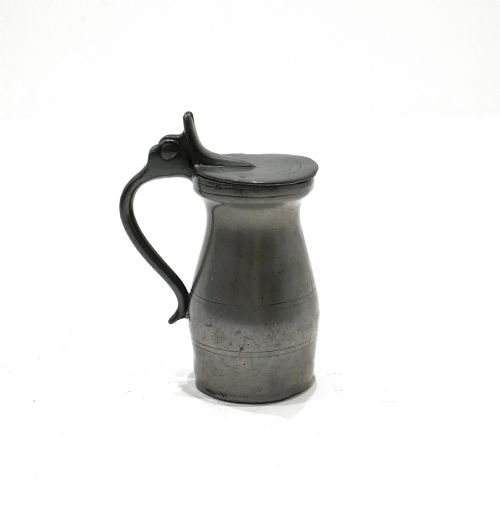
When you search for a georgian pewter jug, you encounter heavy serving vessels designed for liquid measures, ale, and sacramental use. The selection spans robust tavern jugs, spired church flagons, and capacious measures spanning the eighteenth and early nineteenth centuries.
The most common forms on this page include sturdy ale jugs, spouted spire flagons, and regional English and Channel Islands measures. Pieces range from small spirit measures to substantial gallon vessels, reflecting practical domestic and tavern life.
Origins stretch across English, Irish, Scottish, and Channel Islands workshops, demonstrating distinct regional profiles in handle placement, lid design, and touchmarks. Styles incorporate Georgian, Queen Anne, and Victorian elements alongside localized island traditions.
Materials and construction
Construction relies primarily on pewter, an alloy of tin combined with lead or copper, shaped through casting, hammering, and soldering. Selected pieces also appear in copper or silver plate, reflecting the changing metalworking trades of the period.
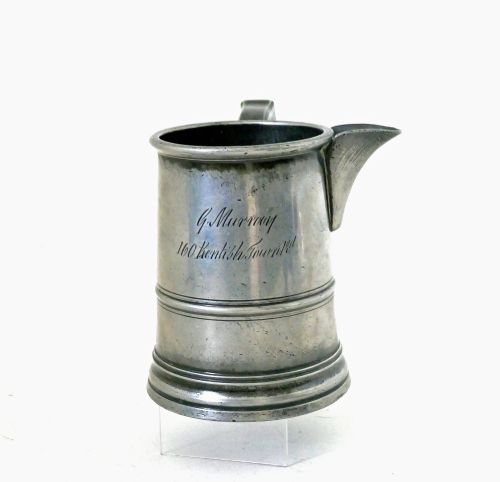
Vessels feature soldered seams, applied handles, and cast lids with flat or thumbpiece designs. Engraving appears on specific pieces, recording names and locations such as Kentish Town Road alongside capacity stamps.
Listings feature items spanning the eighteenth and nineteenth centuries, utilising pewter, copper, and silver plate across English, Scottish, Irish, and Channel Islands origins.
Evaluating quality and character
Quality depends upon the integrity of the original form, the crispness of touchmarks, and the preservation of surface patination. Original lids, intact thumbpieces, and clear maker attribution elevate a vessel above standard utilitarian stock.
The weight of the metal and the balance of the spout or handle dictate the competence of the workshop. Plain domestic measures show honest wear, whereas ecclesiastical flagons and crested tappit hens demonstrate specialised regional craftsmanship.
John Heaney·Robert Iles·John De St Croix
The Georgian Pewter Jug Glossary
- Flagon
- A large vessel with a handle and lid, frequently used in church settings or large households for holding liquids. They often feature spouts and sturdy flat lids.
- Measure
- A standardised container used for dispensing exact quantities of ale, wine, or spirits. Capacities range from small noggins to full gallons.
- Tappit Hen
- A traditional Scottish form of lidded pewter measure with a distinctive knob on the lid resembling a nesting hen. These hold specific historic volumetric capacities.
- Spire Flagon
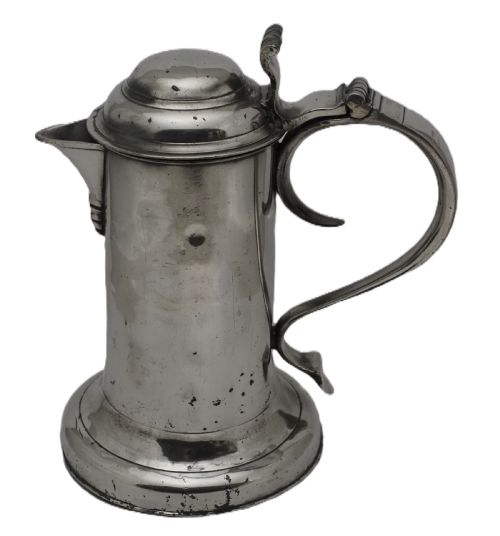
- A tall vessel characterised by a tapering body and a pointed lid profile. They are typical of specific eighteenth-century English forms.
- Touchmark
- An identifying stamp or hallmark struck into the metal by a pewterer to indicate their workshop or standard of alloy purity. These assist in attributing makers and dates.
Georgian Pewter Jug: Frequently Asked Questions
How were these jugs used?
These vessels served primarily to measure, transport, and pour liquids like ale, wine, and spirits in homes, taverns, and churches. Large gallon and flagon capacities supplied groups, while smaller measures dispensed individual portions.
Over time, many transition from active service to decorative display, retaining the physical marks of daily handling and trade use.
What is a tappit hen?
A tappit hen is a specific Scottish pewter measure style defined by a heavy, bulbous body and a lid topped with a distinct knob. These pieces held precise historic volumes like the Scots pint.
They represent some of the most recognizable regional forms collected today, prized for their stout proportions and substantial weight.
How do I identify island pewter?
Channel Islands pieces, such as those from Jersey and Guernsey, exhibit distinct regional forms like lidless measures or specific quart capacities. They often lack the standard London touchmarks found on mainland English items.
Local makers developed unique handle attachments and rim profiles that separate them immediately from contemporary English work.
Can I use antique pewter for drinks?
Historic pewter often contains lead alloyed with tin, which can leach into acidic liquids or alcohol over extended periods. Because of this composition, modern collectors generally treat these pieces as display items rather than functional tableware.
Visual enjoyment of the metal's soft grey patina replaces practical beverage service.