


Antique Metalware Flagon
An antique metalware flagon brings weight and historical craft to a table, offering centuries of domestic and ecclesiastical service.
Antique Metalware Flagon
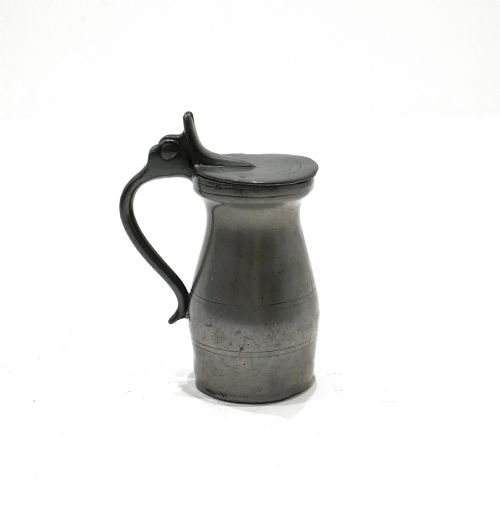
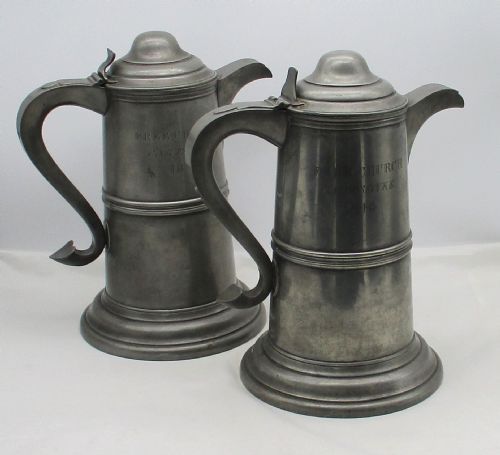
An antique metalware flagon is a sturdy vessel designed for holding liquids, appearing across the eighteenth and nineteenth centuries in forms such as spired flagons, communion sets, beer jugs, and spirit measures. These pieces reflect both domestic utility and formal ceremony, spanning Georgian and Victorian periods.
The English and Scottish pieces on this page range from modest half gill capacity measures to colossal gallon vessels. Buyers will encounter lidded pewter jugs, copper pitchers, silver-plated ewers, and brass vessels from workshops in London and Glasgow.
How they were made
Pewter and copper dominate the construction of these vessels, shaped through casting, hammering, and soldering to create robust bodies with flat lids or spired tops. Old Sheffield plate and silver plating over base metals introduce a polished surface sheen to beer jugs and communion sets.
Makers utilised traditional metalworking techniques to build durability into every handle, hinge, and spout. Cast metal components combine with heavy gauge sheets to ensure the vessels could withstand daily service.
Even a half gill measure carries enough stern metal presence to make a modern shot glass look entirely inadequate.
What varies in quality
The calibre of a metalware flagon rests upon the crispness of its cast details, the structural integrity of its lidded thumbpieces, and the balance of its proportions. Finer examples retain clear maker marks or capacity stamps, showing deliberate craftsmanship in handles and spouts.
Subtle differences in wall thickness and surface finish separate utilitarian vessels from ceremonial pieces. The heft of the metal and the precision of the soldering reveal the skill invested by the original workshop.
Elkington Mason·Robert Iles
The Antique Metalware Flagon Glossary
- Flagon
- A large vessel with a handle and spout or lip, used for holding liquids such as wine or beer. Many antique examples feature hinged lids.
- Tappit Hen
- A traditional Scottish pewter drinking measure featuring a lid and a distinct knob on top. These vessels typically held specific volumes like a Scots pint.
- Spirit Measure
- A small vessel utilised for gauging and serving precise quantities of alcohol. Examples often bear pre-imperial capacity stamps.
- Old Sheffield Plate
- A composite material made by fusing a thin layer of silver to a thick copper core. This technique predates modern electroplating.
- Ewer
- A large jug with a wide spout and a decorative handle, often paired with a basin. In ecclesiastical contexts, ewers serve ritual functions.
Antique Metalware Flagon: Frequently Asked Questions
What is a spired flagon?
A spired flagon is a tall drinking vessel featuring a tapering lid that rises to a distinct point. These pieces date predominantly to the eighteenth century and display prominent vertical lines.
Such vessels often served ceremonial or ecclesiastical functions rather than everyday tavern use. Their height and balanced proportions distinguish them from standard beer jugs.
How do I clean antique pewter?
Antique pewter requires minimal intervention to preserve its historic surface and dark grey patina. Warm water and mild soap remove surface dirt safely.
Avoid modern abrasive metal polishes which strip away age and diminish the character of the metal. Gentle drying with a soft cloth prevents water spotting.
What is a Tappit Hen?
A Tappit Hen is a traditional Scottish pewter container used for measuring and serving ale. The name derives from the distinctive knob on the lid.
These vessels are collected for their regional origins and robust eighteenth-century forms. They represent a specific category within British metalware.