
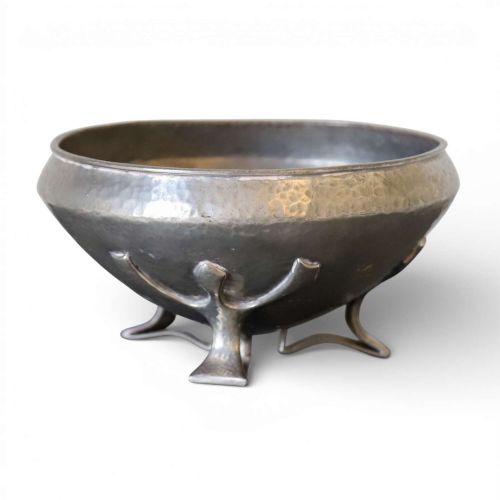


Arts and Crafts Metalware
Arts and crafts metalware comprises hand-hammered copper vessels from the turn of the twentieth century that bring tactile honesty to any interior.
What arts and crafts metalware pieces are
These items embody the movement's philosophy of visible craftsmanship over industrial perfection. Every piece shows the marks of the maker's tools, separating them clearly from mass-manufactured factory goods of the same period.
How arts and crafts metalware was made
Makers fashioned these objects primarily from sheet copper using traditional hand-raising and hammering techniques. Artisans worked the metal over stakes with hammers, creating surface textures that catch the light.
Handles and fittings were often riveted or joined manually rather than machine-welded. This method ensured structural integrity while maintaining an honest, unpretentious appearance.
Listings on this site span the Victorian period and nineteen hundred, focusing exclusively on copper forms.
What varies in quality
Quality rests in the rhythm and control of the hand-hammered surface texture. Master craftsmen left deliberate, uniform hammer marks that reveal intention, whereas lesser work often appears haphazard or carelessly finished.
Proportion and the integration of handles define the finer examples in this category. The best pieces balance utility with sculptural form, displaying thoughtful joins and rivets that serve both function and design.
The Arts and Crafts Metalware Glossary
- Hand-raised
- Formed by hammering a single flat sheet of metal over a stake until it becomes a three-dimensional vessel. This technique requires considerable skill and leaves subtle concentric tool marks.
- Twin-handled
- Featuring two opposing grips or handles attached to the body of a vessel. These were often riveted firmly in place.
- Serving tankard
- A large cylindrical drinking vessel or pouring jug with a single handle. They were utilised for dispensing liquids at the table.
- Patina
- The natural surface sheen and colour acquired by copper through age and handling. Collectors prize an undisturbed surface over aggressive cleaning.
Frequently Asked Questions
What is arts and crafts metalware?
Arts and crafts metalware consists of utilitarian household objects created by hand during the late nineteenth and early twentieth centuries. These pieces emphasise honest materials and visible craftsmanship.
The current selection demonstrates this focus through copper vessels such as twin-handled vases and pouring jugs.
How do I care for antique copper?
Antique copper requires minimal intervention to preserve its historic surface. Dusting with a dry cloth and avoiding harsh chemical polishes protects the natural patina.
Keeping these vessels in stable indoor environments prevents accelerated oxidation and tarnishing.
How old are these metalware pieces?
The items represented here date from the Victorian era up to around nineteen hundred. This period marks the height of the Arts and Crafts movement in England.
Craftsmen and guilds during this time rejected industrial production in favour of traditional hand methods.
Where were these items made?
English workshops and guilds produced the vast majority of these domestic copper items. Specific regional centres, such as the Lake District, became notable for their metalworking output.
Makers in these locations trained apprentices in traditional raising and hammering techniques.