




Hammered Copper Urn
A hammered copper urn brings tactile warmth and industrial texture to an interior, built from durable metal with beaten surface detail.
Hammered Copper Urn
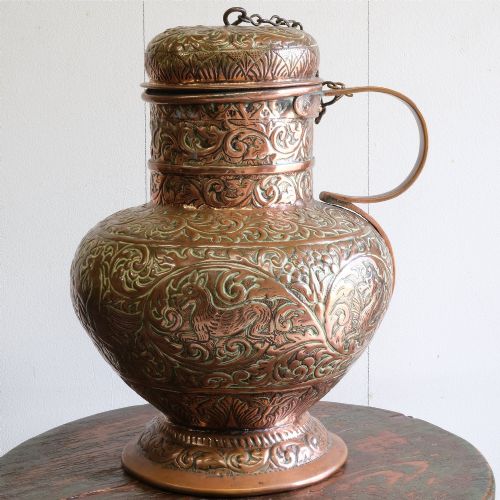
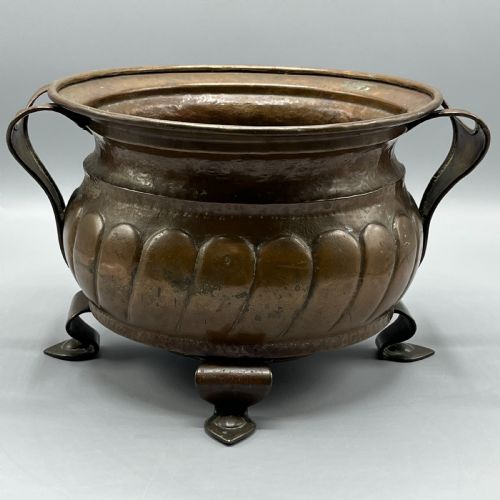
A hammered copper urn encompasses metal vessels shaped for water, plants, coal, and fireside use across multiple decorative movements. These objects bridge utilitarian storage and aesthetic display, utilising beaten metal surfaces to catch the light within a room.
The versions most frequently met on this page span the Victorian era, the Arts and Crafts movement, and the twentieth century. They manifest as jardinieres, coal scuttles, water urns, and cauldrons produced in copper with occasional brass or iron components.
Origins stretch from British workshops associated with the Arts and Crafts style to Indian repoussé work and continental designs. Buyers encounter everything from hanging kettles and umbrella stands to heavy indoor planters suited to domestic display.
How they were made
The primary material is sheet copper, often worked by hand using hammers to create textured, light-catching surfaces known as repoussé or dinanderie. Smiths shaped these metal sheets into vessels, urns, and planters, sometimes incorporating brass handles or wrought iron stands for structural support.
Construction techniques combine raised metal bodies with riveted seams, soldered joints, and applied handles. Makers utilised the malleability of copper to beat intricate patterns directly into the walls of vases and coal scuttles.
Hammered Copper Urn Retail Price Guide 2026
Typical asking prices for hammered copper urn among the pieces listed under this phrase on Sellingantiques today, from the lower quarter to the upper quarter. They describe what is for sale here now, not the wider market.
Some hanging kettles spent their lives suspended over open fires before retiring to quiet indoor corners.
What varies in quality
The distinction between ordinary production and superior work lies in the depth and control of the hand-beating across the metal surface. Pieces bearing named workshop origins or refined repoussé detail demonstrate a higher level of artisanal engagement than standard commercial items.
Proportion and material gauge also determine the caliber of a piece, with heavier copper walls and balanced, twin-handled forms commanding greater attention. The integration of brass fittings and wrought iron details contributes to the structural integrity and visual weight of the vessel.
Keswick Arts And Crafts
The Hammered Copper Urn Glossary
- Repoussé
- Metalworking technique where the metal is hammered from the reverse side to form a raised design in relief. This method creates tactile surface decoration on vases and urns.
- Jardiniere
- An ornamental pot or stand designed to hold indoor plants or flowers. These ceramic or metal planters sit on tables or directly on the floor.
- Dinanderie
- Medieval and later European art of working brass, copper, and other non-ferrous metals into decorative objects. The term applies to beaten vessels and cauldrons.
- Helmet coal scuttle
- A coal bucket shaped like a traditional helmet with a hinged handle and a jutting lip for pouring fuel. These Victorian hearth accessories combine utility with polished metal display.
- Arts and Crafts
- A design movement valuing handcraft, traditional materials, and vernacular styles over mass production. Pieces from this period display visible hammer marks and honest construction.
Hammered Copper Urn: Frequently Asked Questions
How were hammered copper urns originally used?
These vessels served practical domestic roles ranging from heating water and storing fireplace coal to holding indoor plants and umbrellas.
Over time, their decorative metal surfaces transitioned them from purely utilitarian objects into focal points for interior display.
Where should I place a copper urn at home?
A large jardiniere or cauldron planter suits living spaces as a floor-standing log bin or a container for large indoor foliage.
Smaller vases, kettles, and water urns find a natural home on tabletops, sideboards, or hearths where the beaten metal catches ambient light.
How do I care for antique copper?
Copper requires minimal intervention to maintain its physical stability in a modern environment. Dusting with a soft cloth preserves the surface, while allowing the metal to retain its natural ageing.
Avoid abrasive cleaners that strip away the historical patina built up over generations of handling.
How do I tell Arts and Crafts pieces apart?
Arts and Crafts pieces emphasise visible hand-working, distinct hammer marks, and unpretentious construction methods rooted in regional British workshops.
Victorian and Art Deco examples often lean towards heavier ornamentation, smoother finishes, or distinct stylistic geometries like those seen in dinanderie cauldrons.