



Antique Lidded Tankard
An antique lidded tankard brings historical weight to the table, combining functional drinking vessel forms with hinged covers in silver, pewter and ceramic.
Antique Lidded Tankard
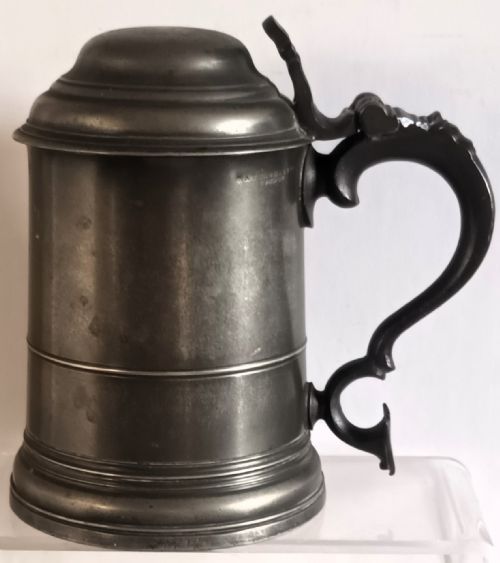
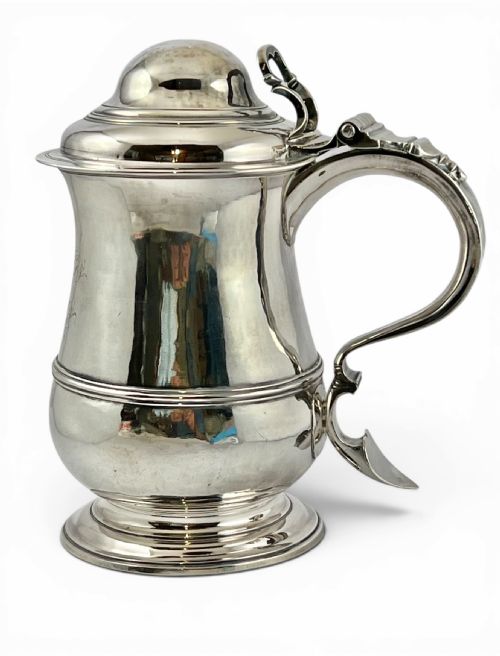
An antique lidded tankard is a drinking vessel designed with a hinged cover, frequently encountered in forms such as heavy pewter measures, gleaming sterling silver jugs and salt-glazed stoneware. These pieces span centuries of social dining and drinking, originating from domestic households, public taverns and institutional collections.
The selection ranges from early Georgian silver specimens bearing crisp hallmarks to robust eighteenth-century pewter flagons and nineteenth-century Old Sheffield Plate jugs. Buyers frequently encounter diverse regional capacities, from modest half-pint spirit measures up to capacious church and tavern flagons.
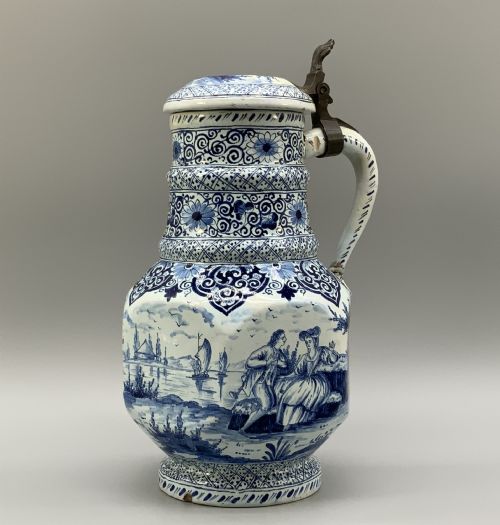
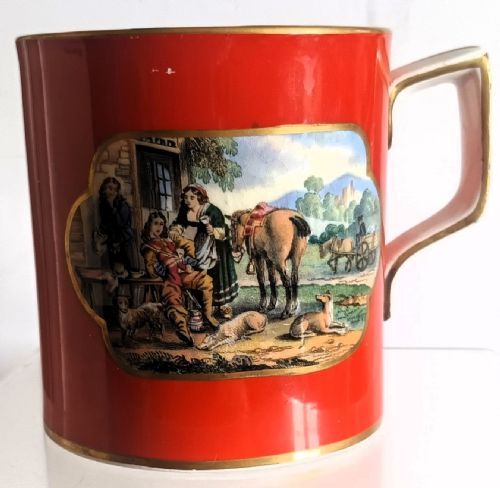
Ceramic variations also populate this category, featuring German salt-glazed stonewares alongside Dutch Delft and Victorian pottery mugs fitted with metal mounts. Each material reflects the domestic customs and tavern standards of its specific period.
Materials and construction methods
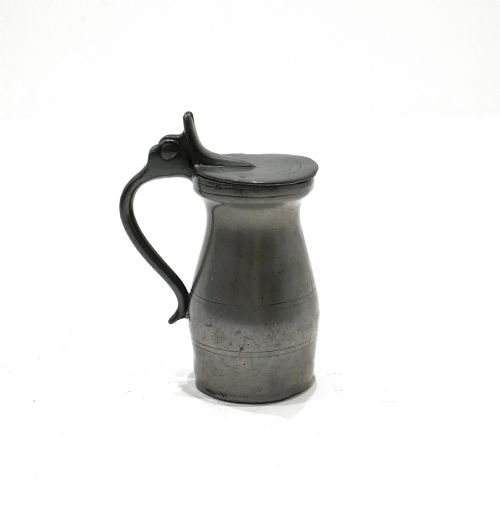
Pewter vessels relied on metal casting and hammering techniques, shaped around moulds to achieve the sturdy walls and flat or dome lids characteristic of early workshops. Makers soldered handles securely to the bodies and attached thumbpieces to hinge mechanisms, ensuring structural longevity for daily use.
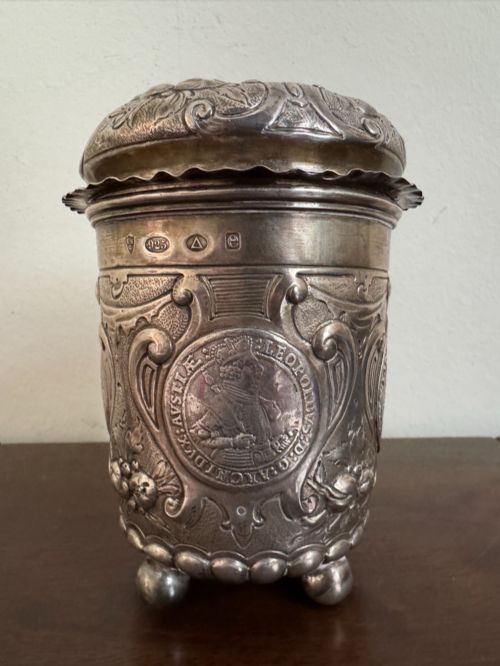
Silver and Old Sheffield Plate pieces utilised sheet metal fabrication, where silversmiths raised bodies from flat bullion or fused copper with a silver layer under intense heat. Master smiths then hammered, chased and engraved decorative motifs onto the exterior surfaces before soldering cast handles and domed lids into place.
Ceramic tankards emerged from kilns utilising salt-glazing, tin-glazing or stoneware firing processes, often decorated with cobalt blue pigments or moulded reliefs. Potters subsequently engaged metalworkers to affix pewter or silver-plated mounts and hinged thumb-lift lids to the finished ceramic bodies.
Some seventeenth-century drinkers requested glass-bottomed tankards so they could keep an eye on duplicitous drinking companions.
Assessing quality in historical vessels
Quality rests upon the crispness of casting and the integrity of the original hinges and thumbpieces, which endure frequent mechanical action. Superior examples retain their original lids with tight alignment, whereas lesser pieces show sloppy solder repairs or replaced hinge pins.
The weight and gauge of the metal dictate the standing of silver and pewter items, where thicker walls prevent distortion and maintain structural balance. Master silversmiths and notable pewterers applied clear touchmarks or legible hallmarks that verify provenance and workshop standards.
Surface preservation separates standard items from exceptional survivals, particularly in plated wares where base copper telegraphs through worn silver layers. Crisp chasing, sharp touchmarks and unblemished ceramic bodies elevate the desirability of any historical drinking vessel.
Watts and Harton·John Payne·John Heaney·Robert Iles·Burgum and Catcott·Archibald Knox for Liberty·Allen Bright·Thomas Whipham·Elkington
The Antique Lidded Tankard Glossary
- Flagon
- A large vessel utilised for holding liquids, often featuring a handle, spout and hinged lid. These pieces frequently served ecclesiastical or large-scale domestic functions.
- Thumbpiece
- The small lever projecting from the rear of a tankard handle that allows the user to open the hinged lid with a single thumb. This functional element helps date the piece by its changing silhouette.
- Old Sheffield Plate
- A composite material formed by fusing a thin sheet of silver to a thicker copper core. Invented in the eighteenth century, it predates modern electroplating.
- Tappit Hen
- A traditional Scottish pewter measure featuring a distinctive knob on the lid and a tapered body. These capacious flagons held specific historic liquid volumes.
- Touchmark
- The stamp or hallmark struck into pewter or silver by the maker or guild to guarantee alloy standards and workshop origin. These marks provide crucial clues for dating and attribution.
- Westerwald
- A German region renowned for producing salt-glazed stoneware ceramics decorated with cobalt blue incisions. Tankards from this area often display mottled grey surfaces and moulded relief panels.
Antique Lidded Tankard: Frequently Asked Questions
What is the difference between a tankard and a flagon?
Tankards are typically single-serving drinking vessels fitted with a handle and a hinged lid for daily use at table or tavern. Flagons are generally larger capacity containers historically used to transport or pour liquids into smaller drinking vessels.
While both share metal and ceramic construction methods, flagons often feature taller spired profiles or ecclesiastical associations. Tankards remain proportioned specifically for hand-held drinking.
How do I care for antique pewter tankards?
Pewter requires gentle cleaning with warm soapy water and a soft cloth to preserve the natural grey patina accumulated over centuries. Abrasive polishes should be avoided because they strip away historical surface texture and soften touchmarks.
Keeping the metal dry prevents corrosion, and storing the vessel in a stable environment avoids thermal shock to soldered joints.
What does a glass bottom signify on a tankard?
Glass bottoms appeared on silver-plated and metal tankards during later periods to allow the drinker to monitor their surroundings while imbibing. Popular folklore suggests this design prevented press-gangs from slipping coins into an ale to entrap unwary recruits.
Structurally, these glass inserts are held securely within metal collars using specialised sealants or bezels.
How can I identify the age of a pewter tankard?
Dating relies heavily on the lid style, handle shape, capacity marks and the touchmarks stamped into the metal by the maker. Flat lids generally point towards seventeenth and early eighteenth-century manufacture, while dome lids became prevalent later in the Georgian era.
Official capacity stamps and touchmarks can be cross-referenced against historical pewterer records to narrow down the decade of production.