



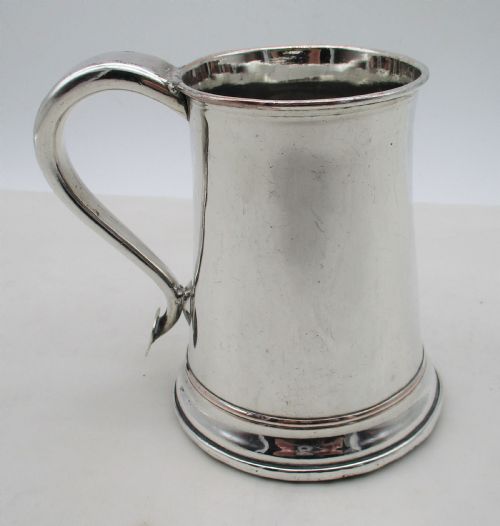

Sheffield Plate Mug
A sheffield plate mug brings genuine Georgian weight and warmth to a desk or sideboard.
What these pieces are
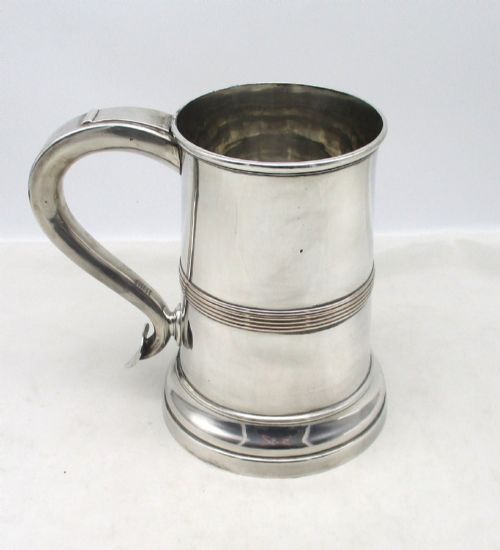
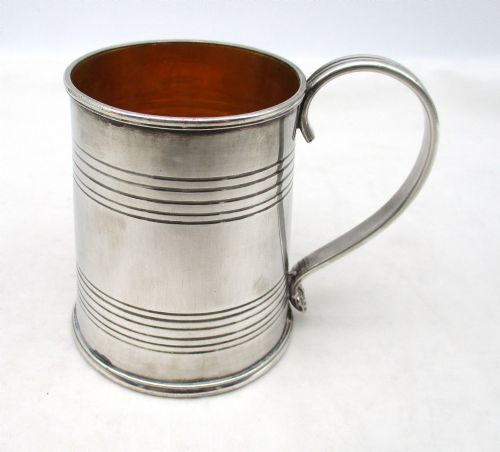
A sheffield plate mug represents a clever fusion of metals that mimics solid silver without the hefty cost. These drinking vessels appear as robust tankards and mugs, often bearing the substantial form typical of Georgian barware.
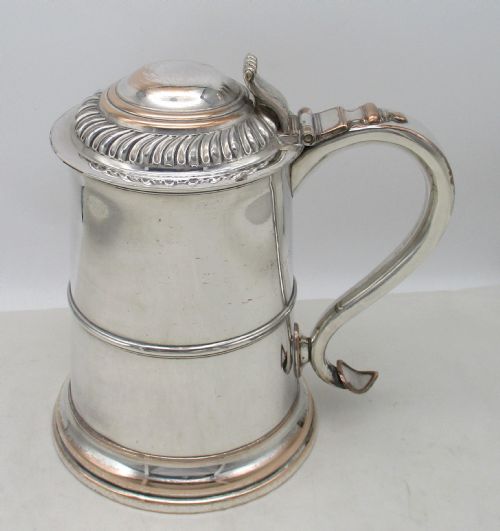
Most examples found here hail from the eighteenth century and the early nineteenth century. Makers fashioned these tankards in pint and quart sizes, sometimes adding secure lids to keep contents covered.
The objects combine domestic utility with display presence, serving as functional vessels that reflect early manufacturing ingenuity. Each piece carries the distinct character of the Georgian era through traditional proportions and sturdy handles.
How they were made
Silversmiths fused a thin sheet of silver to a thick copper core through intense heat and pressure. This molten sandwich was then rolled into workable sheets before being shaped into cylindrical bodies and soldered at the seams.
Craftsmen applied solid silver wire around the rims and edges to hide the exposed copper lines. Handles were cast separately and attached firmly to the main body, ensuring the vessel could handle daily lifting.
Retail Price Guide 2026
Typical UK retail prices for sheffield plate mug, calculated from the Sellingantiques database of over a million retail prices indexed since 2003. This retail price guide relies exclusively on Sellingantiques data; no external sources or auction records are used, so the figures do not describe the wider market.
What varies in quality
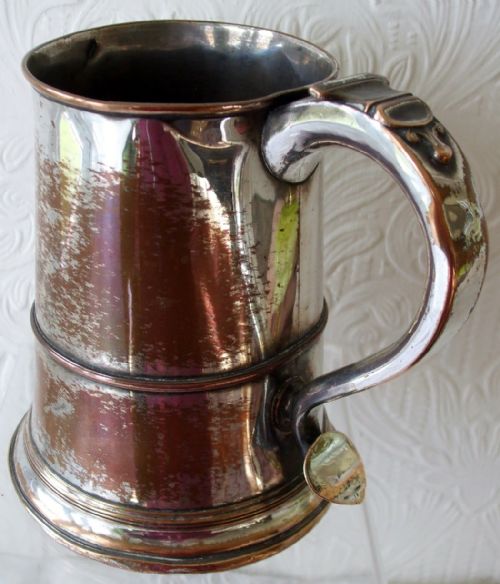
The thickness of the original silver layer dictates how well a piece survives decades of polishing. Finer examples retain their silver cladding intact, whereas heavier wear reveals the ruddy copper tone underneath.
Proportion and decorative restraint separate standard production from superior work. Better pieces display crisp handle attachments, well-balanced bases, and clean soldered joins that remain invisible to the casual eye.
The Sheffield Plate Mug Glossary
- Old Sheffield plate
- A composite material made by fusing a sheet of silver to a thicker copper base. This technique preceded modern electroplating.
- Tankard
- A tall, cylindrical drinking vessel, typically featuring a single handle and sometimes a hinged lid. These forms were standard for ale and beer.
- Quart
- A large liquid measure used to size substantial drinking vessels. Quart tankards hold twice the volume of a standard pint.
- Georgian
- The stylistic period spanning the reigns of the four King Georges, defined by classic proportions and sturdy construction.
Frequently Asked Questions
Can I drink from these tankards?
These vessels were originally designed for holding ale and beer during the Georgian period. Many owners still use them for special toasts.
Ensure the interior is clean and avoid leaving acidic liquids inside for extended periods to protect the metal.
How do I spot exposed copper?
Look closely at high-friction areas like rims, handles, and bases where polishing causes the most wear. A faint reddish hue indicates where the underlying copper shows through the silver.
Minor bleed-through is common on genuine older pieces and simply reflects their age and history of use.
What is the difference between a mug and a tankard?
The terms are often used interchangeably in historical listings, but a tankard traditionally includes a sturdy handle and sometimes a fitted lid. Mugs generally refer to open vessels without lids.
Both forms served similar drinking functions in domestic and tavern settings during the eighteenth century.