



Georgian Silver Drinkware
Georgian silver drinkware brings substantial eighteenth-century heft to the table, offering sturdy tankards, mugs, and goblets crafted for serious daily use.
Georgian Silver Drinkware
When you search for georgian silver drinkware, you enter a domain defined by solid metal vessels and durable fused plate items meant for hearty toasts. These pieces span the eighteenth century and the early years of the nineteenth century, reflecting robust domestic habits.
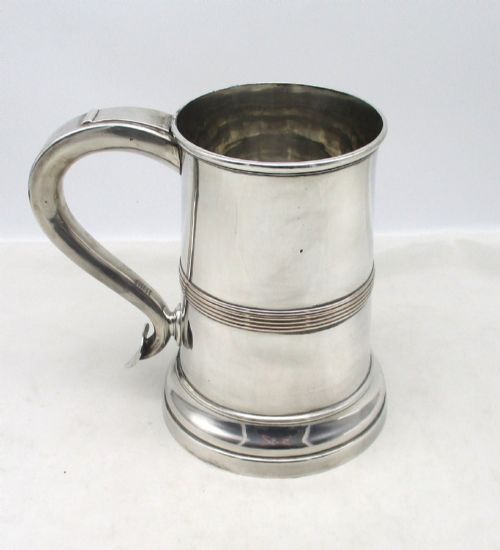
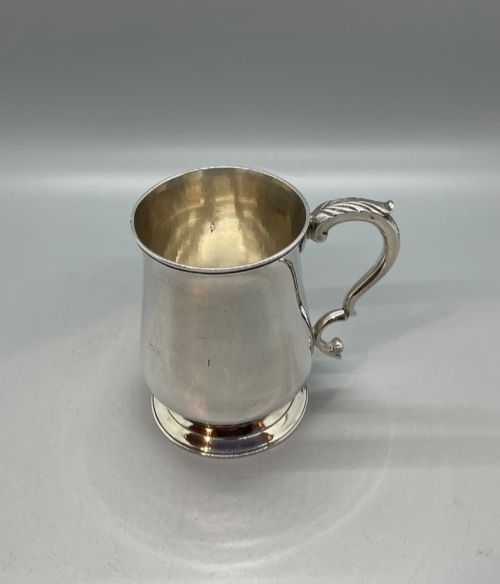
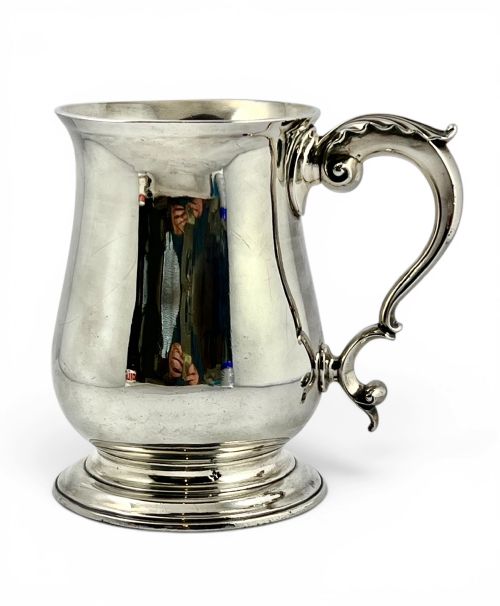
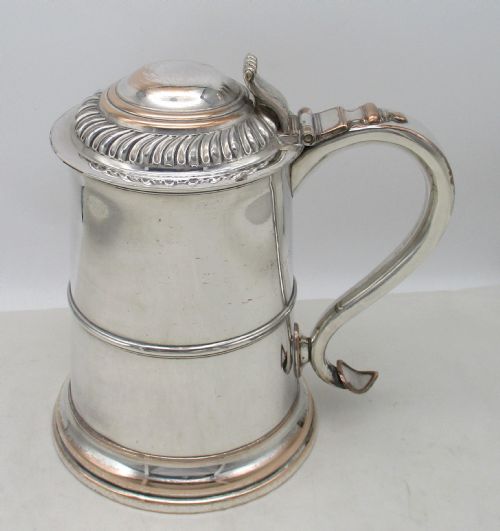
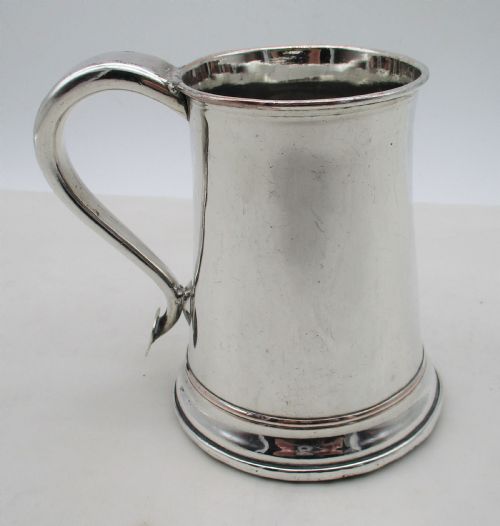
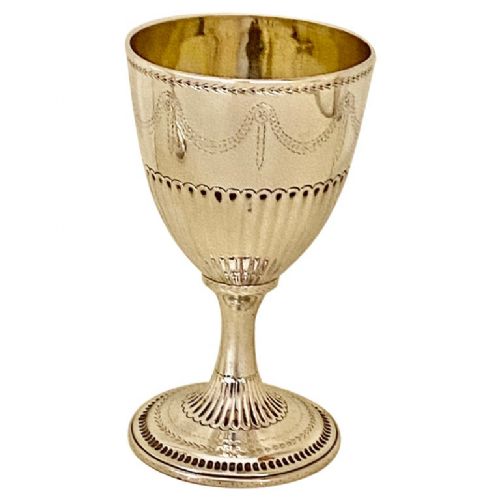
The most common forms on this page are tankards and mugs, appearing in solid sterling silver alongside Old Sheffield Plate. Makers shaped these drinking vessels in sizes ranging from small christening mugs to large quart tankards, occasionally adding goblets and water jugs to the mix.
Origins trace directly to London and Newcastle workshops, capturing the regional tastes of Georgian Britain. Buyers encounter both plain utility vessels and pieces bearing later chased decoration or heraldic crests.
How they were made
Makers fashioned solid items from sterling silver, raising or hammering sheet metal into sturdy walls and applying cast handles for a secure grip. Silversmiths worked within strict guild standards, stamping their output with town marks, date letters, and maker initials.
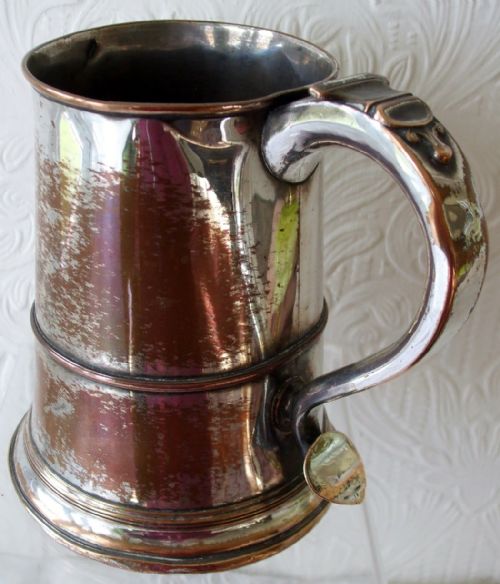
Alternative pieces utilised Old Sheffield Plate, fusing a thin layer of silver onto a thicker copper core to offer the rich appearance of solid metal at a lower cost. Craftsmen then shaped these composite sheets into large tankards, often hiding the exposed copper edges with silver wire mounts.
Thirsty Georgians preferred their ale served in vessels heavy enough to double as blunt instruments during a tavern dispute.
What varies in quality
The distinction between ordinary and exceptional georgian silver drinkware rests on the crispness of the hallmarks and the preservation of the original form. Heavy gauge metal resists dents and maintains the sharp lines of handle attachments better than thinner alternatives.
Plate items show variation in how well the fused silver layer survives over the copper substrate after generations of polishing. Clean solder joints and uncompromised proportions separate everyday serving vessels from pieces holding stronger collector interest.
William Grundy·Richard Morton
The Georgian Silver Drinkware Glossary
- Old Sheffield Plate
- A composite material made by fusing a sheet of silver to a copper ingot and rolling them together. This technique preceded modern electroplating and produced durable vessels throughout the Georgian period.
- Tankard
- A tall, cylindrical drinking vessel with a single handle, frequently fitted with a lid in earlier centuries but appearing here primarily as an open-topped mug.
- Sterling Silver
- An alloy consisting of pure silver and other metals, traditionally copper, standardised to a specific fineness for British plate. Solid items bear assay office marks to verify this composition.
- Quart Tankard
- A large capacity drinking vessel holding a full quart of liquid, designed for communal or heavy consumption at the table.
- Chased
- A method of decorating metal by hammering tools into the surface from the outside to push the material into low relief designs.
Georgian Silver Drinkware: Frequently Asked Questions
How do I clean old silver drinkware?
Wash these vessels gently in warm water using mild soap, avoiding harsh abrasive dips that strip away the historical surface character.
Dry them immediately with a soft cloth to prevent water spots and preserve any remaining original polish on the metal.
Can I still drink from these tankards?
Many solid silver and plated tankards remain structurally sound enough to hold beverages at the table today.
Check the interior for any heavy wear or residue before use, and stick to cold or room temperature drinks to protect the historical materials.
What is Old Sheffield Plate?
Old Sheffield Plate is an early composite material created by melting a thin sheet of silver onto a thick copper block before rolling them into usable sheets.
This technique produced durable vessels that look like solid silver, though careful inspection sometimes reveals a hint of copper along exposed rims.
How do I read the hallmarks?
British hallmarks usually include a maker mark, a lion passant for sterling quality, a town mark like the leopard head for London, and a date letter.
Comparing these stamps against reference tables allows you to pinpoint the exact year and city of manufacture.