
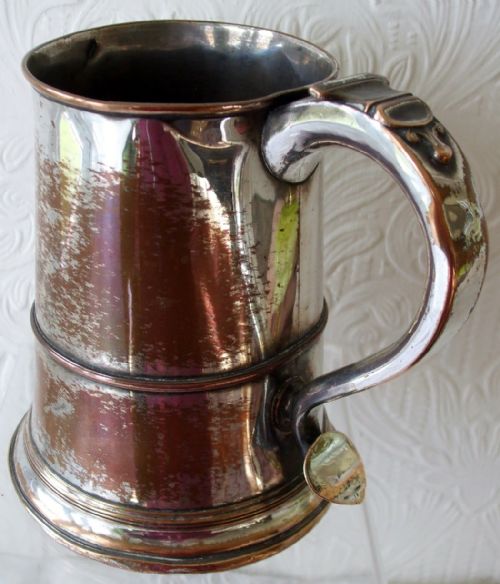

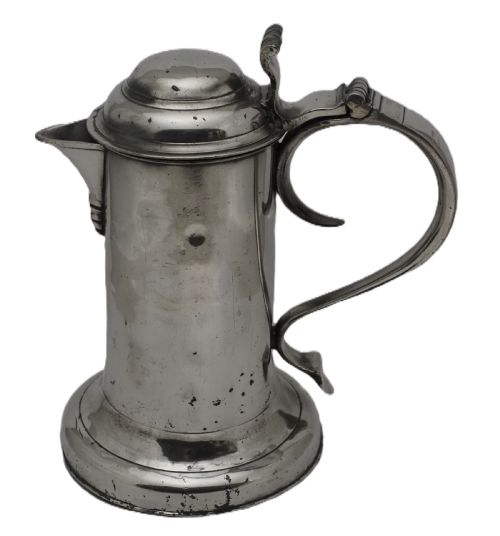


Georgian Metal Tankard
A georgian metal tankard brings solid craft and heft to the table, offering a direct link to historic drinking traditions.
Georgian Metal Tankard
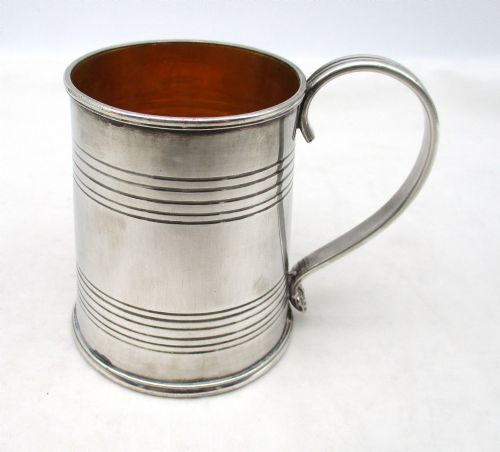
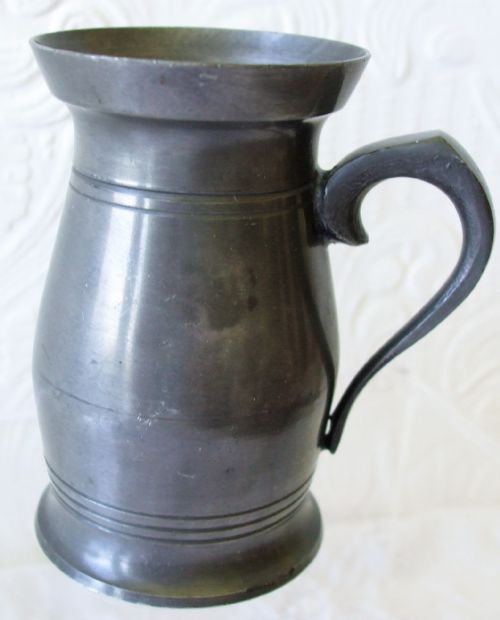
A georgian metal tankard encompasses robust drinking vessels shaped for ale, beer, and spirits across the eighteenth and nineteenth centuries. The selection on this page ranges from compact child's mugs and spirit measures to large quart vessels and church flagons.
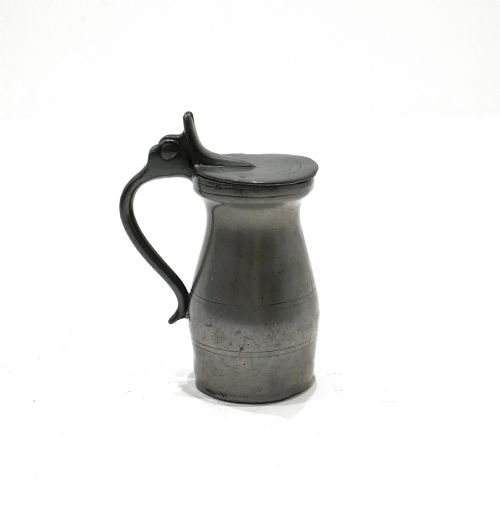
Makers fashioned these drinking vessels in distinct regional styles, including English, Irish, and Scottish forms. Examples span from flat-lidded measures and dome-lid tankards to spouted spire flagons and crested tappit hens.
The material vocabulary of these objects covers pewter, old Sheffield plate, solid silver, copper, and bell metal. Buyers encounter both utilitarian tavern items and finer plated pieces designed for domestic tables.
Craft and Proportion
Quality rests on the weight of the metal and the integrity of the original form. Heavy gauge pewter and substantial old Sheffield plate retain their structural balance and crisp lines through centuries of handling.
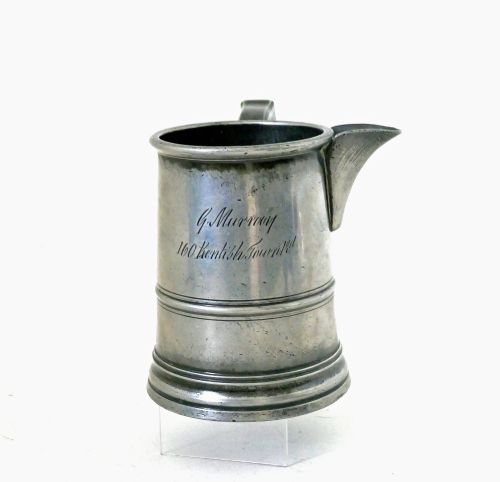
Execution of decorative details, such as engraved maker marks, tavern ownership inscriptions, and cast handle scrolls, separates standard utility items from masterwork pieces.
One tavern jug bears an engraved Kentish Town address, preserving the historic commute of a long-forgotten London drinker.
John Heaney of Dublin·Thomas Phillips I of London·Robert Iles of London·Burgum and Catcott of Bristol·Richard Morton
The Georgian Metal Tankard Glossary
- Old Sheffield Plate
- A composite material made by fusing a thin sheet of silver to a thicker copper base. This technique preceded modern electroplating.
- Tappit Hen
- A traditional Scottish pewter drinking measure featuring a lid with a knob and a bulbous body shape. These containers held specific liquid volumes.
- Spire Flagon
- A tall church or domestic flagon topped with a pointed lid structure. Pewter examples date largely to the eighteenth century.
- Spirit Measure
- A standardised container used for serving precise quantities of alcohol. These small vessels range from gills to half gills.
- Baluster Form
- A curved vessel profile resembling a traditional architectural baluster. The body swells outward near the base and tapers toward the rim.
Georgian Metal Tankard: Frequently Asked Questions
How do I clean an old metal tankard?
Wash pewter and silver plate gently in warm water with mild soap, then dry thoroughly with a soft cloth. Avoid abrasive polishes that remove thin plating layers or historic surface patina.
Store pieces in dry conditions away from extreme temperature shifts to protect the metal surface from chemical reactions and oxidation.
Can I drink from a vintage tankard?
Many historic pewter vessels contain lead alloyed into the metal, which can leach into acidic beverages. Modern testing determines whether a specific piece remains safe for regular beverage consumption.
Old Sheffield plate tankards lined with silver generally present fewer concerns, but collectors often use these items purely for display rather than daily dining.
What is the difference between a tankard and a flagon?
Tankards are drinking vessels equipped with a single handle and often a hinged lid, designed for individual consumption of ale or beer at table. Flagons are larger capacity vessels, frequently associated with church services or communal tavern service.
Church flagons typically feature taller spouts and spire lids, whereas standard tankards maintain a wider, lower profile suited to holding a pint or quart.
How do I identify the date of a metal tankard?
Examine the vessel for maker marks, touchmarks, and town stamps that correspond to known working dates of guilds and individual metalsmiths. Stylistic cues like flat lids, dome lids, and Rococo scroll handles also point to specific decades.
Weights and capacities reflect period measurement standards, helping to separate eighteenth century pieces from nineteenth century reproductions or variations.