
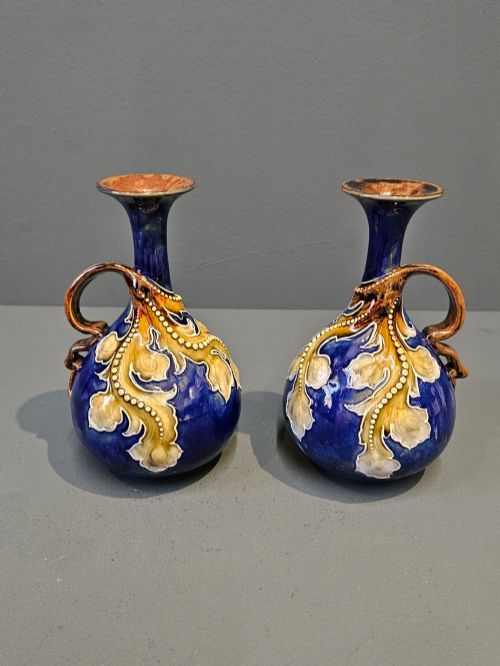
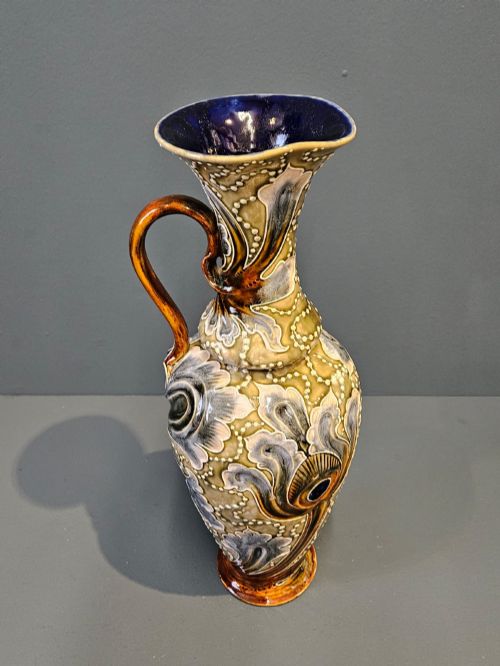


Victorian Doulton Stoneware
These robust victorian doulton stoneware pieces bring tactile nineteenth-century craftsmanship into a modern room through incised decoration and rich salt glaze.
Victorian Doulton Stoneware
Victorian Doulton stoneware encompasses utilitarian and decorative vessels created primarily during the nineteenth century, including vases, jugs, pitchers, and jardinieres. Most examples originate from the Lambeth and Burslem potteries, spanning periods from the 1870s through to the early twentieth century.
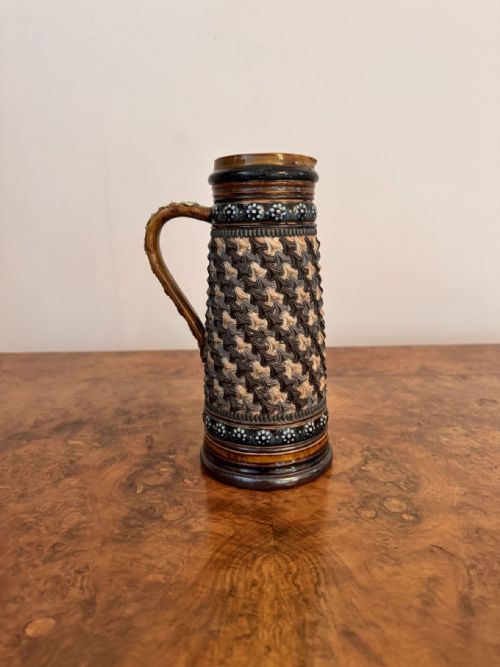
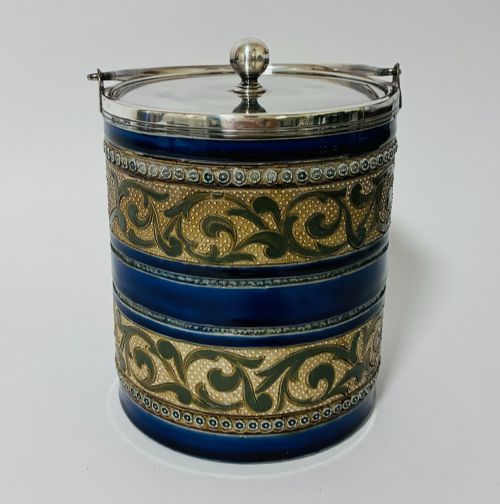
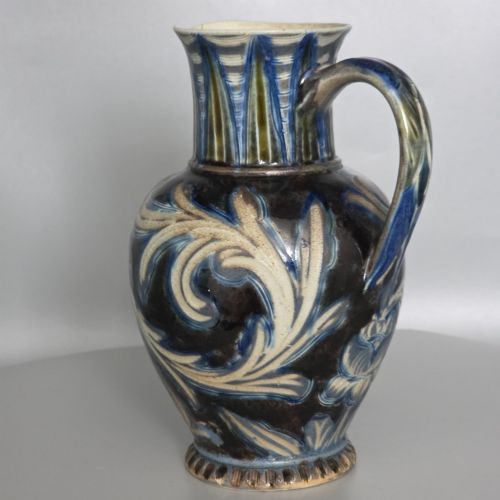
The objects frequently take the form of harvest jugs, ewers, biscuit barrels, and tygs, often finished with silver rims or mountings. Collectors encounter both plain brown glazed whiskey flasks and highly ornate art pottery decorated by notable studio artists.
How They Were Made
Potters shaped durable stoneware and ceramic bodies, frequently applying salt glaze techniques to achieve characteristic textured surfaces. Decoration relied on incised patterns, enamel accents, and specialised finishes like Slaters patent texturing.
Many high-grade vessels incorporated applied silver plate, gold leaf, or hallmarked silver mounts around rims and handles. Individual studio artists then painted and signed unique decorative motifs directly onto the clay body.
Listings feature stonewares, ceramics, and salt glazes across nineteenth and early twentieth-century periods.
What Varies in Quality
Distinctions in quality rest upon the crispness of the incised ornament and the identity of the decorator, with named artists commanding greater attention. The presence of precious metal mountings, such as silver rims and hinged lids, alters the standing of a vessel.
The complexity of the aesthetic style also separates standard production items from ambitious studio pieces. Rich, balanced salt glazing and well-preserved enamel work elevate the visual presence of individual vases and jugs.
Doulton Lambeth·Royal Doulton·Doulton Burslem
The Victorian Doulton Stoneware Glossary
- Stoneware
- A robust ceramic pottery fired at high temperatures until vitrified. This dense material resists liquids naturally without requiring interior glazing.
- Salt Glaze
- A glossy, textured finish created by throwing common salt into the kiln during high-temperature firing. It produces a distinctive orange-peel surface texture.
- Tyg
- A large drinking vessel typically featuring multiple handles designed for communal passing. These forms frequently appear in nineteenth-century salt-glazed ceramics.
- Slaters Patent
- A decorative technique utilising lace or fabrics pressed into damp clay to create textured background patterns. This method gained popularity during the late Victorian aesthetic movement.
- Kingsware
- A dark brown glazed stoneware developed by Royal Doulton featuring incised moulded figures. These pieces often depict historical or sporting scenes.
Victorian Doulton Stoneware: Frequently Asked Questions
How do I date these pieces?
Dating relies on impressed factory stamps, registration numbers, and stylistic shifts between nineteenth-century periods. Earlier Lambeth marks differ significantly from later twentieth-century Royal Doulton iterations.
Studio artists frequently initialled their work, allowing collectors to cross-reference specific operational decades. Silver rims often carry hallmarks providing precise assay years.
Where were they made?
The primary production occurred at the Doulton Lambeth pottery in south London, alongside wares from the Burslem works in Stoke-on-Trent. Lambeth specialised in artistic salt-glazed stoneware.
Burslem focused more on fine earthenware and decorative porcelain lines. Both locations employed skilled designers who shaped the British art pottery movement.
Can I use them daily?
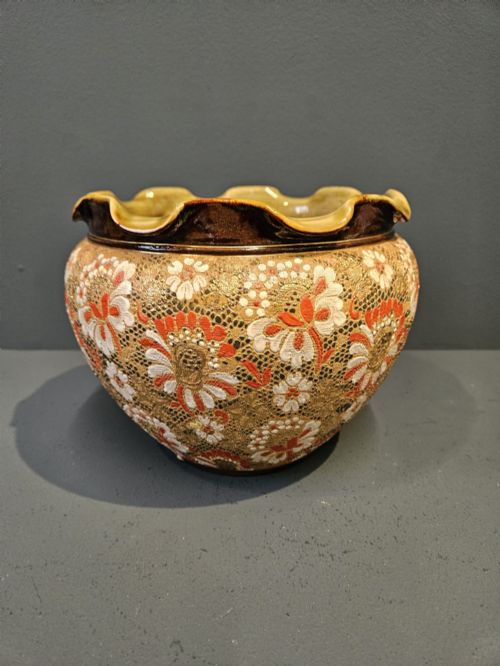
These robust stoneware vessels remain structurally suited for everyday display and functional use. Jardinieres hold plants securely, while jugs and jars function practically.
Care should be taken with silver-mounted or delicate enamel items to preserve historic metalwork and surface decoration. Hand washing remains essential for pieces with historic silver rims.
What is Slaters patent?
Slaters patent refers to a distinctive texturing process involving real lace pressed into wet clay. This created intricate geometric backgrounds for hand-painted floral motifs.
Artisans filled the depressed patterns with gold or coloured enamels to enhance contrast. The technique defines the aesthetic style of many late Victorian decorative items.