
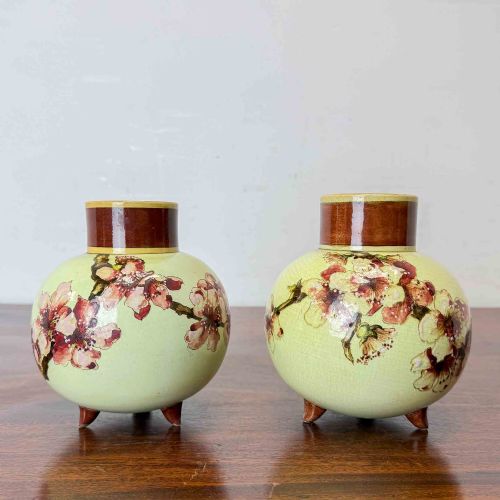
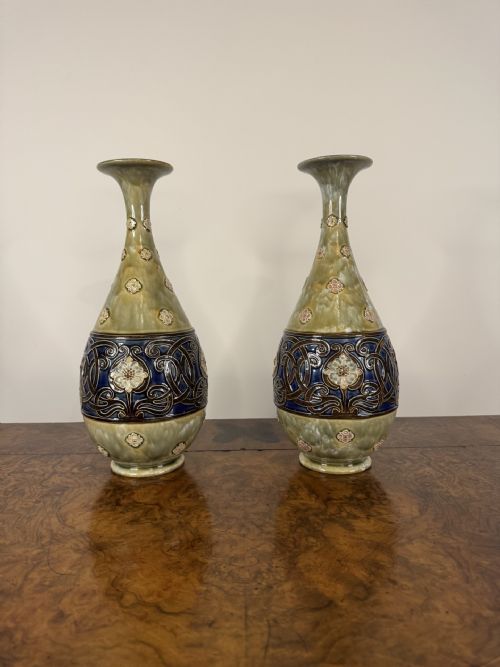


Doulton Lambeth Vase
A doulton lambeth vase brings Victorian art pottery into a room through salt-glazed stoneware and hand-painted detail.
Understanding Doulton Lambeth Vases
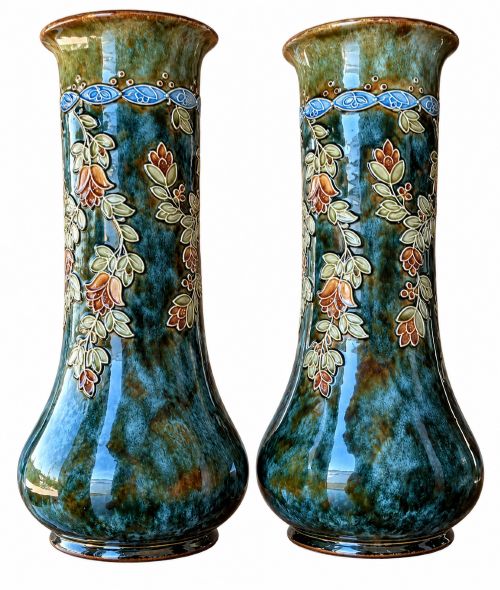
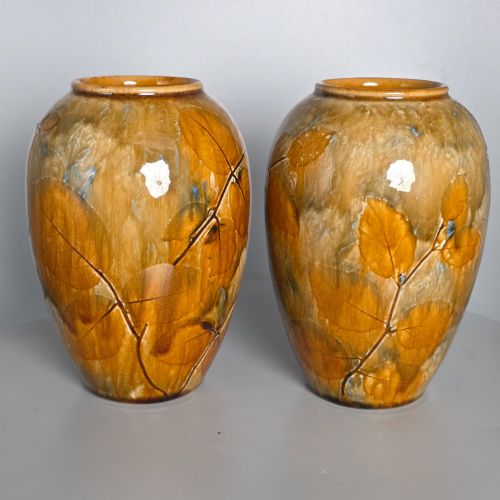
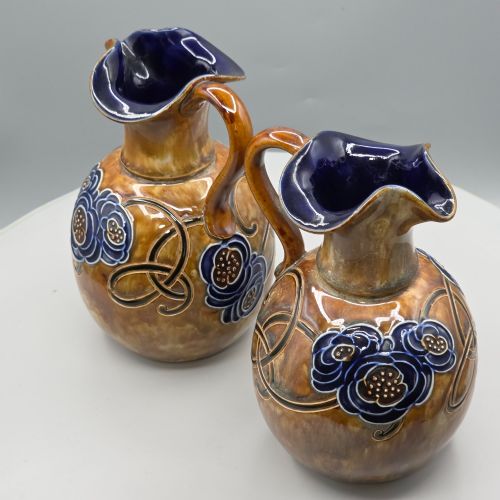
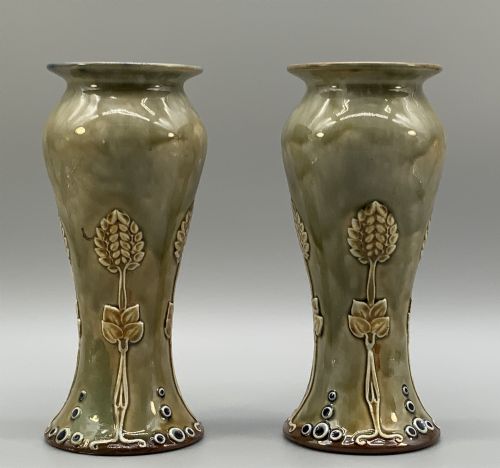
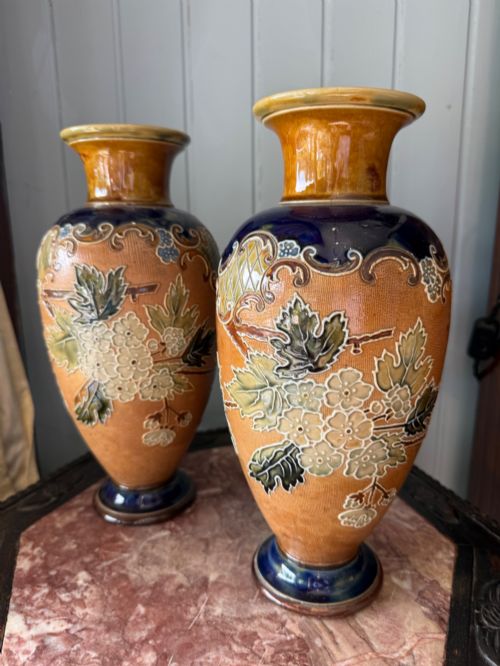
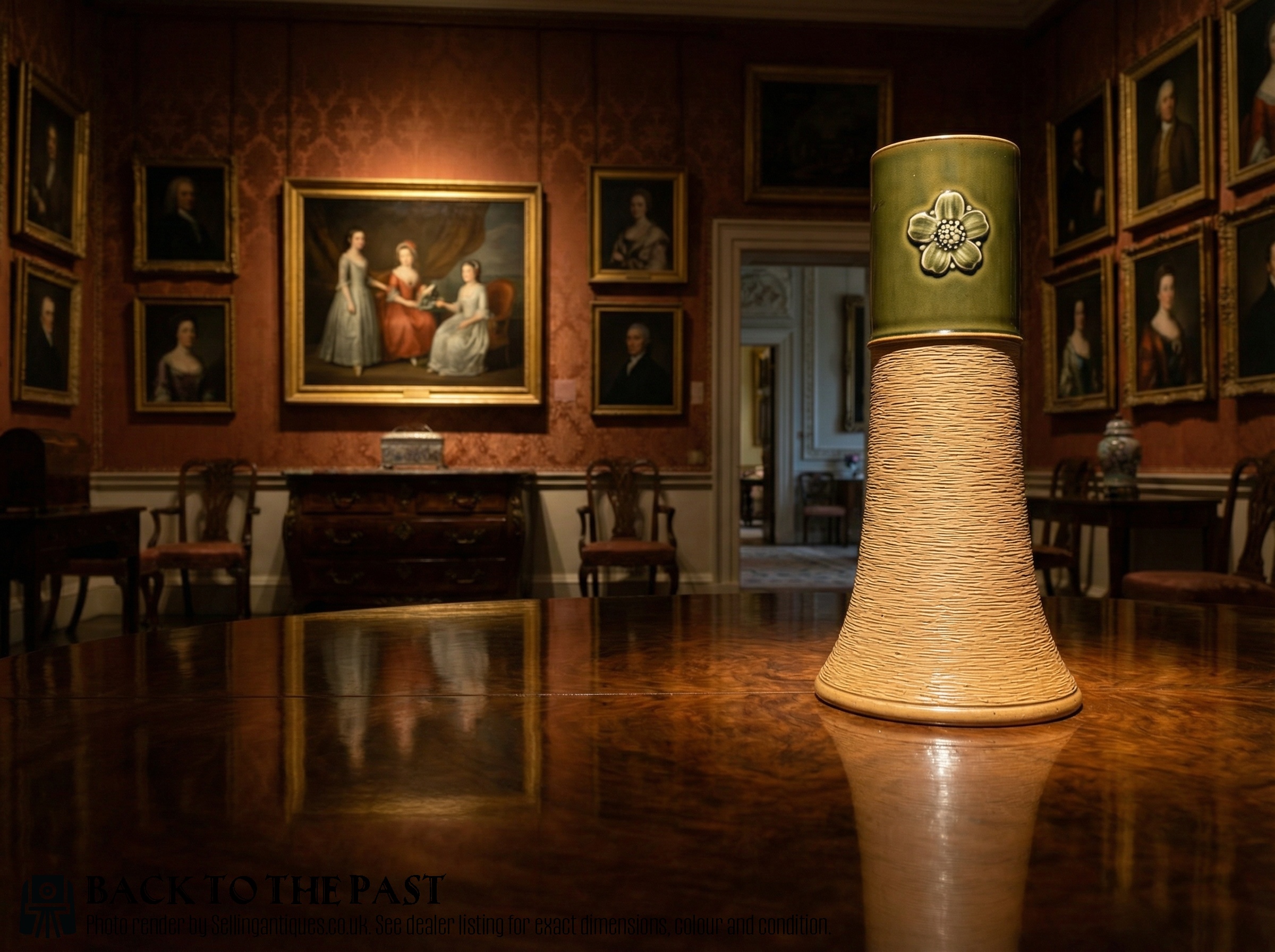
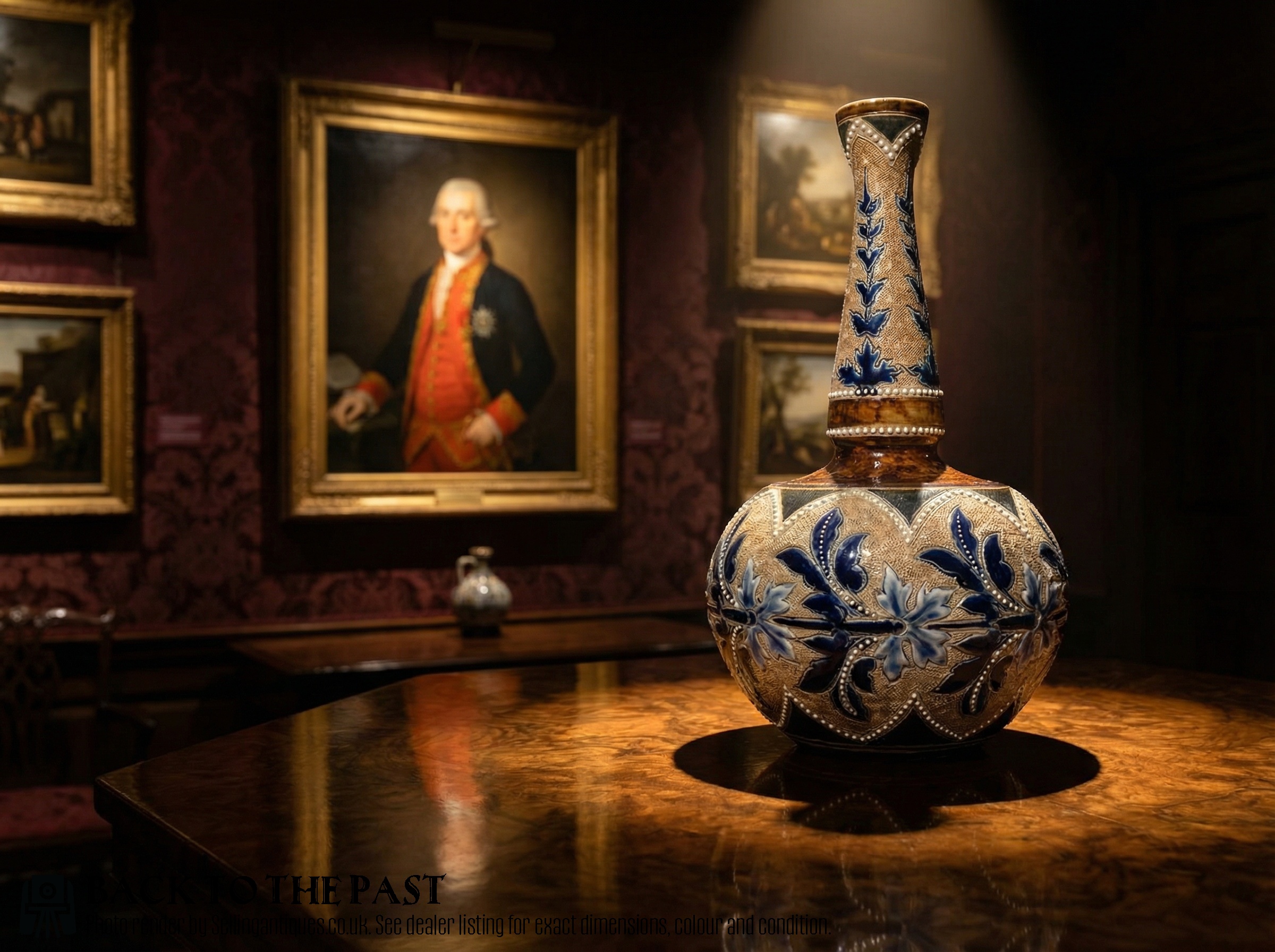
When you search for a doulton lambeth vase, you encounter salt-glazed stoneware and ceramic vessels produced from the Victorian era into the twentieth century. These pieces display distinct influences from the Arts and Crafts movement alongside traditional Victorian decorative arts.
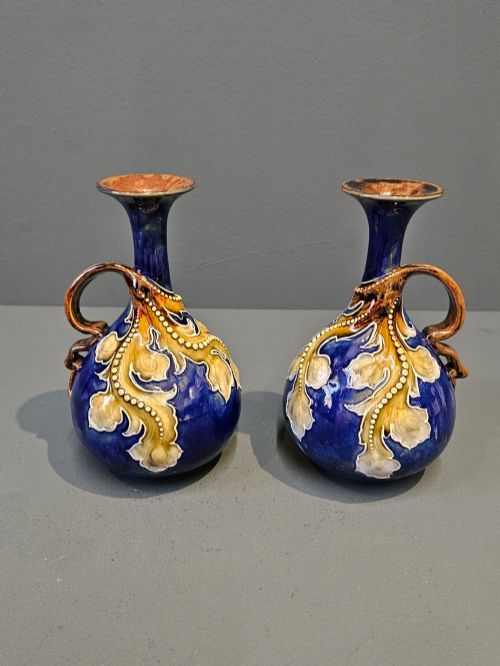
The most common examples on this page are stoneware vases dating from around eighteen-eighty, often featuring characteristic textured bodies and applied or incised ornament. Collectors also find occasional later pieces from nineteen-twenty bearing the Royal Doulton marque.
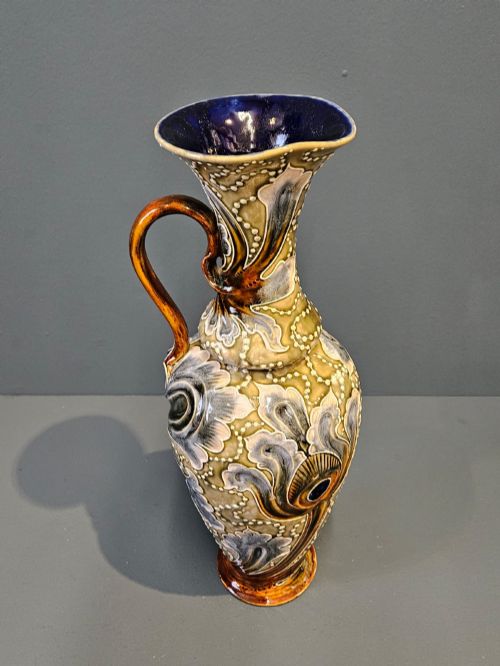
Forms range from standard bottle shapes and onion vases to large display pieces decorated by named studio artists. Each piece reflects the output of the Lambeth pottery works in London.
Materials and Manufacture
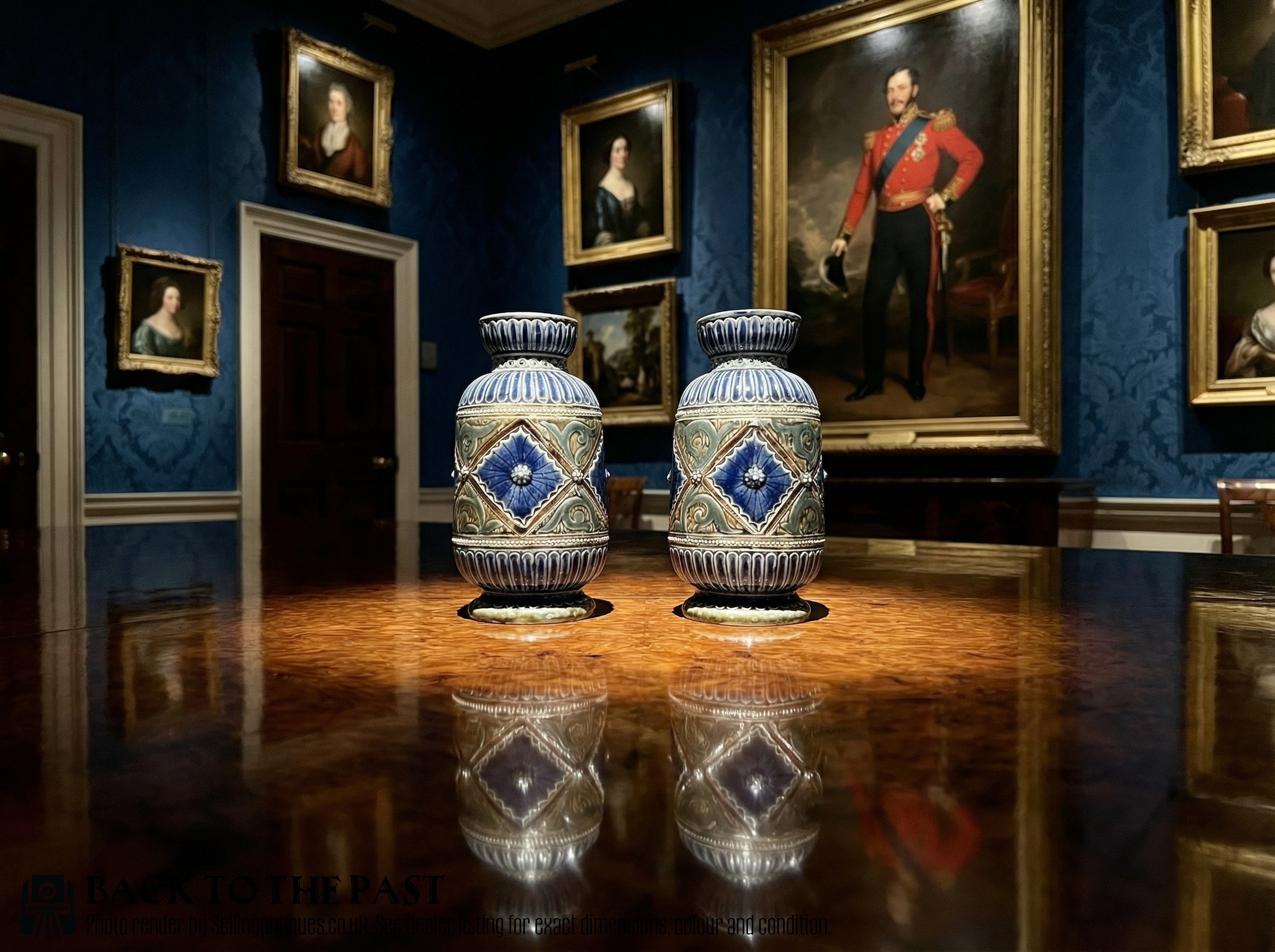
Potters shaped these vessels from heavy stoneware and ceramic bodies, utilising salt glazing methods where salt thrown into the kiln produced a pitted, orange-peel texture. Enamel and coloured glazes were then applied to highlight specific areas of the design.
Makers employed techniques such as incising, pate-sur-pate, and applied paste to build up intricate relief patterns across the ceramic surface. Many surviving examples show the direct touch of individual studio artists through hand-painted floral or geometric motifs.
Hannah Barlow frequently sketched farmyard animals and rampaging goats directly onto damp clay using a steel point, capturing lively expressions before the kiln fire set them in stone.
Markers of Quality
The distinction between standard production items and top-tier pieces rests heavily upon the identity of the decorator and the complexity of the surface work. Vases featuring hand-carved sgraffito or intricate pate-sur-pate work by notable studio artists sit firmly at the higher end of the scale.
Form and scale also dictate worth, with large bottle neck shapes, pairs, and specialised patented techniques like Slaters Patent demonstrating superior ambition. Crispness in the salt glaze and depth of the enamelling separate finer examples from simpler factory pieces.
Emily Edwards·Emily Stormer·Alberta L Green·Eliza Simmance·Frank Butler·Ethel Beard·Hannah Barlow·Florence E Barlow·J P Hewitt·Florence Bowditch·Annie Horton·George Tinworth
The Doulton Lambeth Vase Glossary
- Stoneware
- A robust, vitrified ceramic fired at high temperatures until impervious to liquid. It forms the primary body for the majority of these vessels.
- Salt glaze
- A glossy, slightly textured finish achieved by throwing common salt into the kiln during firing. This chemical reaction creates the characteristic orange-peel surface texture.
- Slaters Patent
- A decorative technique involving lace or fabrics pressed into the damp clay before firing. It created textured backgrounds for hand-painted floral highlights.
- Faience
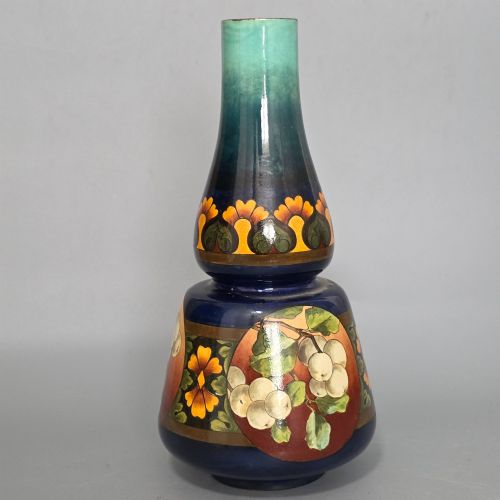
- Earthenware decorated with opaque coloured glazes before a final firing. These pieces often feature painterly floral scenes rather than traditional salt-glazed relief work.
- Pate-sur-pate
- An exacting method of building up layers of liquid clay to form low-relief designs. It requires great skill from the artist to achieve tonal depth.
Frequently Asked Questions
How do I date a Doulton Lambeth piece?
Examine the impressed factory stamps and monograms found on the base of the ceramic body. These marks changed across the decades and often include specific year ciphers.
Style and glaze characteristics also help narrow the period, moving from Victorian salt-glazed stoneware towards later twentieth-century bodies.
What is the difference between stoneware and faience?
Stoneware uses a high-fired, vitrified clay body finished with salt glaze for a durable, textured surface. It defines the core output of the Lambeth pottery.
Faience employs an earthenware body covered in opaque coloured glazes, resulting in a smooth canvas suited for detailed hand-painted floral decoration.
How should I display these vases at home?
Place them on sturdy wooden surfaces where natural light can catch the salt glaze and textured relief details. Their substantial weight makes them secure for tabletop display.
Keep them away from direct, harsh sunlight to protect any sensitive enamels, and use simple interiors to let the ceramic form stand out.
Who were the Barlow sisters?
Hannah and Florence Barlow were pioneering artists who worked extensively for the pottery in the late nineteenth century. Hannah became famous for her incised animal friezes.
Florence specialised in painting birds and foliage, frequently utilising pate-sur-pate techniques to create depth within her feathered subjects.