
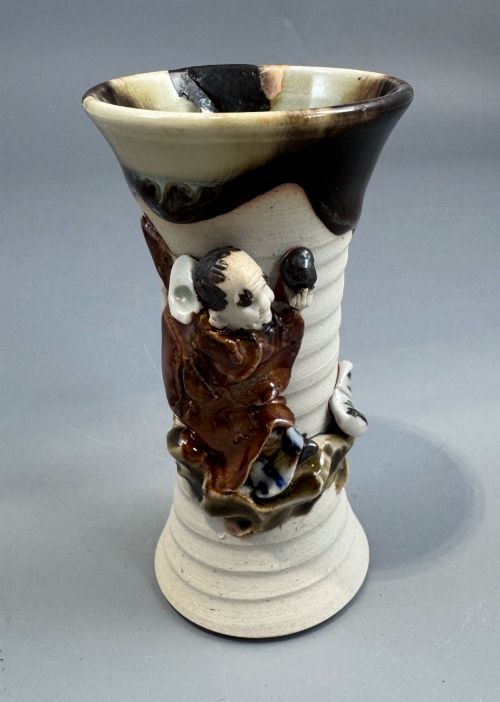


Brown Glazed Pottery Vase
A brown glazed pottery vase brings earthy depth and tactile warmth to an interior, drawing the eye through rich surface glazes and sculptural forms.
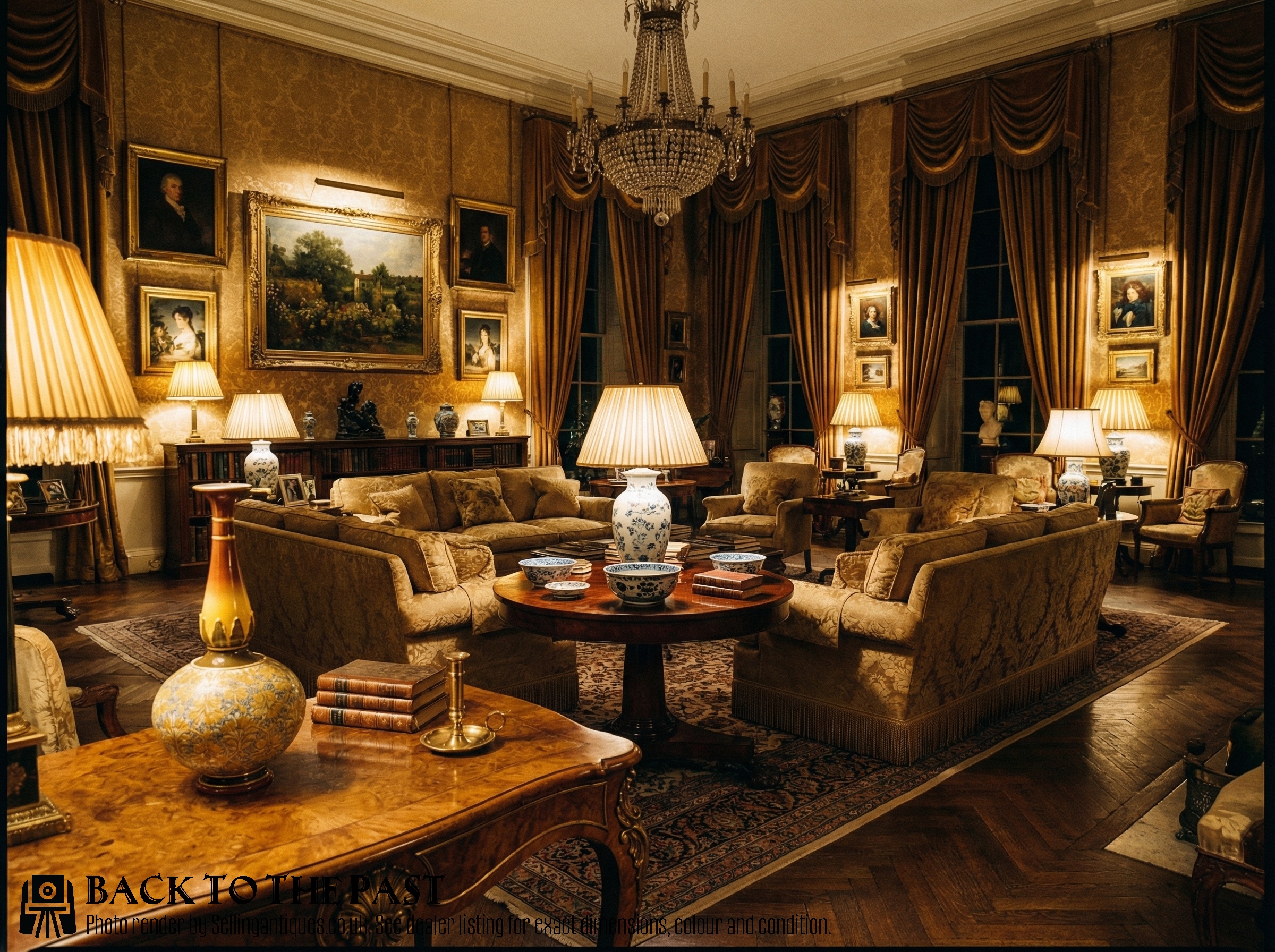
Brown Glazed Pottery Vase
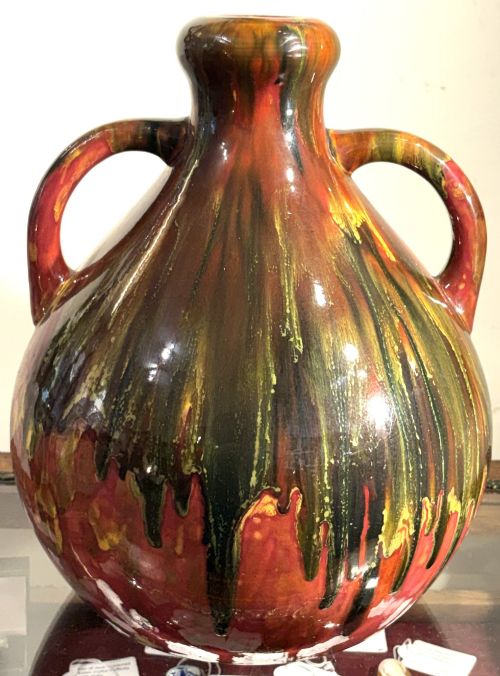
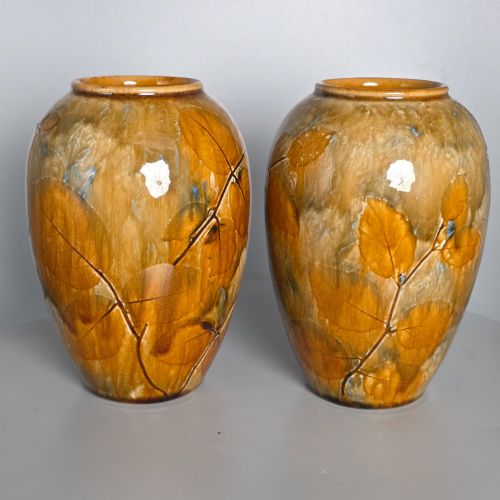
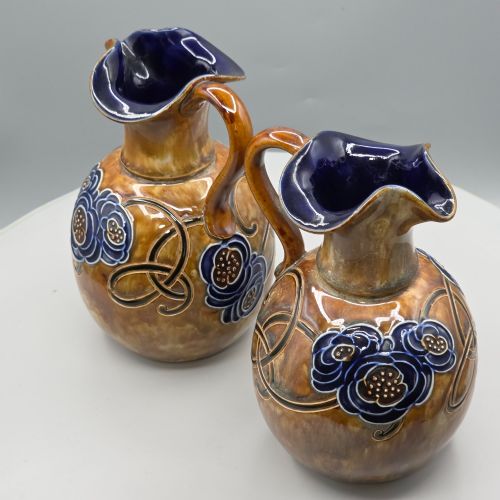
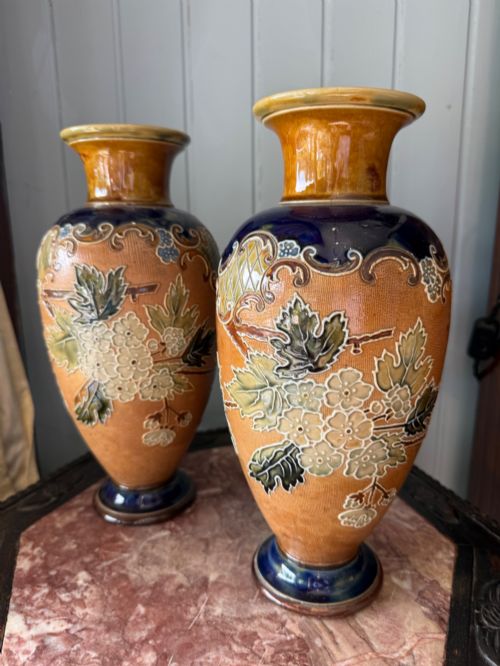
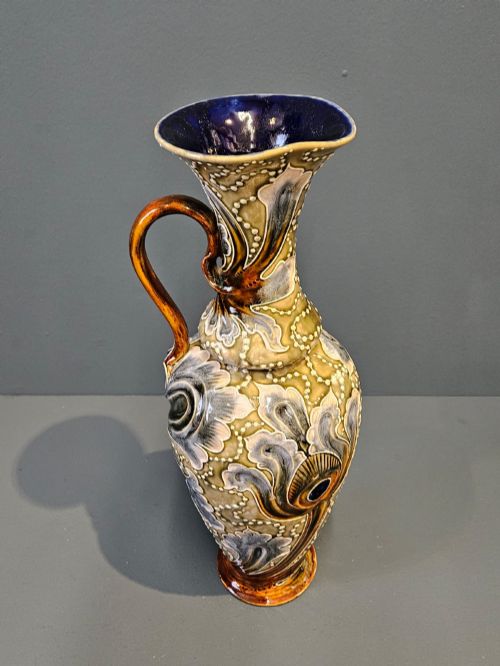
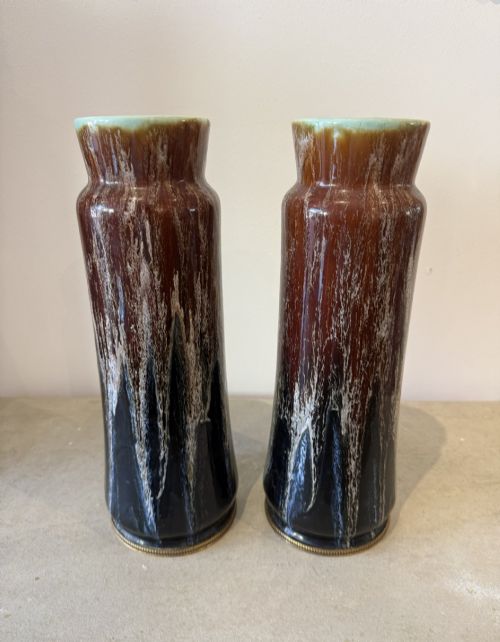
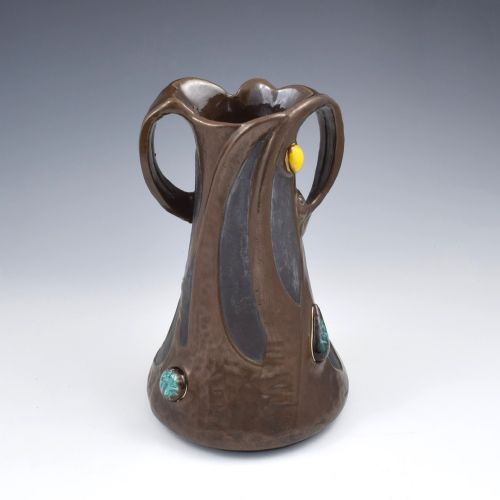
When you search for a brown glazed pottery vase, you encounter vessels shaped from clay during the Victorian, Edwardian, and early twentieth-century periods. These objects span utilitarian origins and decorative studio pottery, taking the form of bulbous jugs, tall spill vases, and twin-handled vessels.
The selection on this page demonstrates the diverse output of nineteenth-century and early twentieth-century kilns, including notable British art pottery and continental examples. Makers from Staffordshire, London, and beyond experimented with rich earthenware and stoneware bodies to achieve varied silhouettes.
Victorian and Arts and Crafts examples often display robust handles and incised decoration, whilst later pieces embrace flowing Art Nouveau contours. Buyers find everything from intimate cabinet pieces to substantial floor-standing umbrella stands finished in deep, glossy or mottled finishes.
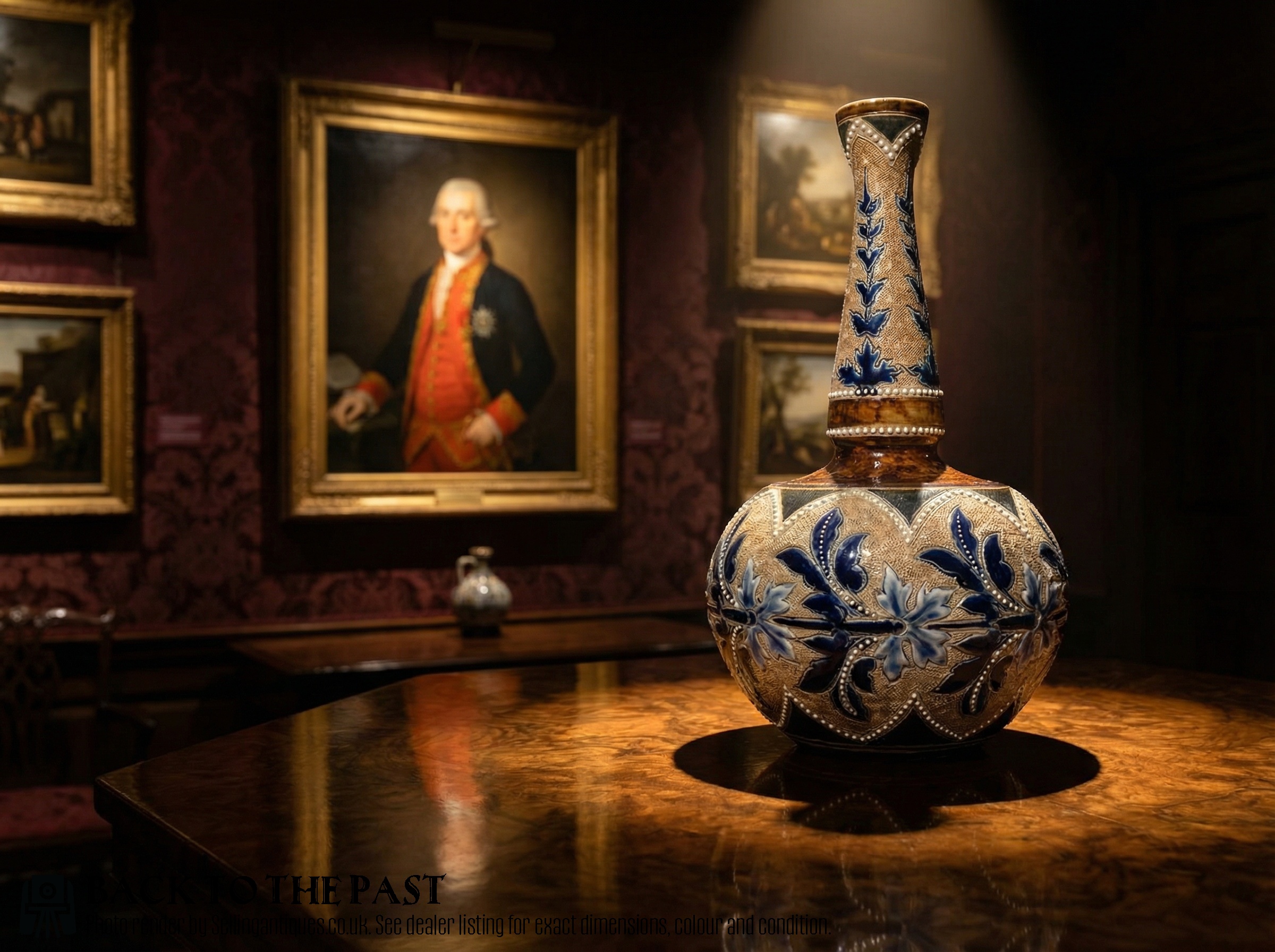
How they were made
Potters shaped these vessels using earthenware and stoneware bodies, often throwing them on a wheel or pressing them into moulds. The raw clay was then dried and fired before artisans applied liquid slip or metallic glazes to the surface.
Makers utilised specialised firing techniques in kilns to produce the characteristic lustrous brown surfaces, sometimes incorporating copper effects or jewelled cabochons. Applied figures, incised patterns, and slip-trailed foliage were frequently added to the damp clay before the final glaze firing.
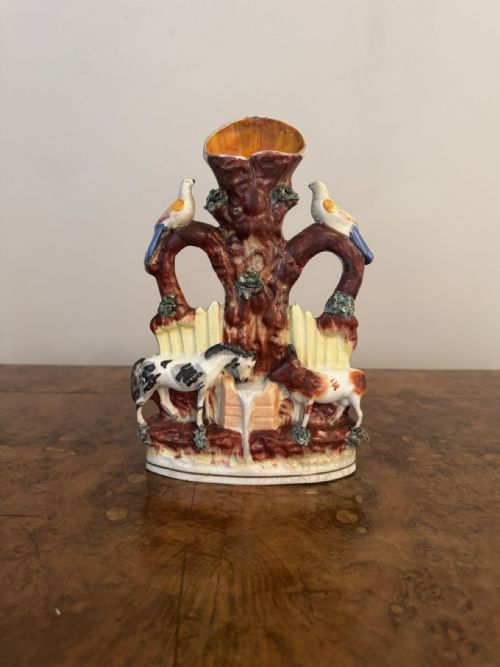
Several pieces incorporate whimsical applied figures and jewelled cabochons designed to catch the firelight in a Victorian parlour.
What varies in quality
Quality rests in the harmony between the thrown body and the depth of the glaze, where successful chemical reactions in the kiln create varied tonalities across the surface. Pieces finished with hand-painted slip or applied details show the distinct touch of individual studio artists rather than mechanical production.
The crispness of incised decoration and the balance of applied handles distinguish finer studio output from standard commercial wares. Heavier stoneware and well-balanced earthenware indicate careful control during both the forming and firing stages.
Royal Doulton·Doulton Lambeth·Burmantofts·Boch Freres·Linthorpe Pottery
The Brown Glazed Pottery Vase Glossary
- Stoneware
- A robust pottery fired at high temperatures until the clay vitrifies and becomes impermeable to water. It provides a durable body that holds sharp surface detail.
- Earthenware
- A porous pottery fired at lower temperatures, typically finished with an opaque or transparent glaze to seal the body. It allows for vibrant surface decoration.
- Faience
- Tin-glazed earthenware popular in nineteenth-century art pottery production. It provides a smooth white ground suitable for painting rich coloured glazes.
- Ewer
- A large jug with a wide spout and a looped handle, originally designed for pouring water. In decorative pottery, it serves as an ornamental display piece.
- Slip
- Liquid clay suspended in water, used for coating pottery bodies or trailing decorative lines across the surface. It adds raised texture beneath the glaze.
Brown Glazed Pottery Vase: Frequently Asked Questions
How do I date a brown glazed pottery vase?
Dating relies on examining the factory marks stamped or incised on the unglazed base, alongside stylistic clues such as Arts and Crafts lettering or Art Nouveau plant motifs.
Period manufacturing techniques and the specific formulation of the glaze also help narrow the decade of production.
Can I use these vases for fresh flowers?
Many stoneware and glazed earthenware pieces hold water safely, particularly those produced with dense vitrified bodies.
However, fragile nineteenth-century art pottery is best kept dry to protect historic interior glazes and porous earthenware bodies from moisture damage.
What is the difference between earthenware and stoneware?
Earthenware is fired at lower temperatures, resulting in a porous body that requires a complete glaze to hold liquid safely.
Stoneware is fired much hotter until the clay vitrifies, making it exceptionally dense, heavy, and naturally watertight even without interior glazing.
Who were the notable makers of these vases?
British factories such as Doulton Lambeth and Burmantofts led much of the artistic pottery production during the late nineteenth century.
Continental potteries and independent studios also contributed significant slip-decorated and glazed vessels to the period market.