

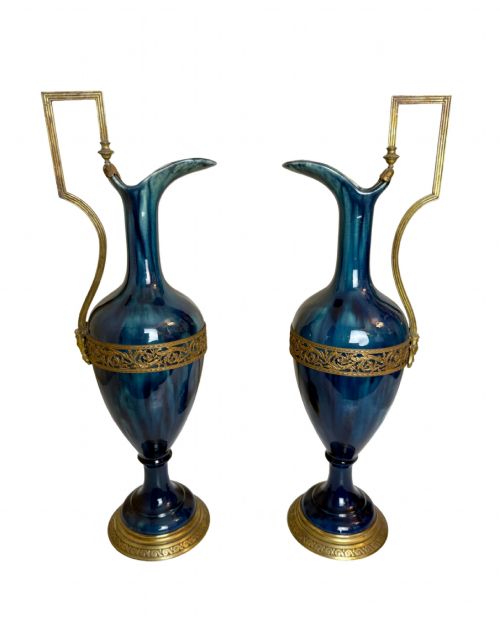


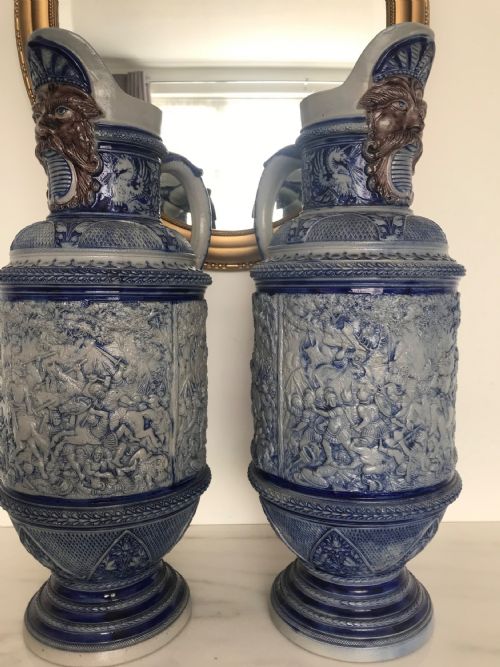
Blue Ceramic Ewer
A blue ceramic ewer brings liquid history to a room, offering sculptural form and cobalt depth across centuries of craft.
Blue Ceramic Ewer
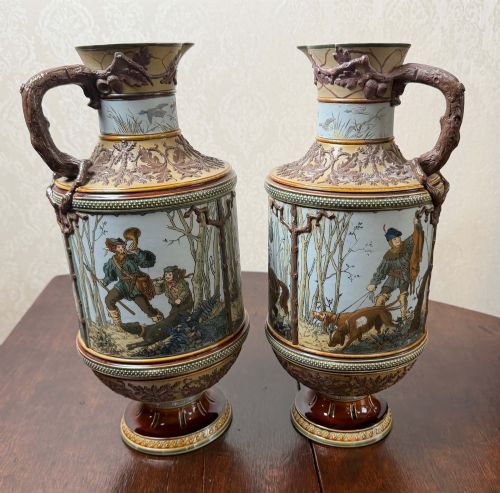
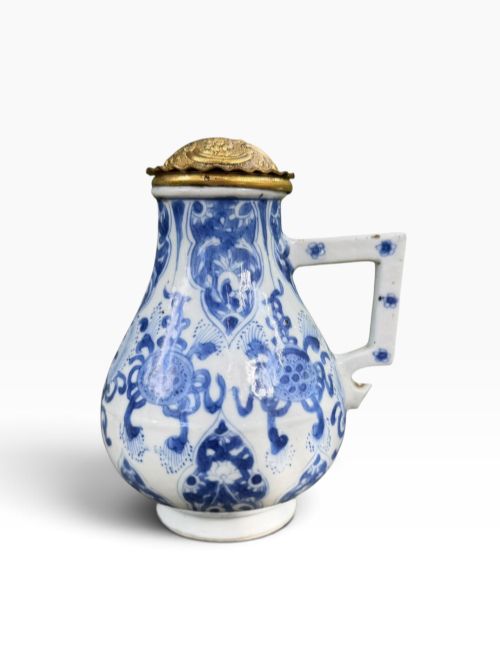
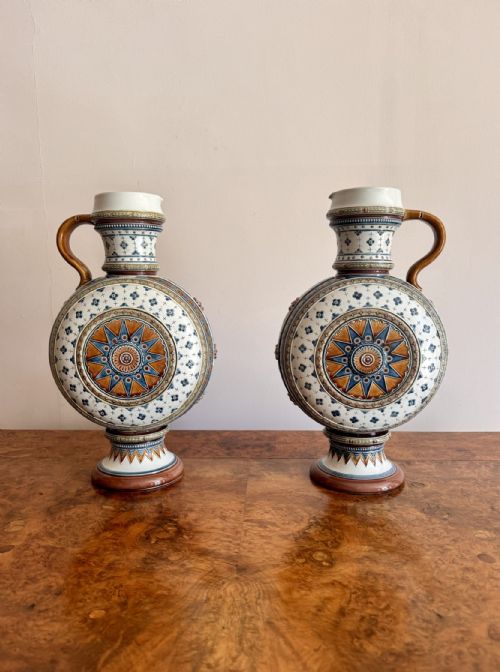
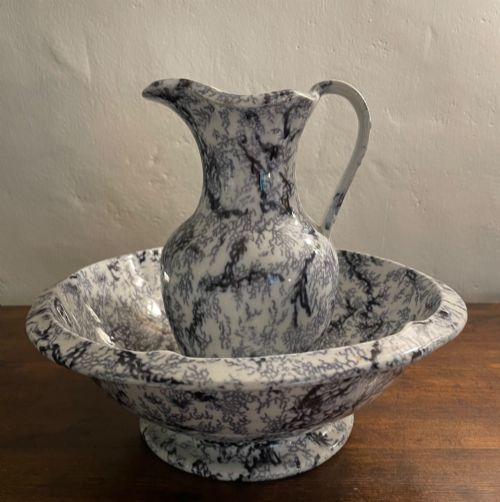
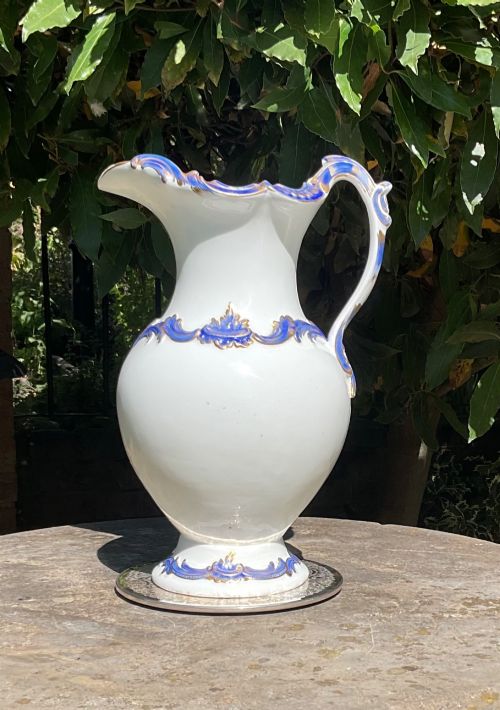
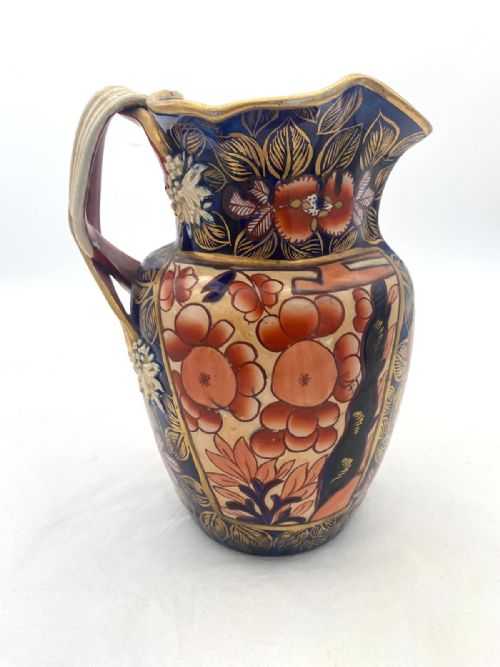
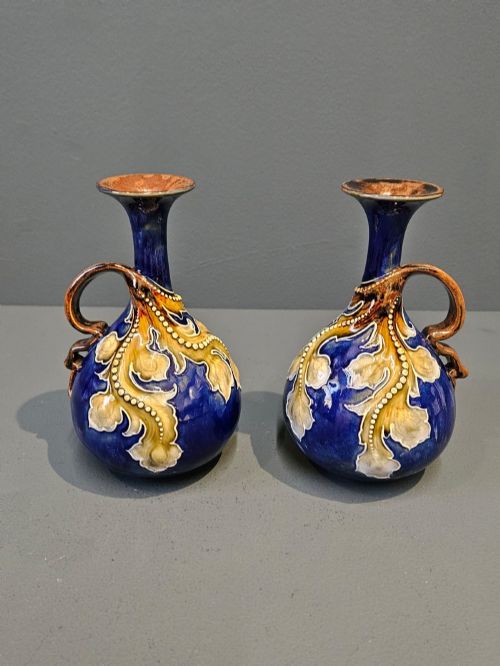
A blue ceramic ewer functions primarily as a pouring vessel, taking forms from utilitarian water pitchers to ornamental display pieces. When exploring a blue ceramic ewer, buyers encounter everything from modest earthenware basins to decorative porcelain masterworks.
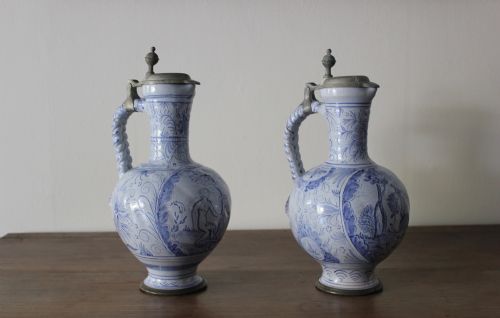
The selections span distinct periods, including pieces from the seventeenth century through to the early twentieth century. Common manifestations on this page include jugs, water pitchers, and matched basin sets originating from English potteries, European kilns, and Asian traditions.
Maker traditions visible in the inventory range from English ironstone manufacturers to salt-glazed stoneware workshops on the continent. Buyers often select these objects for their striking cobalt decoration, which displays varied tones from pale grey-blue to deep navy.
Evaluating craftsmanship
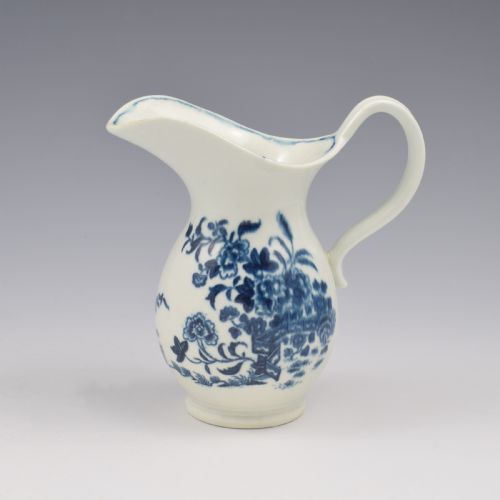
Quality rests in the crispness of the moulding, the evenness of the glaze, and the depth of the cobalt pigment. Superior pieces display sharp transfer-printed or hand-painted details without smudging, alongside balanced proportions between spout, body, and handle.
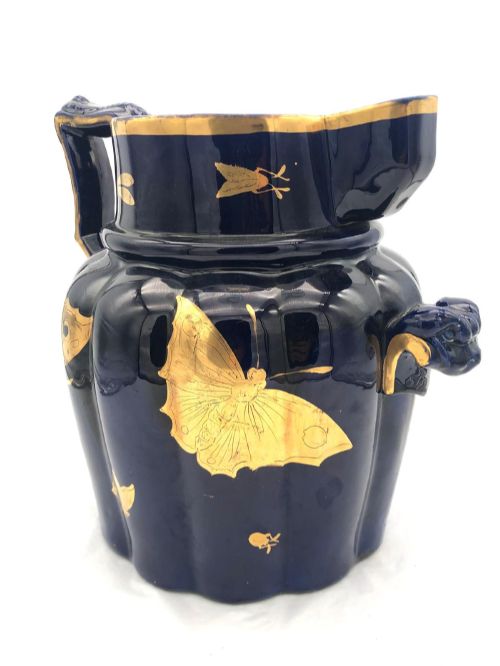
The weight of the ceramic and the precision of the base indicate the maker's skill and the intended grade of the vessel. Finer examples retain intact gilding and well-preserved surface enamels that have survived centuries of handling.
Blue Ceramic Ewer Retail Price Guide 2026
Typical asking prices for blue ceramic ewer among the pieces listed under this phrase on Sellingantiques today, from the lower quarter to the upper quarter. They describe what is for sale here now, not the wider market.
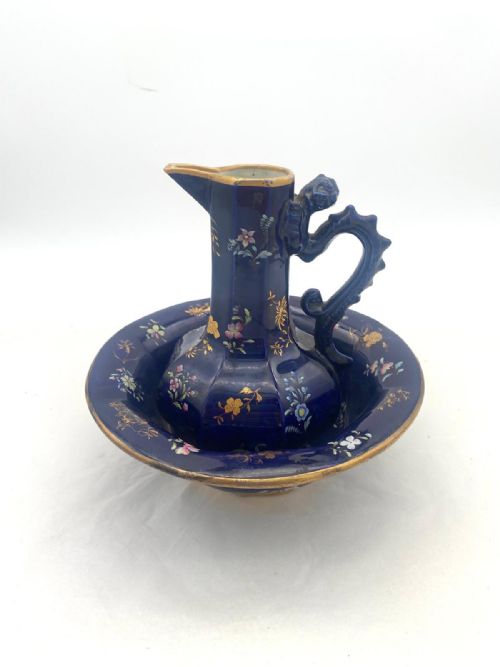
Some nineteenth-century makers attached surprisingly grotesque handles to otherwise dignified blue and white jugs.
Doulton Lambeth·Mason's Ironstone·Minton·Spode·Coalport
The Blue Ceramic Ewer Glossary
- Ewer
- A large jug with a wide spout and a shaped handle, traditionally used for holding water. These vessels often paired with matching basins for washing.
- Ironstone
- A heavy, durable type of earthenware patented in nineteenth-century Britain. It offered a resilient alternative to porcelain for everyday functional wares.
- Cobalt blue
- A stable mineral pigment capable of withstanding extreme kiln temperatures without losing intensity. It remains the dominant blue shade on historical ceramic wares.
- Salt glaze
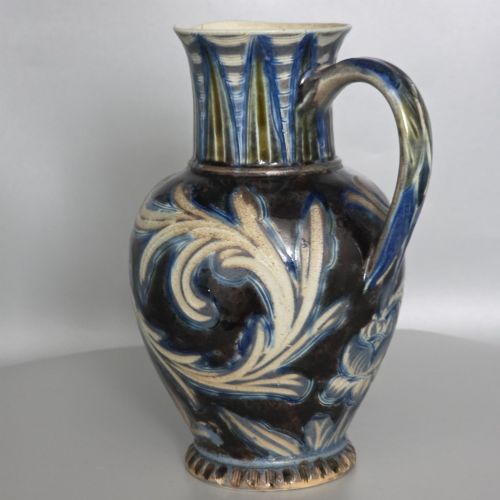
- A glassy, slightly textured finish achieved by throwing salt into the kiln during high-temperature firing. This technique creates an orange-peel texture on stoneware bodies.
- Chinoiserie
- European artistic interpretation of Chinese and East Asian decorative motifs. These designs often feature imaginary landscapes, pagodas, and exotic figures.
Blue Ceramic Ewer: Frequently Asked Questions
How do I care for antique ceramic vessels?
Dust these pieces gently with a dry, soft cloth to protect vulnerable glazes and gilded surfaces. Avoid using chemical cleaners or submerging antique ironstone and earthenware in water.
Keep them away from direct sunlight to prevent any fading on enamel-painted decorations.
Were these vessels used for daily washing?
Many examples on this page formed part of large bedroom wash sets alongside matching basins. Wealthy households displayed them on washstands for morning ablutions.
Smaller pieces served narrower functions at the dining table for wine, water, or sake.
How can I tell an eighteenth-century piece from a Victorian one?
Eighteenth-century items often show softer paste bodies and hand-painted motifs executed with individual brushwork. Victorian pieces frequently utilise industrial advancements like transfer printing and heavy ironstone.
Examining the base marks and glaze pooling helps clarify the manufacturing era.