



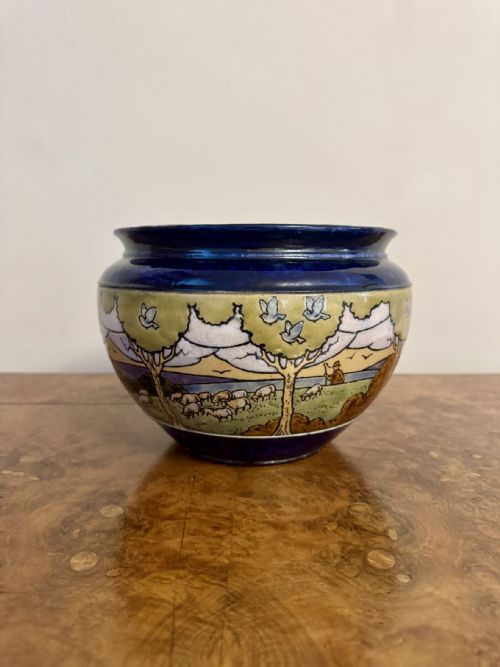


Royal Doulton Lambeth
Royal Doulton Lambeth pieces bring tactile weight and rich, textured ornament to any room, offering a tangible connection to the height of British art pottery.
Royal Doulton Lambeth
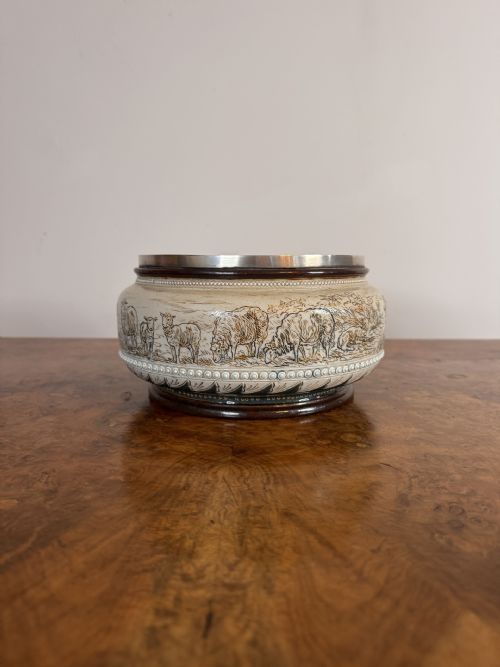
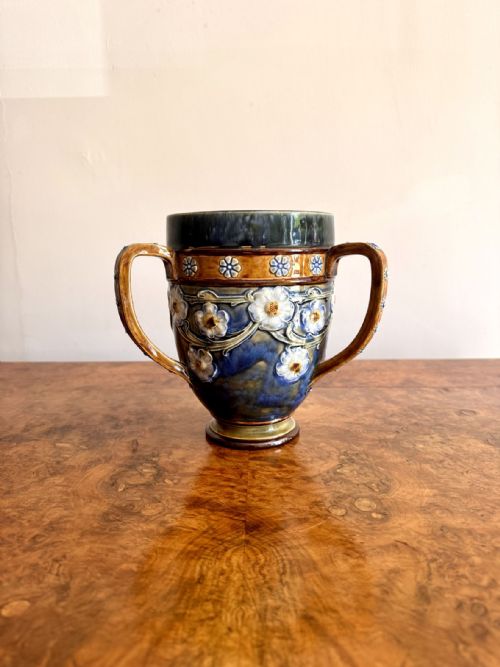
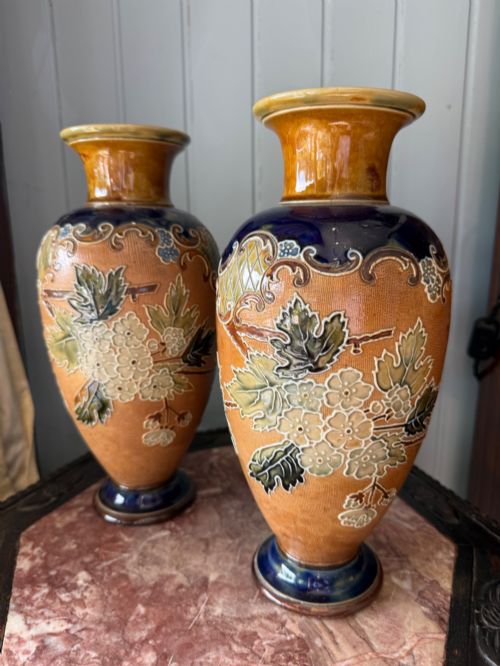
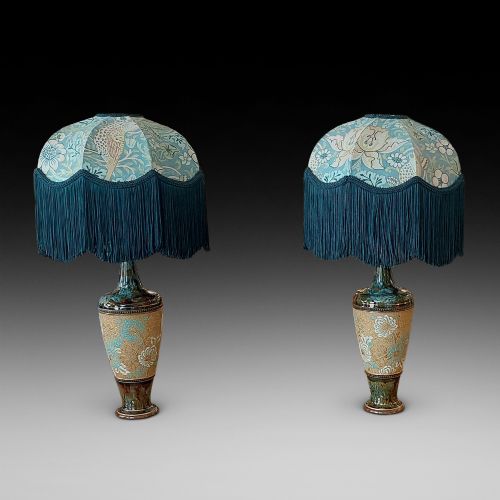
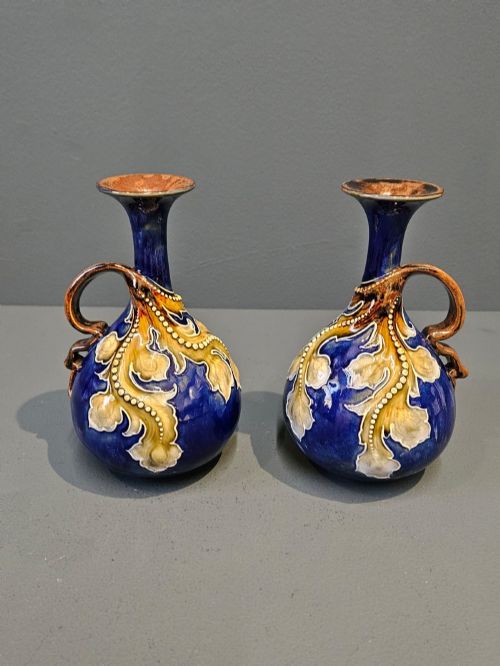
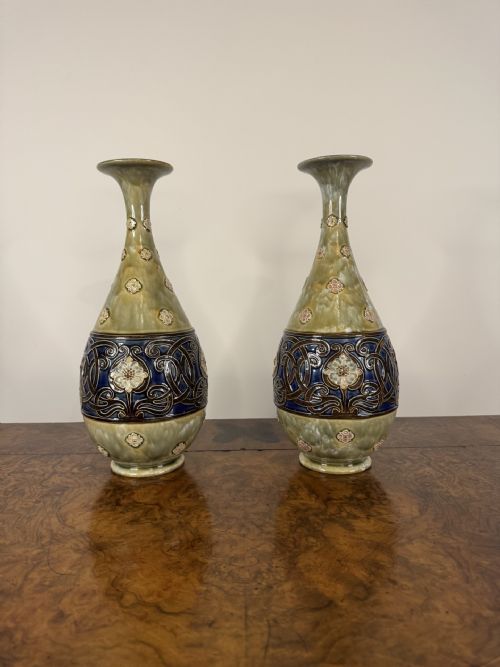
Royal Doulton Lambeth encompasses the robust stoneware pottery produced in south London from the Victorian era into the twentieth century. When exploring this phrase, collectors encounter a diverse array of forms, predominantly vases, jugs, and jardinieres designed for domestic display. The pieces frequently reflect the aesthetic currents of their time, spanning Victorian, Edwardian, and Art Nouveau movements.
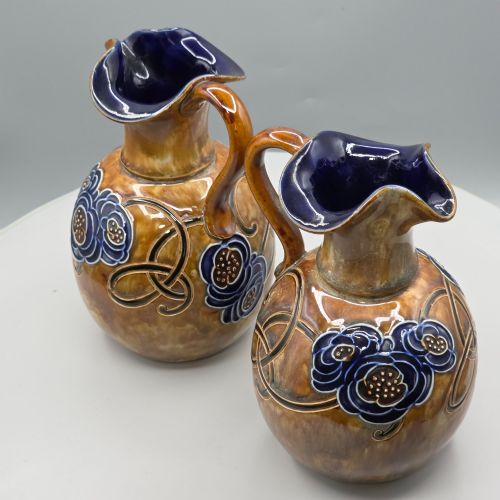
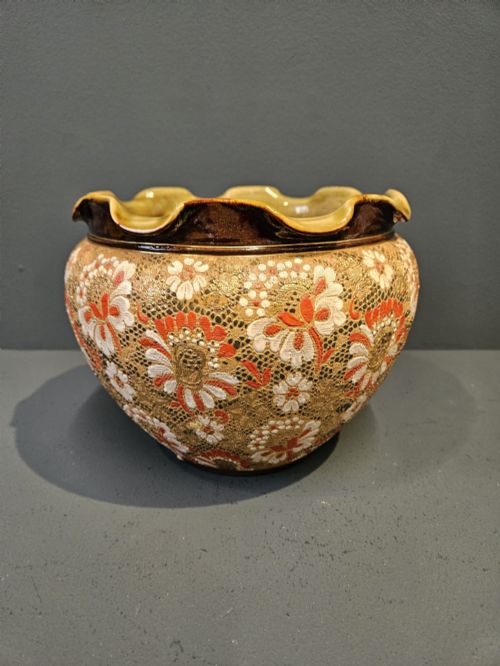
The objects available on this page lean heavily towards pairs of decorative vases and commemorative jugs dated around nineteen ten and the nineteenth century. One also finds jardiniere planters, tobacco jars, and occasional tea sets decorated with botanical motifs or intricate patterns. These items range from simple utilitarian forms adapted for the home to ambitious exhibition pieces created by named studio artists.
Materials and Technique
The foundation of these works is durable stoneware, fired at high temperatures to achieve a dense, impermeable body that readily accepted salt glazes and specialised treatments. Potters applied surface decoration using methods such as Slater's patent technique, which pressed lace or textured materials into the damp clay to create patterned backgrounds.
Enamel, gilt, and gold leaf additions provide striking contrast against the earthy tones of the fired clay. Many pots received hand-painted floral motifs or incised geometric details executed by skilled studio assistants and notable artists working within the Lambeth pottery.
Royal Doulton Lambeth Retail Price Guide 2026
Typical asking prices for royal doulton lambeth among the pieces listed under this phrase on Sellingantiques today, from the lower quarter to the upper quarter. They describe what is for sale here now, not the wider market.
Object forms include baluster vases, harvest jugs, tobacco jars, and large decorative jardinieres.
Judging Quality
Quality in these ceramics rests upon the crispness of the incised ornament and the precision of the glazed surface. Superior examples demonstrate a confident harmony between the clay body and the decorative scheme, whether through fluid Art Nouveau plant forms or meticulously applied enamel detailing.
Pieces bearing the distinct signatures or monograms of accomplished studio artists command greater attention from collectors. The balance of the form, the depth of the salt glaze, and the ambition of the original design separate standard production items from exceptional studio achievements.
Louisa Wakely·Emily Stormer·Ethel Beard·Maud Bowden·Mark V Marshall·Jane Rumbol
The Royal Doulton Lambeth Glossary
- Stoneware
- A robust ceramic fired at high temperatures until vitrified and non-porous. It provides a sturdy canvas for textured glazes and intricate incised decoration.
- Slaterware
- A decorative technique involving the application of lace or fabrics into damp clay to produce textured backgrounds. This method was widely utilised during the late nineteenth century.
- Jardiniere
- A large ornamental pot designed to hold plants or flowers. These vessels often sit on heavy tables or pedestals within period interiors.
- Tyg
- A large drinking vessel featuring multiple handles, historically shared among company. In this ceramic tradition, it serves as a decorative commemorative object.
- Salt Glaze
- A glossy, slightly textured finish achieved by throwing common salt into the kiln during high-temperature firing. This creates a distinctive orange-peel texture on the stoneware surface.
Royal Doulton Lambeth: Frequently Asked Questions
What is Royal Doulton Lambeth pottery?
Royal Doulton Lambeth refers to decorative and utilitarian ceramics produced at the Doulton factory in south London. The works are celebrated for their distinctive stoneware bodies and inventive surface decoration.
Production spanned the Victorian and Edwardian periods, capturing major design shifts from heavy historicism to organic Art Nouveau styles.
How do I date a piece?
Dating relies primarily on factory backstamps impressed into the clay base, which evolved as the company gained royal warrants and changed its corporate name. Stylistic clues such as floral motifs or specific patent references also help narrow down the decade.
Comparing the specific lettering and symbols against established ceramic reference guides provides the most accurate timeline.
Were these pots used daily?
While many items like jugs and tobacco jars served practical household functions, the majority of surviving vases and jardinieres were intended purely for interior decoration. Commemorative pieces marked royal jubilees or society events and sat on mantelpieces as display items.
Over time, even utilitarian vessels transitioned into purely decorative roles within period homes.
How should I clean my stoneware?
Cleaning requires only a gentle wipe with a soft, damp cloth to remove accumulated dust from the textured surface. Harsh chemical cleaners or abrasive sponges must be avoided to protect the delicate enamel and gilt highlights.
Careful handling ensures the historic glazes and applied decorations remain undamaged for years to come.