

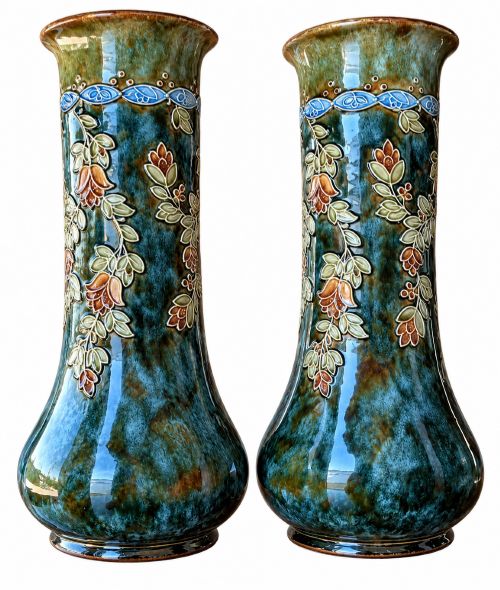
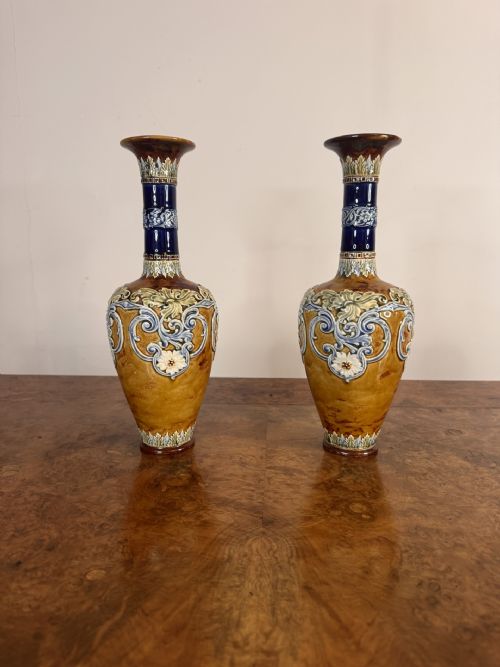
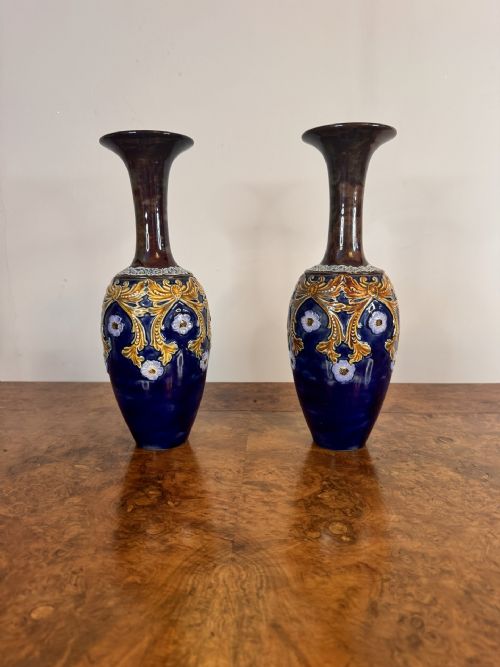
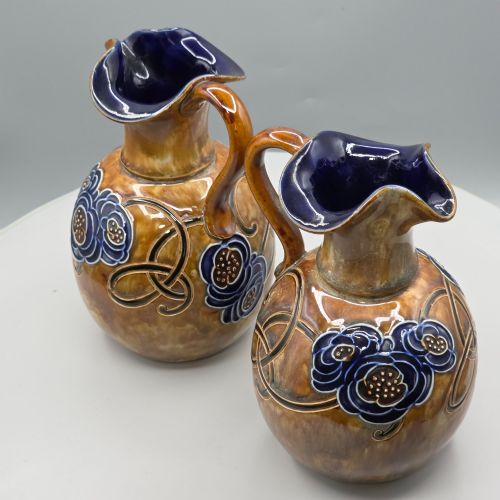


Doulton Pottery Pair
These doulton pottery pair selections bring balanced symmetry and distinct period character to a room through matching forms.
Doulton Pottery Pair
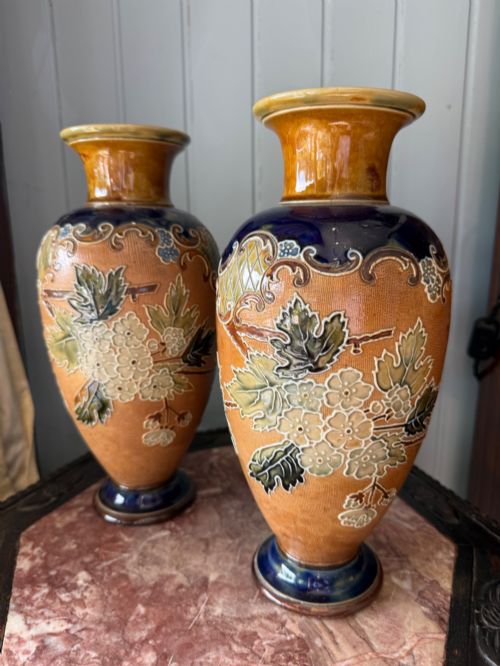
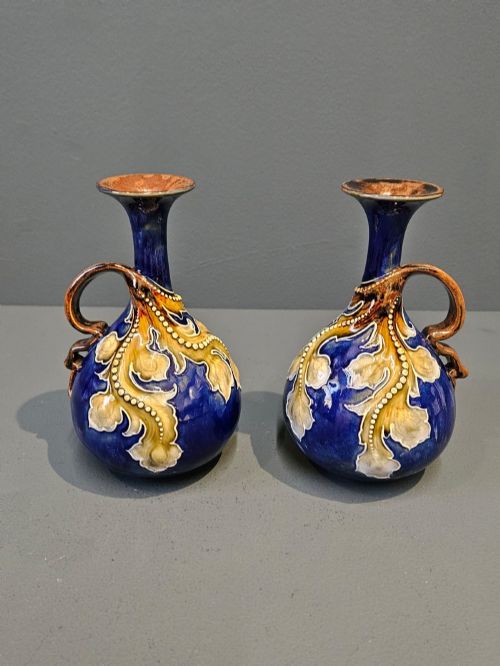
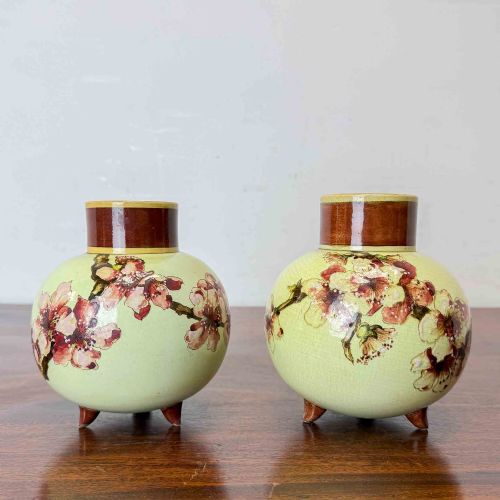
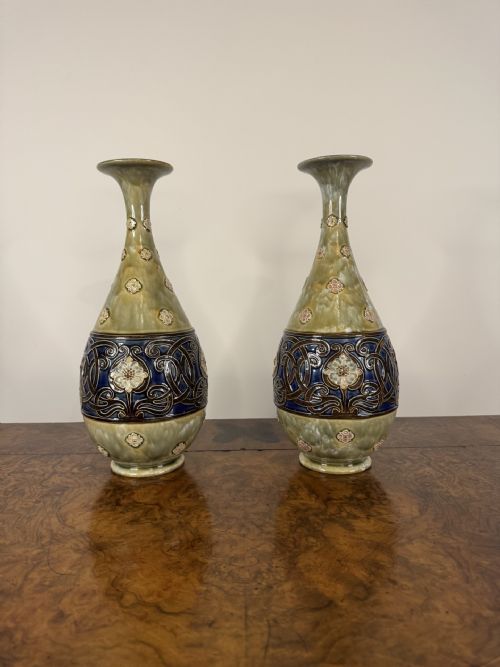
A doulton pottery pair typically consists of matching vases, jugs, or planters produced during the nineteenth and early twentieth centuries. These coordinated duos were designed for balanced mantelpiece or table displays in homes of the period.
The selections on this page span from the Victorian era into the Edwardian period, encompassing styles such as Art Nouveau, Arts and Crafts, and Aesthetic Movement. Vases and jugs form the bulk of these matched sets.
Makers working within these workshops produced both thrown stoneware and moulded earthenware. Buyers will encounter both simple baluster shapes and elaborate decorated pieces bearing distinct studio markings.
Materials and Techniques
Stoneware and earthenware provide the physical foundation for these items, shaped on the potter's wheel or formed in moulds. Artisans applied glazes, enamels, and occasional gold leaf to the surfaces before firing.
Decoration often involved incised patterns, slip decoration, and applied floral motifs characteristic of Lambeth and Burslem production. Silver rims appear on specific utility vessels, adding metalwork to the ceramic body.
Doulton Pottery Pair Retail Price Guide 2026
Typical asking prices for doulton pottery pair among the pieces listed under this phrase on Sellingantiques today, from the lower quarter to the upper quarter. They describe what is for sale here now, not the wider market.
Some tobacco jar lamps disguise smoking habits as fine art.
Assessing Quality
The distinction between standard production and top tier pieces rests on the complexity of the hand decoration and the reputation of the artist. Named decorators contribute significantly to the standing of an individual pair.
Form and proportion dictate visual success, with unusual silhouettes and crisp incised detailing marking out superior examples. The depth of the glaze and the preservation of enamel or leaf accents complete the evaluation.
Louisa Wakely·Emily Edwards·Ethel Beard
The Doulton Pottery Pair Glossary
- Stoneware
- A robust ceramic pottery fired at high temperatures until vitrified, making it impermeable to liquids without glaze. This material forms the durable body of most Lambeth pieces.
- Faience
- Tin-glazed earthenware offering a fine, opaque surface suitable for painted floral or landscape decoration. This technique allowed for softer colour palettes than standard salt-glazed wares.
- Baluster
- A vertical architectural form swelling gently toward the bottom, frequently utilised for vase silhouettes. This balanced shape provides a stable base for display.
- Slater's Patent
- A specific textural technique involving the pressing of lace or fabric into damp clay to create a patterned background. Enamel floral details were frequently added over this textured surface.
Doulton Pottery Pair: Frequently Asked Questions
How do I date a doulton pottery pair?
Dating relies on the bottom factory stamps, base marks, and the prevailing artistic style of the piece. Victorian examples often show distinct Lambeth incisions, while later twentieth-century items adopt smoother Edwardian profiles.
Examining the specific glaze types and recorded decorator marks helps narrow the decade of production. Comparing the style to known design shifts provides further chronological clarity.
Where were these pieces manufactured?
Production centred primarily around the Lambeth works in south London and the Burslem pottery in Staffordshire. Each location utilised distinct regional clays and developed specific decorative traditions.
Lambeth became known for robust stoneware and salt-glazed items, while Burslem focused on refined earthenware and decorative table sets. The factory marks on the underside usually indicate the specific pottery of origin.
How were these matched pairs displayed?
Matched pairs were traditionally placed symmetrically on fireplace mantels, sideboards, or console tables in Victorian and Edwardian interiors. Their balanced design created a sense of formal order in the room.
Some functional examples, such as washstand sets or tobacco jars, served daily domestic purposes before becoming purely decorative display items today.