


Salt Glazed Jug
When you seek a salt glazed jug, you discover robust stoneware vessels bearing mottled textures and rich historical character.
Salt Glazed Jug
A salt glazed jug is a sturdy ceramic vessel formed from clay and fired at high temperatures where salt is thrown into the kiln to produce a characteristic pitted, orange-peel texture. These pieces range from stout German stoneware wine bottles to ornate British harvest jugs and Victorian art pottery.
Buyers browsing this selection frequently encounter nineteenth century English salt glazed pieces alongside continental Westerwald and Germanic jugs stretching back to earlier centuries. These items appear in various forms, including puzzle jugs, ale pitchers, flagons, and ewers.
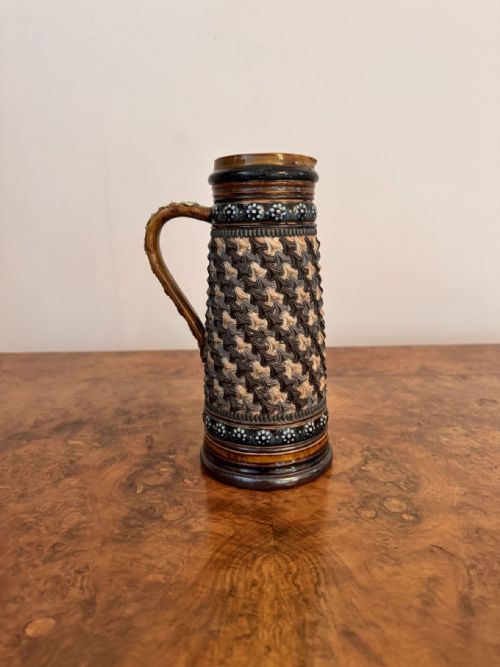
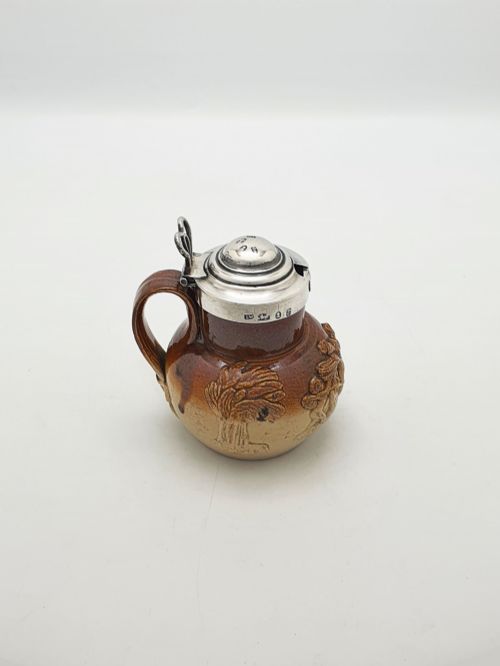
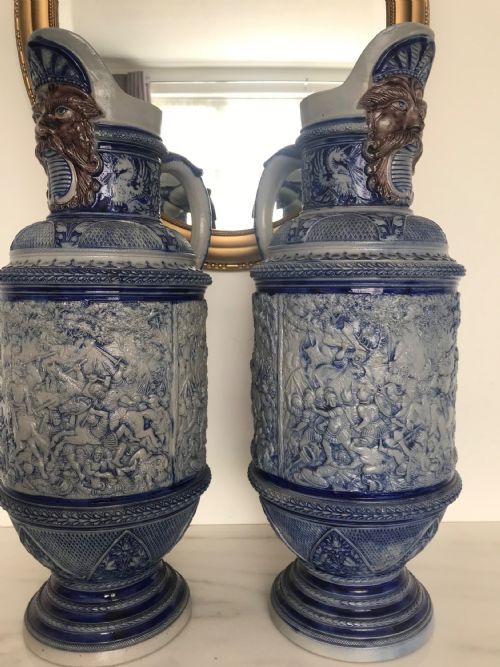
Makers often embellished these heavy stoneware bodies with applied sprigged reliefs, cobalt blue ornamentation, or precious metal rims in sterling silver. The resulting objects combine utilitarian strength with distinct decorative appeal suited to traditional interiors.
How they were made
Potters shaped dense clay into jugs and flagons before introducing common salt directly into the kiln fire at peak temperature. The sodium vaporised and combined with the silica in the clay body to form a durable, glossy silicate skin.
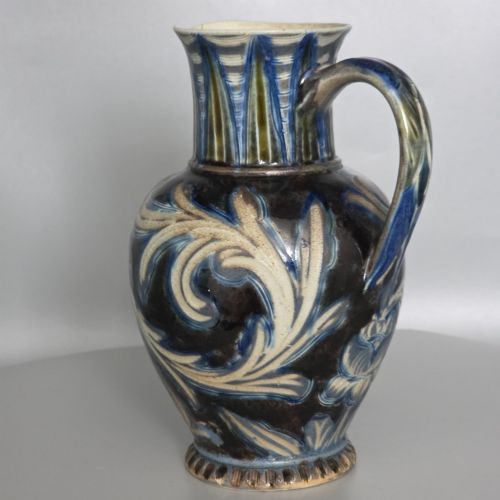
Makers decorated many stoneware jugs before firing by incising patterns, pressing sprigged motifs into the clay, or painting cobalt blue designs onto the surface. Some finished pieces received fitted additions such as hinged sterling silver collars and lids.
Listings feature salt glazed vessels spanning from the sixteenth century up through the Victorian era, encompassing both British stoneware and German Westerwald pieces.
What varies in quality
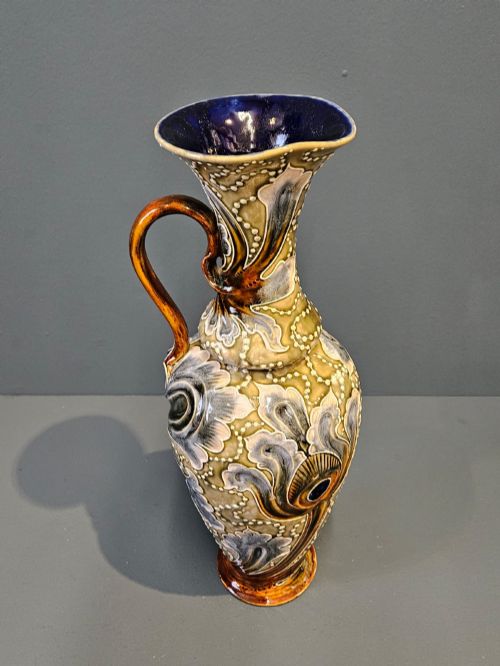
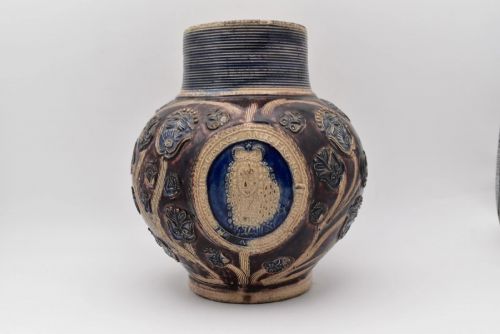
Quality rests upon the crispness of the moulded or incised decoration and the uniformity of the characteristic salt glaze finish across the stoneware body. Pieces with cleanly rendered portraits, heraldic ciphers, or intricate botanical motifs demonstrate superior craftsmanship.
The integration of precious metal additions alters the standing of a piece, particularly where hallmarked sterling silver rims and hinged lids accompany the ceramic body. Early continental Westerwald examples and marked Victorian studio pieces display artistic ambition that elevates them above standard utilitarian ware.
Doulton Lambeth·Simon Peter Gerz·Royal Doulton·Emma Shute·Moorcroft
The Salt Glazed Jug Glossary
- Salt Glaze
- A glossy, textured finish resembling orange peel created by throwing common salt into a hot kiln during firing. This chemical reaction produces a durable vitreous coating on stoneware.
- Stoneware
- A dense, hard ceramic fired at high temperatures until the clay body vitrifies and becomes completely non-porous. It provides the heavy, robust foundation for traditional jugs and flagons.
- Sprigged
- A method of decoration where separately moulded clay reliefs are applied to the surface of an un-fired vessel using slip as an adhesive. Makers used this technique to add detailed hunting scenes and floral motifs.
- Westerwald
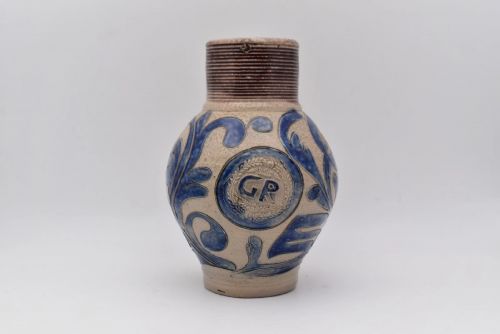
- A historic German region renowned for producing salt glazed stoneware featuring cobalt blue incised decoration and royal ciphers. These vessels date from the sixteenth century onward.
- Puzzle Jug
- A traditional drinking vessel featuring a perforated neck that prevents normal drinking, requiring the user to suck liquid through a hidden tubular rim. These trick pieces often rewarded drinkers who solved the riddle.
Salt Glazed Jug: Frequently Asked Questions
Were these jugs used for serving ale?
Many examples served as heavy flagons and pitchers for storing and pouring beer, wine, or water at the table. The dense stoneware kept liquids cool while the tough salt glaze resisted acidic contents.
Other vessels functioned purely as decorative display items or commemoration pieces for royal jubilees. Puzzle jugs additionally served as tavern entertainments rather than everyday utilityware.
How do I distinguish German Westerwald jugs?
Westerwald pieces typically display distinctive cobalt blue coloration painted over grey salt glazed stoneware bodies. They frequently incorporate incised geometric patterns, floral stamps, or historical royal ciphers.
Many examples date from the seventeenth and eighteenth centuries, originating from the Rhineland potting districts. Their robust form and characteristic grey-and-blue palette set them apart from later British wares.
What is a harvest jug?
A harvest jug is a large stoneware vessel traditionally filled with ale and carried into the fields during seasonal gathering times. They often feature generous loop handles and robust bodies designed for communal sharing.
Potters frequently decorated these utility pieces with applied hunting scenes, rustic figures, or silver rims. They represent a distinct tradition of British country pottery from the nineteenth century.