


Antique Tavern Pottery
Antique tavern pottery gathers functional vessels from past centuries, offering drinkers and collectors tactile connections to historic public houses.
Antique Tavern Pottery
Antique tavern pottery comprises drinking and serving vessels used in drinking establishments across the seventeenth, eighteenth, and nineteenth centuries. These objects include pitchers, jugs, mugs, tankards, and storage jars designed for everyday service in alehouses and inns.
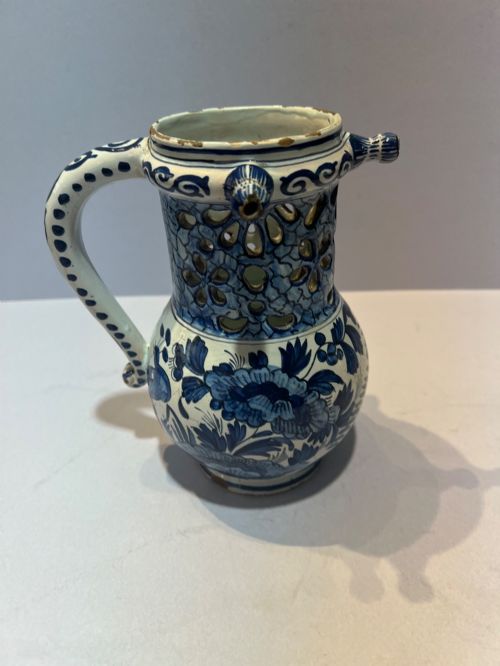
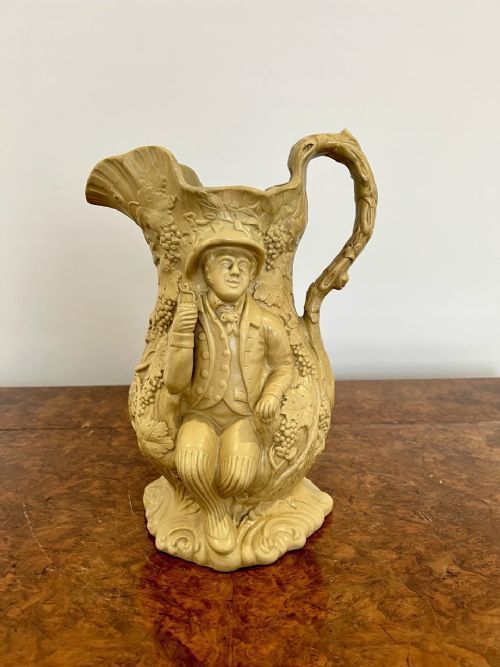
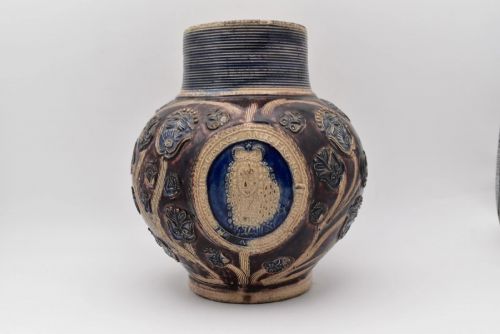
The pieces on this page span several distinct periods, reaching from the seventeenth century through the Victorian era. Forms range from simple utilitarian containers to complex puzzle jugs and royal portrait pieces produced in salt-glazed stoneware and tin-glazed earthenware.
Buyers encounter regional English country pottery alongside continental imports such as Dutch delft and Westerwald stoneware. These drinking vessels reflect the robust material culture of historical taverns and the heavy demands placed on pub hospitality.
How these pieces were made
Potters shaped these vessels from clay, earthenware, and stoneware using traditional wheel-throwing and moulding techniques. Artisans applied glazes including salt glaze, tin glaze, and majolica finishes to seal the porous bodies for liquid containment.
Eighteenth-century drinkers faced deliberate leaks built into puzzle jugs to test their sobriety.
What varies in quality
Quality in these utilitarian vessels relates to the crispness of relief moulding and the control achieved during high-temperature firing. Finer examples display precise cobalt decoration, intact applied handles, and sophisticated multi-spouted or puzzle construction.
Condition and originality dictate much of the standing within this category, particularly regarding the survival of original metal mounts or complex spouts. The presence of specific historical decoration, such as royal portraits or named tavern titles, separates standard utility ware from collector pieces.
Doulton Lambeth·C & A Painter·Mortlake·Bridgewater·Westerwald
The Antique Tavern Pottery Glossary
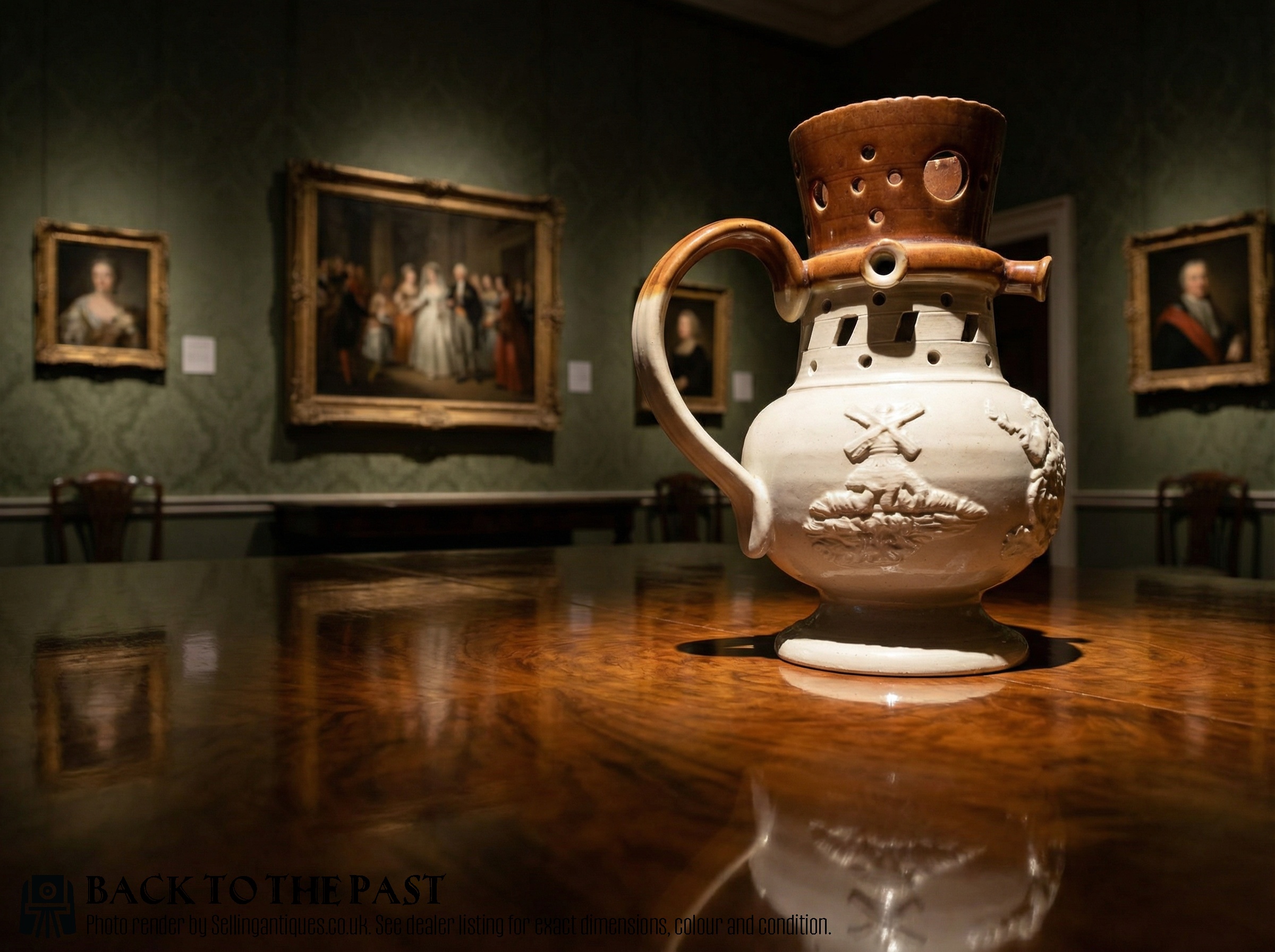
- Puzzle jug
- A drinking vessel featuring perforated necks and hidden channels designed to confound drinkers who failed to cover the correct air holes. These interactive pots provided amusement in seventeenth and eighteenth-century taverns.
- Salt-glazed stoneware
- A dense, impervious ceramic created by throwing salt into the kiln during high-temperature firing, producing a pitted orange-peel texture. This durable material suited heavy pub use.
- Tin-glazed earthenware
- Pottery covered with a glaze containing tin oxide to create an opaque white surface suitable for painted decoration. This technique links English delftware to continental traditions.
- Slipware
- Pottery decorated with liquid clay applied to a contrasting clay body before firing. Potters used this method for traditional country pieces.
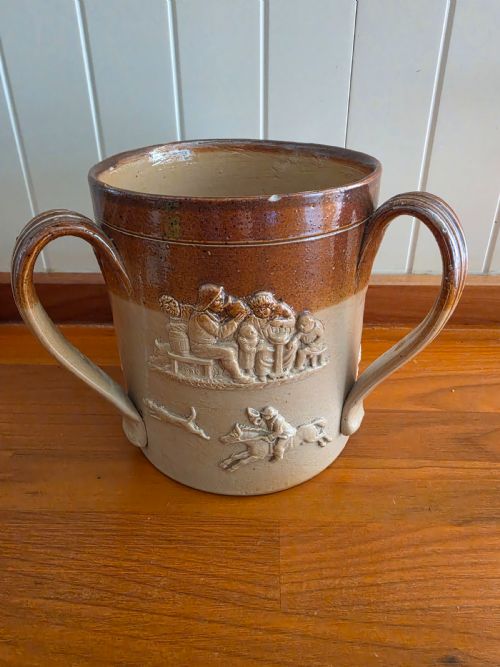
- Tyg
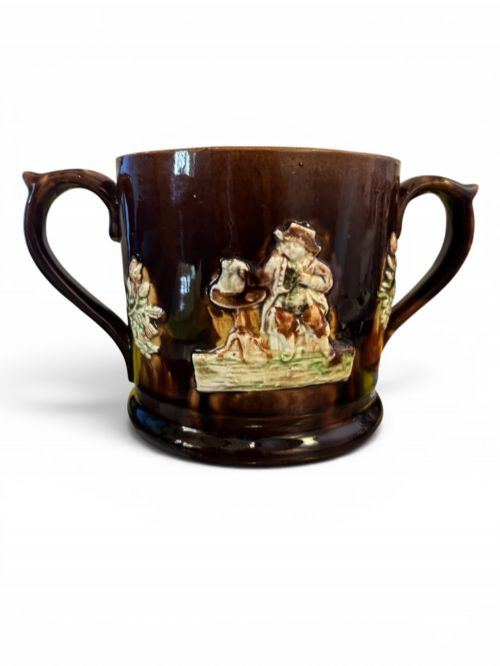
- A large drinking vessel featuring three or more handles intended for communal passing around a table. These multi-handled mugs appeared frequently in early tavern settings.
Antique Tavern Pottery: Frequently Asked Questions
What is a tavern puzzle jug?
A puzzle jug is a drinking vessel featuring perforated necks and hidden channels that spill liquid onto the drinker unless proper holes are covered. These interactive pots provided entertainment in historic drinking houses.
Potters constructed these vessels with internal tubes connecting the hollow rim to the main chamber. Users had to figure out the correct combination of covered spouts to drink successfully.
How do I date salt-glazed stoneware?
Dating salt-glazed stoneware involves examining the manufacturing techniques, decorative styles, and material textures typical of specific centuries. Pieces from the seventeenth century often show distinct German Westerwald characteristics, while later Victorian items display industrial Doulton Lambeth manufacturing methods.
Changes in handle attachment and glaze consistency also help distinguish earlier handmade pieces from later production methods. Comparing known marked examples provides reliable chronological markers.
What were three handled tygs used for?
Three handled tygs were communal drinking vessels designed for passing around a table among multiple drinkers in taverns. The multiple handles allowed each person to grasp the vessel securely as it circulated through the room.
These sturdy earthenware and stoneware pieces held large quantities of ale. Their robust construction withstood the heavy handling of crowded public houses.