

Antique Doulton Stoneware
These antique doulton stoneware pieces are robust Victorian ceramics valued for their distinctive salt glaze finishes and intricate artistic decoration.
What these pieces are
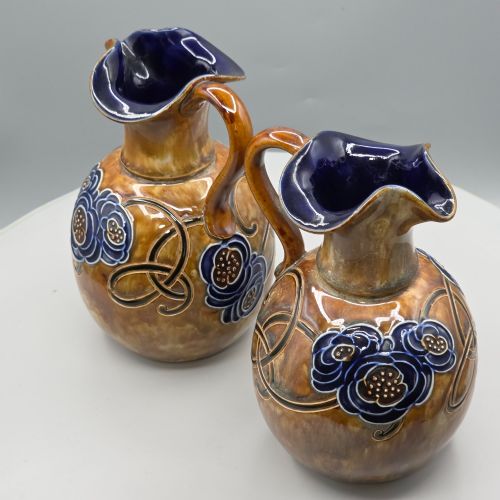
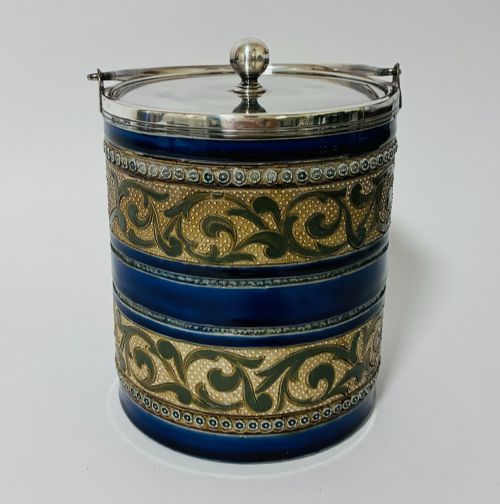
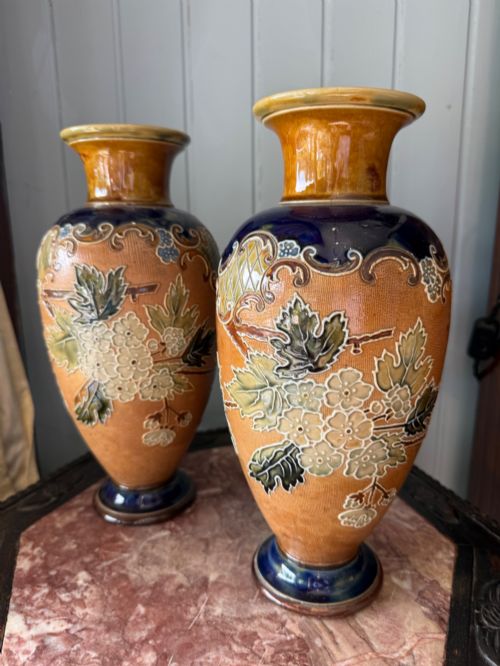
You are most likely to meet Victorian and Edwardian examples on this page, including Lambeth productions and Slater stoneware varieties. The assortment covers everything from large bowls and water filters to whisky jugs and tobacco jars.
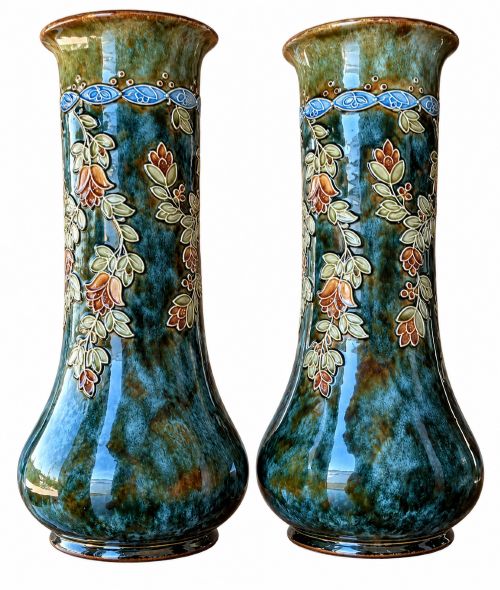
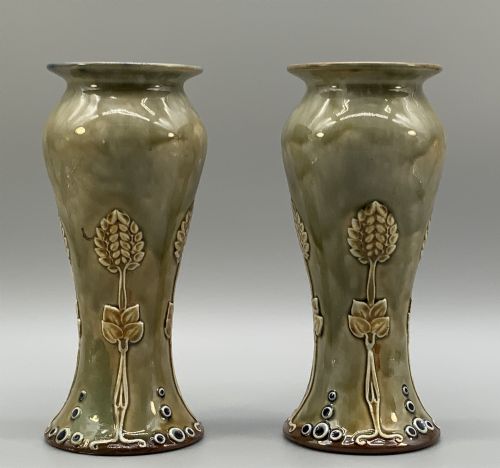
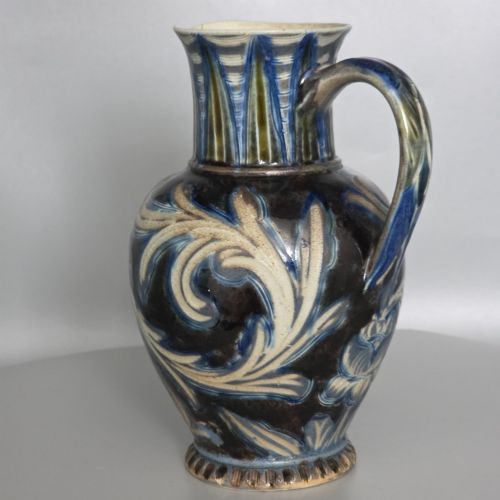
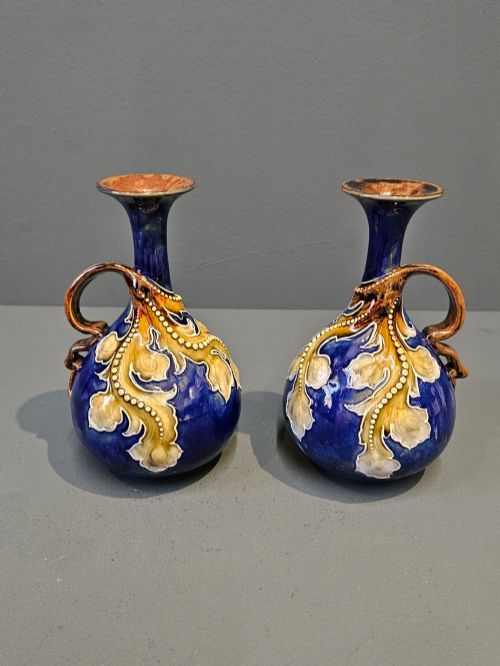
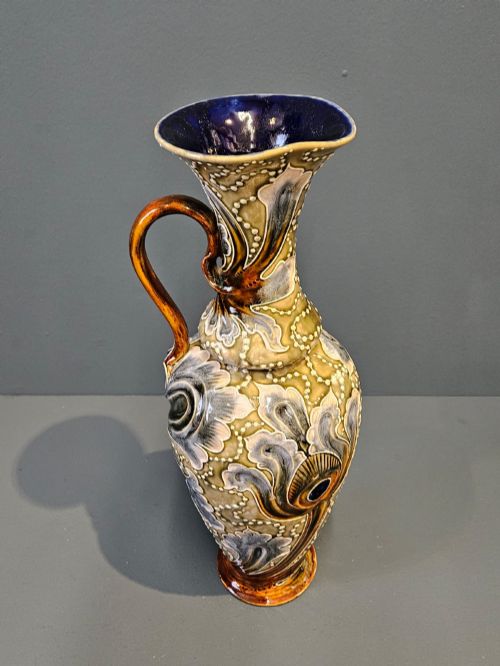
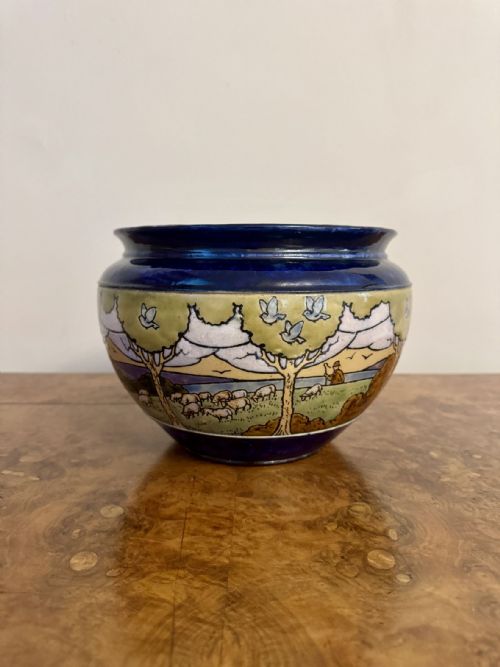
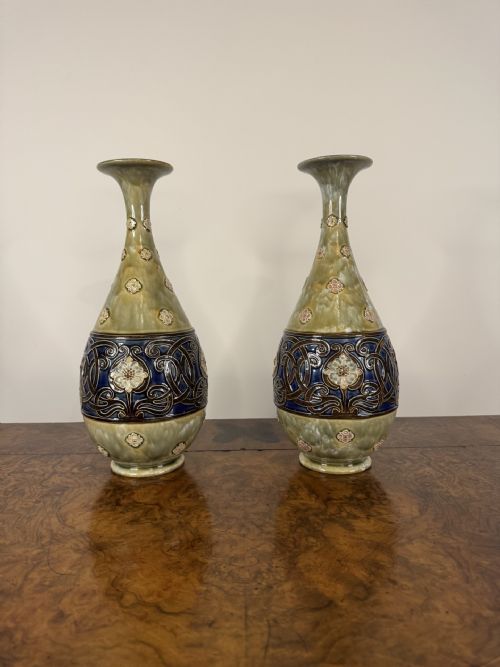
The aesthetic sits firmly within the Victorian Arts and Crafts and Art Nouveau movements. Makers utilised surface textures, applied enamels, and incised patterns to elevate industrial materials into ornamental art.
How they were made
The body consists of dense ceramic stoneware fired at high temperatures to achieve impermeability and strength. Artisans applied salt glaze techniques during the firing process to create a characteristic orange-peel texture across the surface.
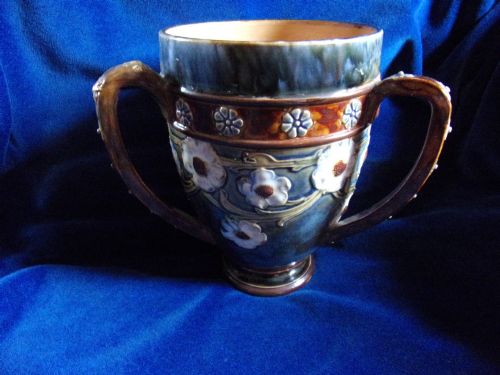
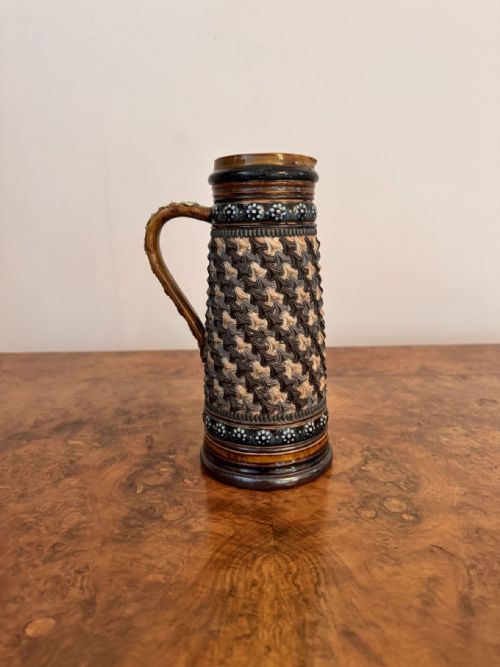
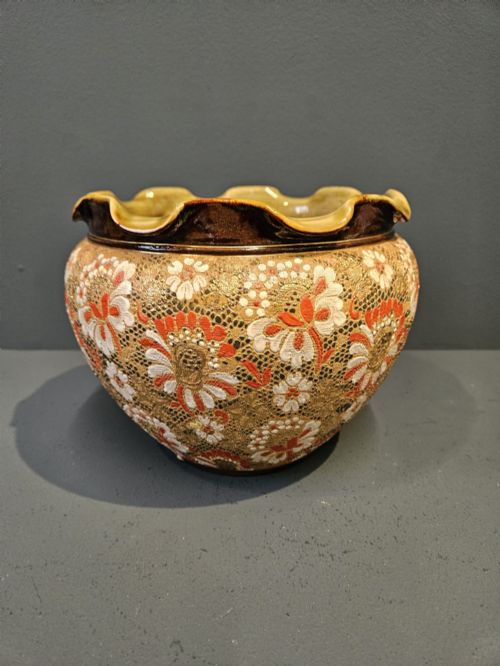
Decoration often involved intricate hand-carved motifs, raised enamel detailing, and occasional accents of gold leaf. Specialised techniques such as the Slater patent utilised lace pressed into damp clay to produce textured backgrounds beneath floral designs.
Early Glaswegians kept their spirits close with Doulton whisky jugs bearing cheerful commercial slogans.
What varies in quality
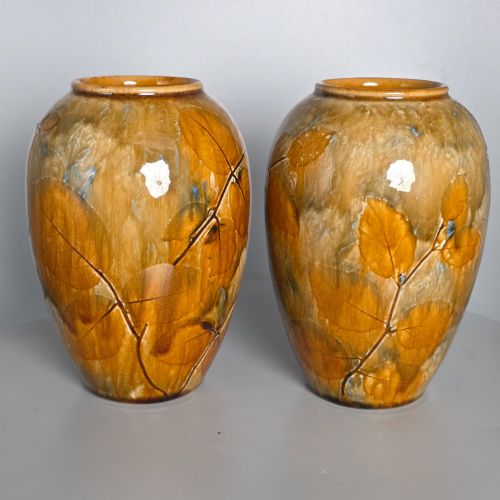
Quality rests upon the crispness of the incised ornament and the ambition of the form. Master artists working at the Lambeth studios produced individually modelled vases with distinct artistic merit, standing apart from standard factory output.
The complexity of the glazing and the inclusion of specialised decorative elements such as pâte-sur-pâte or applied metal rims elevate certain pieces. Condition of the delicate salt glaze and integrity of any applied ornamentation dictate the standing of individual vessels.
Royal Doulton·Doulton Lambeth·Florence Barlow
The Antique Doulton Stoneware Glossary
- Salt Glaze
- A finish achieved by throwing common salt into the kiln during high-temperature firing, producing a pitted texture resembling orange peel. This impervious coating protects the ceramic body.
- Stoneware
- A robust, vitrified ceramic made from clay fired at high temperatures until it becomes non-porous. It withstands heavy use and holds detailed surface decoration.
- Tyg
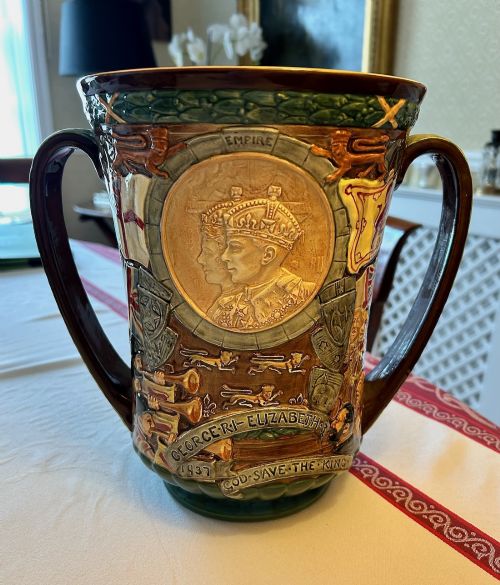
- A large drinking vessel featuring multiple handles, traditionally designed for communal passing around a table. These pieces often carry motto inscriptions.
- Jardiniere
- An ornamental ceramic pot or stand designed to hold a plant or floral arrangement. These items frequently display prominent Art Nouveau styling.
- Enamel
- Opaque vitreous material applied to the ceramic surface for decorative colour and pattern. It fuses permanently with the body during secondary firings.
Frequently Asked Questions
What is antique doulton stoneware?
These pieces are durable British ceramics produced during the nineteenth and early twentieth centuries. They encompass a wide variety of utilitarian and decorative forms.
The manufacturing process utilised dense clay bodies and specialised salt glazing techniques. This resulted in robust vessels adorned with intricate artistic decoration.
How were these stoneware pieces used?
Many items served practical domestic purposes such as storing tobacco, dispensing spring water, or holding whisky. Larger vessels functioned as umbrella stands or garden planters.
At the same time, smaller vases and jugs served purely decorative roles in Victorian and Edwardian homes. Their artistic finishes made them suitable for display in prominent rooms.
How do I care for stoneware?
Stoneware is naturally robust and requires minimal maintenance beyond gentle dusting. Avoid harsh chemical cleaners that might damage the delicate salt glaze or applied enamel.
Keep pieces away from sudden thermal shocks to protect the ceramic body. Handle decorated handles and rims with care during repositioning.
How can I tell periods apart?
Earlier nineteenth-century examples often display the Doulton Lambeth mark alongside individual artist ciphers. These pieces frequently align with Victorian Arts and Crafts design principles.
Later Edwardian productions often incorporate the Royal Doulton warrant and utilise industrial patent techniques like Slater texturing. Stylistic shifts from Gothic revival towards Art Nouveau help anchor the chronology.