

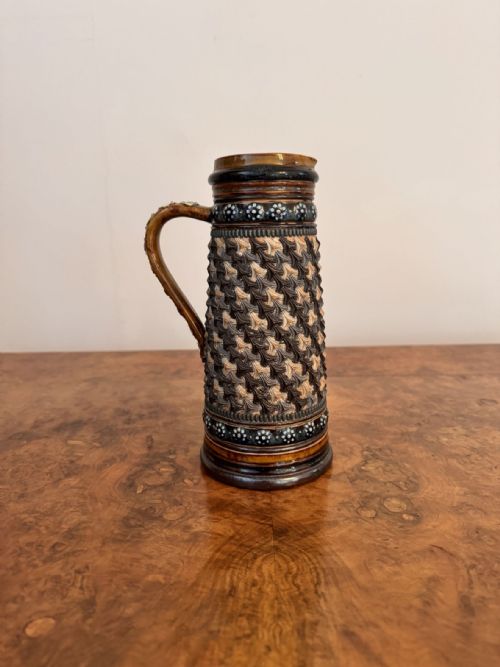
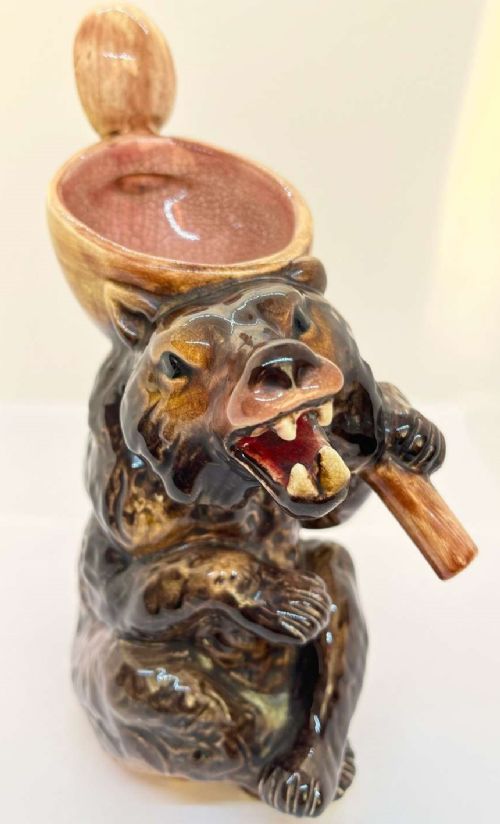
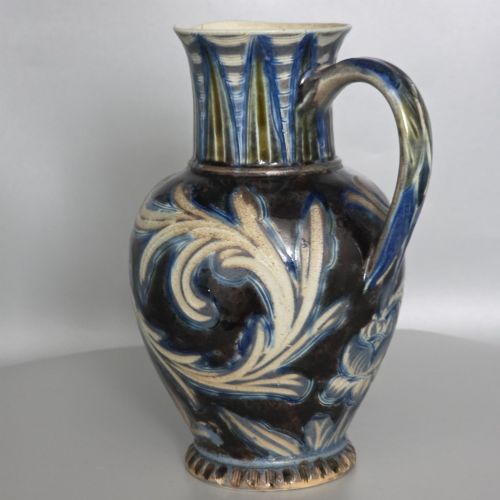
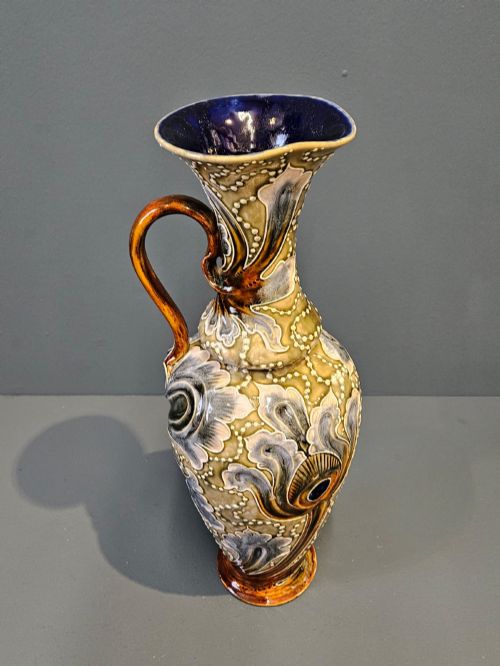


Brown Ceramic Water Pitcher
These brown ceramic water pitcher examples range from Victorian majolica to salt-glazed stoneware, offering practical service and decorative presence for the table.
Brown Ceramic Water Pitcher
A brown ceramic water pitcher serves fluid at the table or holds water for washing, appearing in forms such as harvest jugs, ewers, and carafes. When exploring this group, buyers frequently encounter Victorian stoneware and earthenware pieces produced across the nineteenth century.
Makers shaped these vessels for everyday domestic utility, hotel service, and decorative display. The inventory includes heavy salt-glazed storage vessels, graduated sets, and elaborately modelled figural designs with specialised mounting.
The aesthetic reaches from French provincial simplicity to the textured surfaces of Victorian arts and crafts production. Production centres on sturdy earthenware and dense stoneware bodies designed to retain liquids effectively.
Materials and production methods
Potters formed these pitchers using durable stoneware and porous earthenware bodies, often finished with salt glazes or rich lead glazes. The dense clay formulations required high kiln temperatures to achieve vitrification and liquid impermeability.
Decoration relied on incised patterns, applied sprigged motifs, and moulded reliefs depicting botanical or sporting themes. Workshops occasionally added fitted silver rims to reinforce high-wear lips and elevate the status of utility vessels.
Brown Ceramic Water Pitcher Retail Price Guide 2026
Typical asking prices for brown ceramic water pitcher among the pieces listed under this phrase on Sellingantiques today, from the lower quarter to the upper quarter. They describe what is for sale here now, not the wider market.
One historic piece bears the scars of an active life holding ice water in a nineteenth-century hotel dining room.
Assessing quality in historical pitchers
Quality rests upon the crispness of moulded or incised detail and the evenness of the glaze application. Pieces decorated by named studios display superior hand-finishing and artistic control over standard commercial wares.
Structural integrity, including the proper alignment of the handle and spout, distinguishes fine production. The weight of the ceramic body and the complexity of decorative styles, such as majolica or art pottery finishes, drive the graduation between simple utilitarian vessels and high-art examples.
Holdcroft·Doulton Lambeth·Emma Shute·Copeland Spode·George Jones
The Brown Ceramic Water Pitcher Glossary
- Stoneware
- A robust, vitrified ceramic fired at high temperatures until non-porous. It resists moisture naturally without requiring an interior glaze.
- Salt Glaze
- A glossy, textured finish created by throwing common salt into the hot kiln during firing. This chemical reaction produces a characteristic orange-peel surface texture on stoneware.
- Earthenware
- A permeable ceramic body fired at lower temperatures than stoneware. It requires a complete glaze coating to hold water successfully.
- Ewer
- A large pitcher featuring a flared spout and a sweeping handle. Historically used for hand-washing at the table, it functions primarily as a decorative display piece today.
Brown Ceramic Water Pitcher: Frequently Asked Questions
How do I clean an antique pitcher?
Wash these historical vessels by hand using warm water and mild soap, avoiding abrasive pads that can damage aged glazes. Submerging porous earthenware for long periods risks harming the historic body.
Dry the interior thoroughly after washing to prevent moisture entrapment in any hairline crazing. Display pieces benefit from occasional dusting with a soft, dry cloth.
Can I use these pitchers for serving water?
Many glazed stoneware and ceramic pitchers remain fully functional for serving cold water or beverages at the table. Check the interior for complete glazing and structural soundness before liquid use.
Utilitarian items from the nineteenth century often perform reliably, but pieces with extensive hairline cracks or historical repairs are best reserved for dry decorative display.
How do I date a brown ceramic pitcher?
Examine the base for maker marks, impressed stamps, or registration numbers that pinpoint production years. Stylistic clues such as Victorian aesthetic movement motifs or art nouveau curves also narrow the timeline.
Material composition provides further evidence, as heavy salt-glazed stoneware typifies mid-nineteenth-century utility ware while majolica points directly to high Victorian manufacture.
What caused the different shades of brown?
Variations in brown tones result from natural iron impurities in the clay and the specific chemical reactions of lead or salt glazes during kiln firing. Different firing atmospheres alter the oxidation of minerals in the ceramic body.
Applied slip colours and specialised dipping techniques allowed potters to control depth, ranging from light tan salt-glaze surfaces to deep chestnut majolica finishes.