



Victorian Doulton Water Jug
These Victorian Doulton water jugs combine robust utility with striking decorative ambition, offering a tangible piece of late nineteenth-century ceramic history.
Victorian Doulton Water Jug
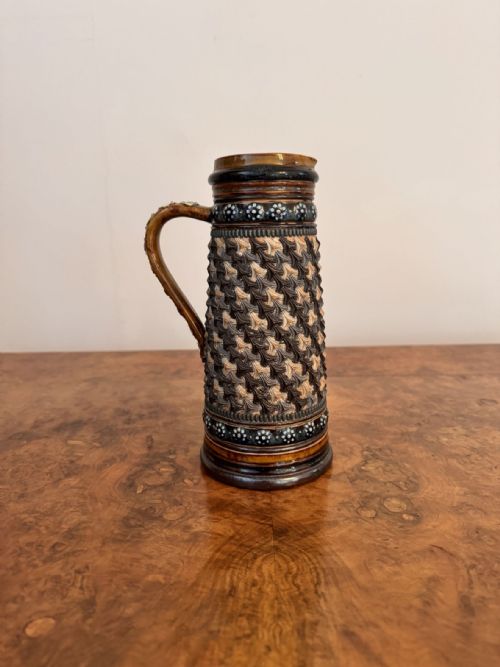
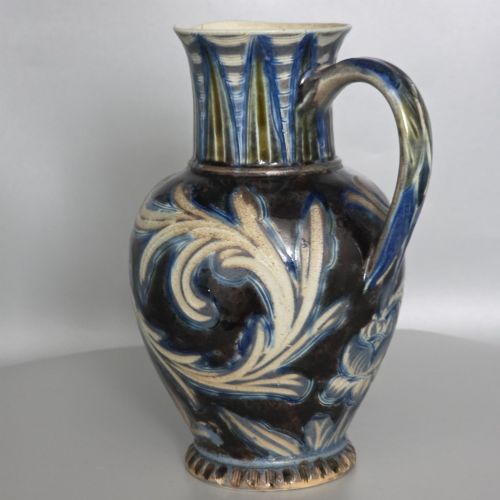
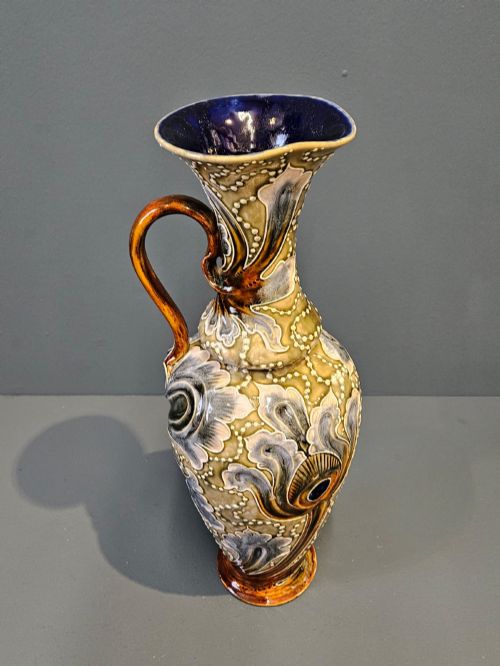
When you search for a victorian doulton water jug, you encounter robust stoneware and ceramic vessels produced during the nineteenth century. The selection ranges from salt-glazed kitchenware to exhibition pieces and elaborate decorative ewers.
Most examples originate from the 1870s, 1880s, and 1890s, reflecting the height of Victorian artistic production. You will frequently find pieces attributed to specific design movements such as Arts and Crafts, Art Nouveau, and the Aesthetic Movement.
Forms include large harvest jugs with silver rims, blue and white Norfolk patterns, and complete jug and basin sets. These vessels served practical domestic functions while simultaneously displaying intricate surface decoration.
How they were made
Potters shaped these vessels primarily from heavy stoneware and earthenware, utilising salt-glaze techniques that produced distinctive textured surfaces. Artisans applied cream sprigging, incised patterns, and rich glazes directly onto the clay body before firing.
Specialised workshops employed talented decorators to paint, carve, and stamp the pieces by hand. Silver mounts and rims were frequently added by silversmiths to elevate the status of utilitarian water jugs into prestige items.
Victorian Doulton Water Jug Retail Price Guide 2026
Typical asking prices for victorian doulton water jug among the pieces listed under this phrase on Sellingantiques today, from the lower quarter to the upper quarter. They describe what is for sale here now, not the wider market.
Some sporting jugs feature jovial Victorian cricketers and golfers immortalised in salt glaze, proving the Victorians took their leisure as seriously as their pottery.
What varies in quality
The distinction between standard utility ware and top-tier pieces lies in the complexity of the surface decoration and the renown of the decorator. Elaborate incised carving, applied sprigged motifs, and signed studio work elevate certain jugs above mass-produced factory output.
Exhibition pieces and items created for royal jubilees exhibit superior throwing, finer glaze control, and more ambitious artistic styling. The inclusion of hallmarked silver rims also indicates a higher original cost and superior status.
Emma Shute·Doulton Lambeth·Doulton Burslem
The Victorian Doulton Water Jug Glossary
- Salt glaze
- A glassy, textured finish achieved by throwing common salt into the kiln during high-temperature firing. This creates a characteristic orange-peel texture on the stoneware surface.
- Sprigging
- The technique of moulding small clay reliefs separately and applying them to the body of a vessel before firing. These applied details often feature contrasting colours.
- Ewer
- A large pitcher with a wide spout and flared base, traditionally used for pouring water alongside a matching basin. These decorative forms often received the most ornate treatment.
- Stoneware
- A dense, hard pottery fired at high temperatures until vitrified, making it completely non-porous and exceptionally durable for holding liquids.
Victorian Doulton Water Jug: Frequently Asked Questions
What were Victorian water jugs used for?
These vessels served primarily as functional containers for fresh water in bedrooms and dining rooms. They were paired with basins for washing or placed on sideboards to serve guests during meals.
Over time, their roles shifted from purely utilitarian washing equipment to decorative display pieces, particularly as ceramic artistry gained prominence in Victorian households.
How do I identify a Doulton salt glaze?
Doulton salt-glazed pieces feature a distinctive pitted surface texture resembling an orange peel, created by salt vaporising inside the kiln. They are typically heavy, robust stoneware with natural earthy tones.
Look for impressed factory stamps and decorator ciphers on the base to confirm the specific origin and period of production.
Can I use these antique jugs daily?
While these stoneware and ceramic jugs remain structurally robust, historical pieces require gentle handling to preserve their delicate glazes and applied decoration. Hand washing is essential to prevent thermal shock or chemical damage from modern detergents.
Many collectors prefer to display them safely on surfaces or use them exclusively for holding dried florals rather than active daily water service.
How do I date a Doulton piece?
Dating relies heavily on impressed factory marks, registration numbers, and stylistic markers such as Arts and Crafts incising or Art Nouveau motifs. Specific stamps evolved across the decades from the 1870s through the 1890s.
Comparative analysis of known decorator signatures and patented processes like Slater's patent provides a reliable timeframe for each individual vessel.