


Vintage Stoneware Pitcher
A vintage stoneware pitcher brings robust utility and earthy charm to a room, offering tactile pleasure through dense, vitrified clay and salt glaze.
Vintage Stoneware Pitcher
A vintage stoneware pitcher represents a durable utilitarian vessel formed from dense, fired clay that resists liquid absorption without requiring interior glaze. Buyers seeking a vintage stoneware pitcher encounter substantial jugs designed for everyday service, tavern use, or commemorative display across the nineteenth and early twentieth centuries.
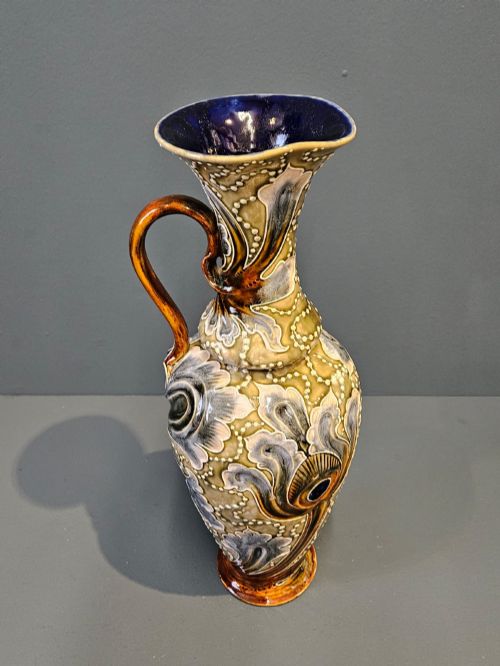
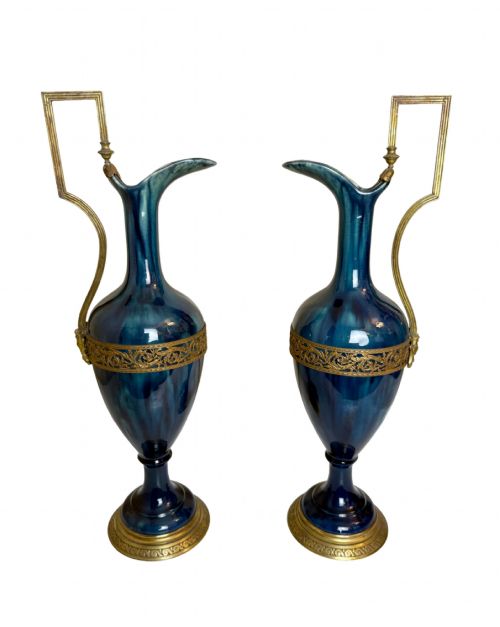
The selections span functional water jugs, harvest vessels, and decorative ewers shaped by Victorian and Arts and Crafts traditions. Most examples emerge from British potteries operating during the eighteen-eighties and eighteen-nineties, showing robust handles, pouring lips, and occasionally fitted metal rims.
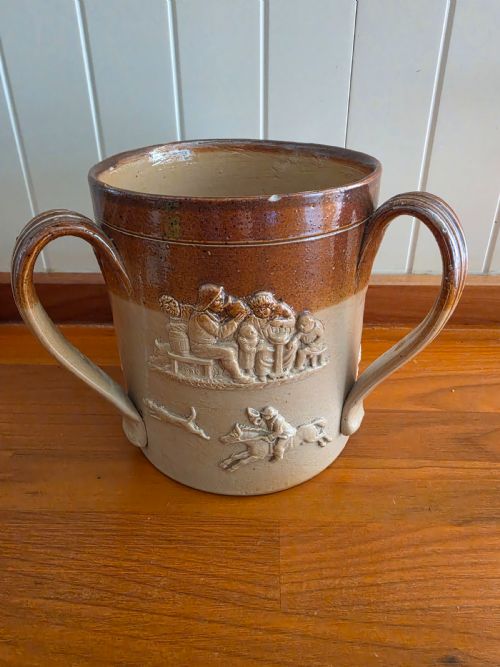
Forms vary from large multi-handled tygs and heavy tavern jugs to slender carafes and relief-moulded exhibition pieces. Collectors find both plain utilitarian salt-glazed bodies and ornate moulded designs featuring classical or sporting motifs.
How they were made
Potters shaped these vessels using dense clay bodies fired at high temperatures until vitrified, ensuring impermeability and strength. Many pieces utilised salt glazing, where salt thrown into the kiln produced a characteristic orange-peel texture on the surface.
Relief decoration was often achieved by pressing moulded sprigs onto the leather-hard body before firing, creating crisp sculptural scenes of bacchanalian revels or historical jubilees. Other methods included dipping the clay into coloured glazes or applying slip decoration prior to the final heat.
The selection includes specialised forms such as puzzle jugs, multi-handled tygs, and silver-rimmed harvest vessels bearing salt glazes.
What varies in quality
The distinction between standard utility vessels and top-tier examples lies in the crispness of the moulded relief work and the depth of the salt glaze. Superior pieces exhibit sharp, detailed figural scenes and balanced proportions without distortion from the kiln firing.
Maker attribution also dictates standing, with documented works from established potteries commanding greater attention than anonymous factory output. The sophistication of applied handles, metal rims, and specialised decorative motifs further separates ordinary kitchenware from exhibition-grade specimens.
Doulton Lambeth·Charles Meigh·Ridgway and Sons·Jones and Walley·Minton
The Vintage Stoneware Pitcher Glossary
- Stoneware
- A type of pottery fired at high temperatures until the clay body becomes vitrified and non-porous. It is heavy, durable, and naturally resistant to liquids.
- Salt glaze
- A glassy finish created by throwing common salt into the kiln during high-temperature firing, producing a pitted texture resembling an orange peel. This treatment protects the vessel and gives the surface a subtle sheen.
- Relief-moulded
- A technique where raised decorative patterns are pressed onto the surface of the vessel using pre-formed moulds. It creates tactile pictorial scenes that stand out from the main body.
- Slipware
- Pottery decorated with slip, which is a liquid mixture of clay and water applied to the vessel before firing. It allows for contrasting colours and fluid linear patterns beneath a clear glaze.
- Tyg
- A large drinking vessel featuring multiple handles designed to be passed around a group. These sturdy pieces are frequently constructed from stoneware or earthenware.
- Ewer
- A large jug with a wide spout and elaborate handle, traditionally used for pouring water. These forms often lean towards decorative display rather than rough domestic service.
Vintage Stoneware Pitcher: Frequently Asked Questions
What is a stoneware pitcher used for?
These pitchers were originally manufactured for carrying and serving water, beer, or cider in domestic settings and taverns. Heavy duty examples held substantial volumes of liquid for communal dining or hotel service.
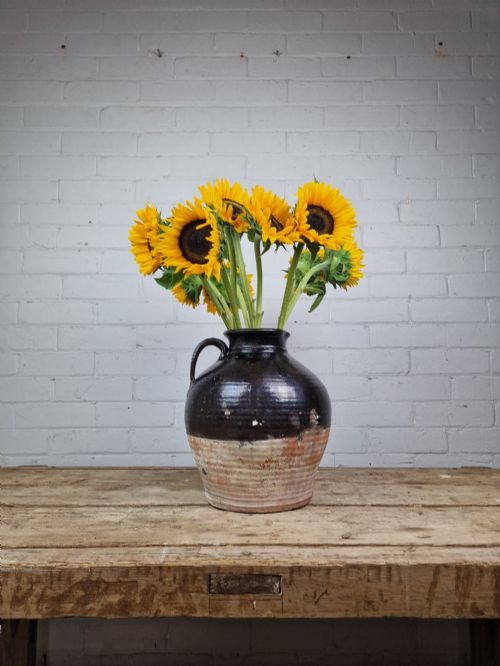
Today, buyers frequently utilise them as decorative vases for dried stems, shelf displays, or functional water jugs on a dining table. Their sturdy construction permits everyday use alongside decorative appreciation.
How do I date a vintage pitcher?
Dating relies on stylistic clues, factory marks stamped into the base, and specific commemorative subjects such as royal jubilees. Victorian pieces often display registration diamonds or impressed maker stamps characteristic of the nineteenth century.
Art Nouveau flourishes or distinct aesthetic movement motifs point toward the end of the nineteenth century and early twentieth century. Examining the weight, glaze type, and moulding style helps narrow down the production era.
Are these pitchers waterproof?
Stoneware is naturally vitrified during high-temperature firing, meaning the clay body itself is non-porous and holds liquids securely without interior glaze. Most pieces remain entirely capable of holding water for floral arrangements or serving.
Collectors should check for hairline cracks or historical repair work that might compromise structural integrity before filling them with liquid. Undamaged salt-glazed examples function precisely as they did in the nineteenth century.
What is salt glazed stoneware?
Salt glazing occurs when common salt is introduced into the kiln at the peak of the firing process. The sodium vaporises and reacts with the silica in the clay body to form a durable, glossy coating.
This chemical reaction produces the distinctive textured surface resembling an orange peel that protects the pitcher from moisture. It remains a hallmark of traditional stoneware manufacturing.