


Decorative Pottery Pitcher
These decorative pottery pitcher examples combine practical service with bold ornamental design across multiple historic periods.
Decorative Pottery Pitcher
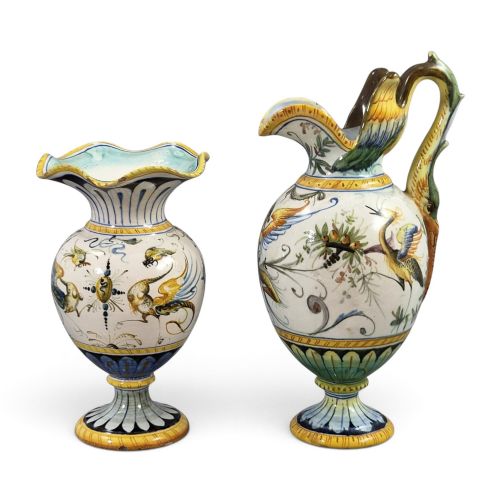
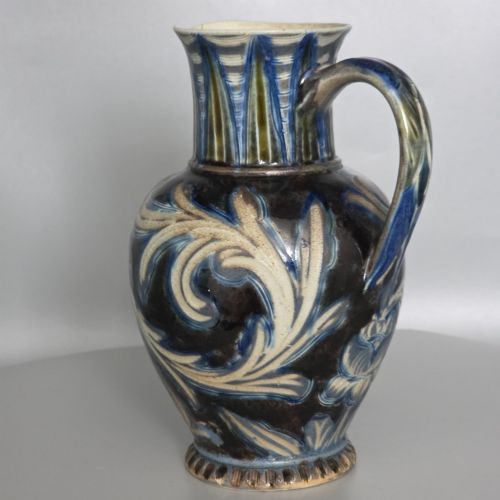
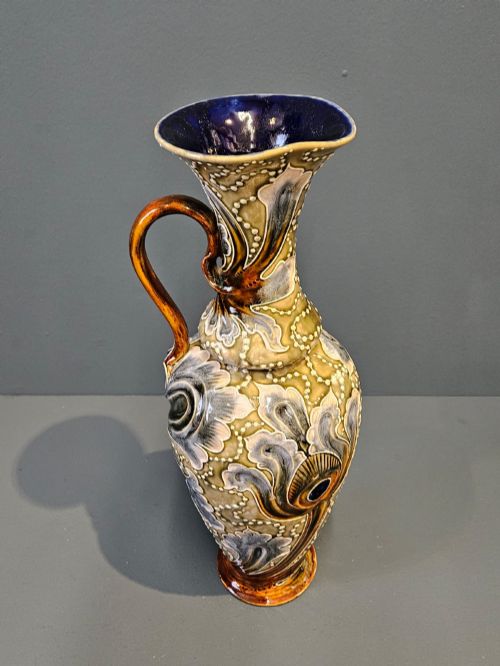
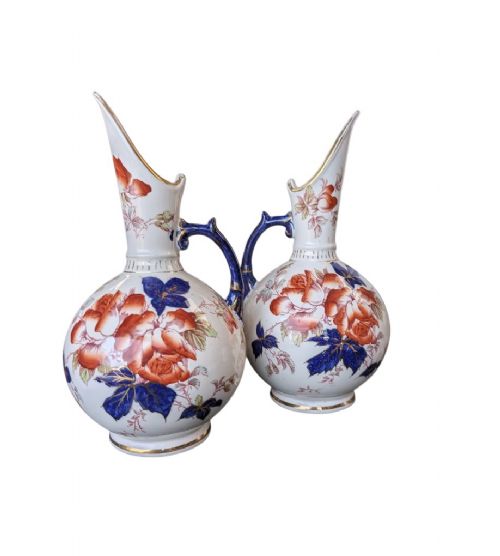
A decorative pottery pitcher bridges the gap between utilitarian vessel and ornamental display piece, taking forms such as ewers, jugs, and vases designed for water, wine, or flowers. When searching for a decorative pottery pitcher, buyers encounter everything from modest nineteenth century earthenware and ironstone pouring vessels to elaborate majolica and salt-glazed art pottery from the Victorian era.
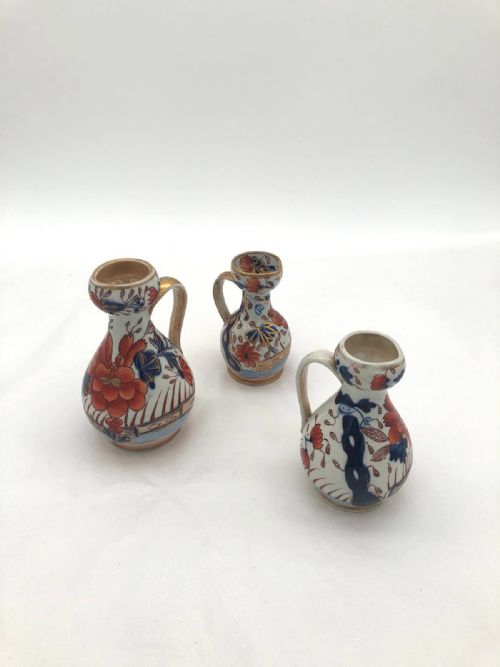
The selections span periods from the Georgian era through the Victorian years and into the early twentieth century, incorporating diverse regional traditions like Staffordshire figures, Gaudy Welsh patterns, and Japanese Imari influences. These pieces reflect shifting domestic tastes, moving from maritime transfer decoration and copper lustre to complex Renaissance Revival styling and studio pottery experiments.
Materials and production
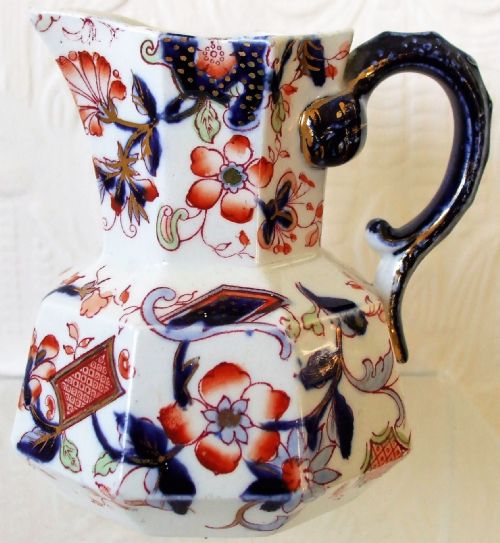
Potters constructed these vessels using foundational ceramic bodies including earthenware, heavy ironstone, pearlware, and robust stoneware, shaping them on the wheel or pressing them into moulds. Artisans then applied foundational glazes, enamel colours, and metallic details such as gold leaf to achieve rich surface textures and vibrant patterns.
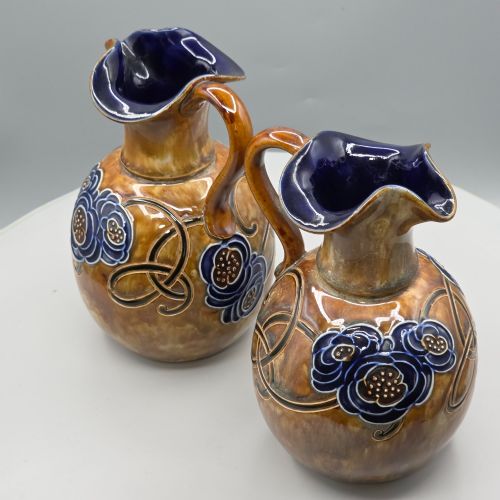
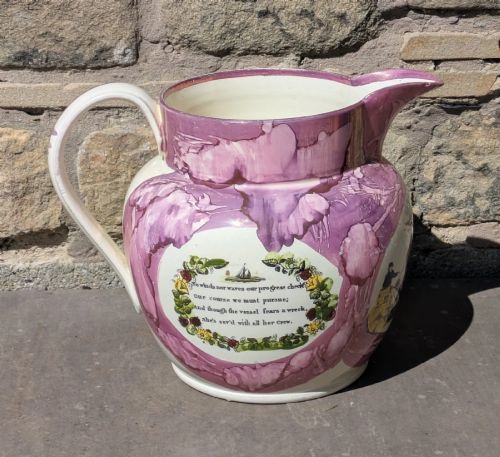
Decoration techniques varied widely according to the period and factory, encompassing incised studio work, transfer printing in pink, purple, or monochrome, and glossy majolica lead-glazes. Makers frequently utilised salt-glazing or slip decoration, resulting in durable finishes designed to withstand daily use while maintaining decorative appeal.
Several pitchers come complete with hounds gripping the handle for dear life.
Craftsmanship and execution
Quality in these vessels rests upon the crispness of the moulded relief, the steadiness of the handle attachment, and the precision of the hand-painted or transfer-printed decoration. Finer pieces demonstrate careful control during the kiln firing, preventing glaze pooling or distortion in large forms like ewers and multi-gallon jugs.
The reputation of the maker and the ambition of the design separate standard utilitarian production from exceptional studio and factory output. Pieces bearing specific incisions, clear registry marks, or documented artistic direction display a higher tier of ceramic artistry.
Royal Doulton·Mason's Ironstone·Cantagalli Florence·Doulton Lambeth·Keeling & Co.·Sir Edmund Elton·Doulton Burslem·Charlotte Rhead·Minton·Phillips & Bagster·Spode
The Decorative Pottery Pitcher Glossary
- Earthenware
- Porous pottery fired at lower temperatures, requiring an impermeable glaze to hold liquids.
- Ironstone
- A durable, heavy ceramic developed in the nineteenth century as a robust alternative to porcelain.
- Majolica
- A colourful, lead-glazed earthenware popular in the Victorian period, known for vivid hues and moulded relief decoration.
- Transfer printing
- A decoration technique using engraved copper plates to transfer ink designs onto ceramic surfaces before glazing.
- Stoneware
- Dense, vitrified pottery fired at high temperatures, naturally impervious to water without surface glazes.
Decorative Pottery Pitcher: Frequently Asked Questions
How do I identify Victorian salt glaze?
Victorian salt-glazed pieces display a distinctive, slightly pebbled or orange-peel texture created by throwing common salt into the kiln during high-temperature firing.
This chemical reaction produces a hard, glossy surface that seals the stoneware body without requiring liquid glaze application.
What is Gaudy Welsh pottery?
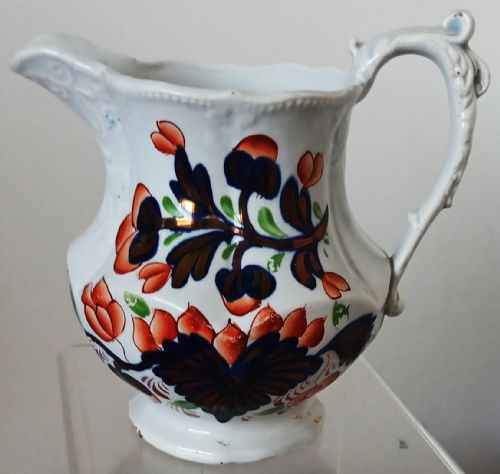
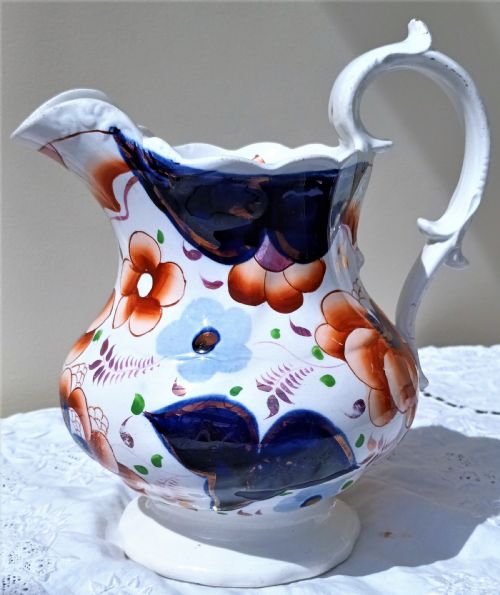
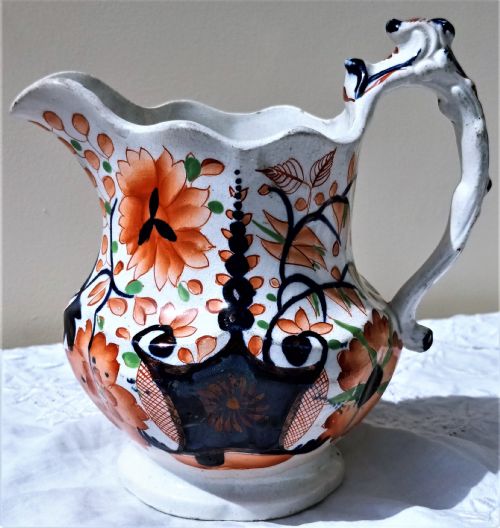
Gaudy Welsh refers to brightly coloured earthenware pottery produced in the nineteenth century, characterised by generous applications of cobalt blue, iron red, copper lustre, and green.
These pieces typically feature repeating patterns like Grape, Drape, Pagoda, or Gwent, designed primarily for the domestic market.
How are Toby jugs different from regular pitchers?
Toby jugs are modelled in the full-length or seated figure of a robust character, usually holding a mug of beer and a pipe, serving as both a drinking vessel and a satirical portrait.
Standard pitchers focus on geometric, botanical, or animal motifs rather than anthropomorphic figurine construction.