




Victorian Commemorative Jug
These Victorian commemorative jugs mark moments, marriages and movements in durable ceramic, giving the collector a direct link to nineteenth-century life.
Victorian Commemorative Jug
When you search for a victorian commemorative jug, you are looking at substantial vessels created to mark royal jubilees, political factions, and personal milestones across the nineteenth century. These jugs function as domestic monuments, often bearing names, dates, or specific historical scenes transferred or painted onto their surfaces.
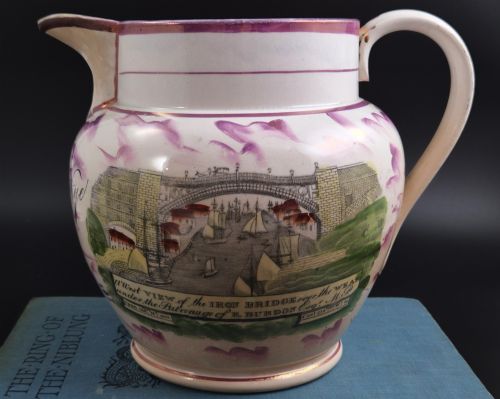
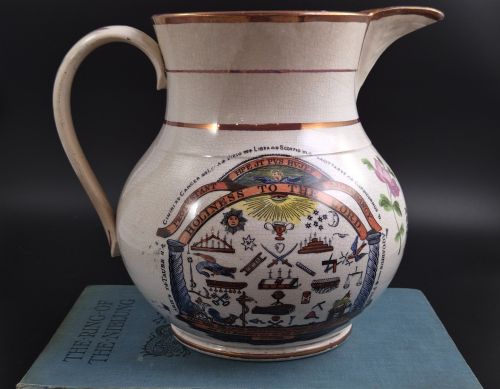
The pieces on this page span the nineteenth century, taking forms from robust stoneware pitchers to refined porcelain and earthenware jugs. You will frequently encounter Sunderland pink lustre vessels alongside Staffordshire earthenware and Doulton Lambeth salt-glazed stoneware.
Makers recorded in these listings include Mountford and Doulton Lambeth, alongside pieces originating from Staffordshire potteries. Their forms range from standard pouring vessels to large capacity pitchers holding up to one and a half gallons.
How they were made
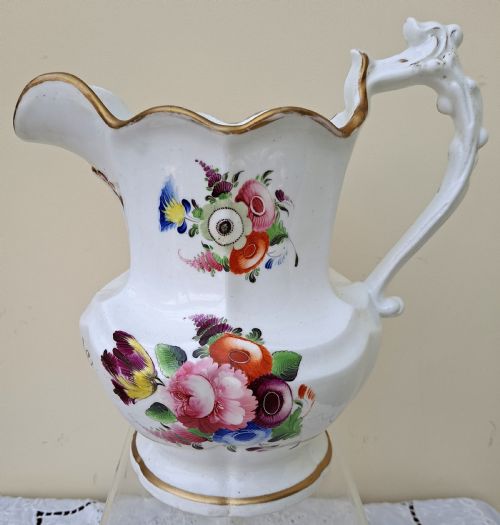
Potters shaped these jugs using earthenware, stoneware, or porcelain bodies, finished with glazes that range from metallic lustre to smooth enamel. Decoration relied heavily on polychrome pigments, transfer printing, and occasional applications of gold leaf to highlight names and dates.
Specialised techniques defined specific regional wares, such as the distinctive pink splash lustre associated with Sunderland potteries and the salt-glazed modelling found on Doulton Lambeth pieces. Potters applied moulded reliefs or hand-painted inscriptions directly onto the greenware or fired body before a final glaze firing.
Victorian Commemorative Jug Retail Price Guide 2026
Typical asking prices for victorian commemorative jug among the pieces listed under this phrase on Sellingantiques today, from the lower quarter to the upper quarter. They describe what is for sale here now, not the wider market.
Listings span the nineteenth century, incorporating both Georgian crossover periods and high Victorian production utilising earthenware, stoneware, and porcelain.
What varies in quality
Quality rests in the crispness of the moulded relief, the vibrancy of the polychrome or lustre glazes, and the clarity of the historical transfer prints. Finer jugs exhibit precise hand-painted details and well-preserved metallic surfaces that retain their original sheen.
The significance of the subject matter and the presence of specific, named individuals or dated events elevate certain examples above standard utilitarian production. Scale also plays a role, with larger, heavier stoneware vessels demonstrating distinct potting capabilities compared to domestic porcelain jugs.
Doulton Lambeth·Mountford Staffordshire
The Victorian Commemorative Jug Glossary
- Lustre glaze
- A metallic glaze application that produces an iridescent, reflective surface sheen. Sunderland pink lustre is particularly common on these commemorative vessels.
- Earthenware
- A porous pottery body fired at lower temperatures, requiring a vitreous glaze to hold liquids. Most nineteenth-century Staffordshire jugs utilise this material.
- Stoneware
- A dense, heavy ceramic fired at high temperatures until vitrified and completely non-porous. It provides the durable body for large capacity pitchers.
- Transfer printing
- A decoration technique where an engraved metal plate transfers a design onto tissue paper and then onto the ceramic body. This method allowed for detailed historical scenes and long inscriptions.
- Polychrome
- The use of multiple distinct colours in the painted or printed decoration of the ceramic surface.
Victorian Commemorative Jug: Frequently Asked Questions
What events do these jugs celebrate?
These pieces commemorate royal milestones like Queen Victoria's jubilee, political groups such as the Orange Order, and local volunteer movements. They also mark personal events like marriages and memorialise named individuals with specific dates.
Such vessels served as permanent household records of public enthusiasm and family history long before mass photography existed.
How do I identify a Sunderland lustre jug?
Sunderland jugs typically feature distinctive pink splash or marbled lustre effects, often combined with transfer-printed images of local landmarks like the Iron Bridge over the Wear. They frequently include moral verses or patriotic sentiments alongside hand-painted highlights.
These characteristics separate North East regional production from contemporaneous Staffordshire earthenware factories.
Were these jugs used for pouring liquids?
While shaped as functional pitchers with spouts and handles, many commemorative pieces functioned primarily as display objects on mantelpieces and sideboards. Their substantial size, particularly the larger one-and-a-half-gallon stoneware variants, suggests they were sometimes reserved for special communal gatherings.
Their survival in clean condition often indicates they spent more time on display than in active kitchen service.
How can I tell a Georgian piece from a Victorian one?
Attribution relies on stylistic markers, recorded dates, and technical shifts between late eighteenth-century Georgian aesthetics and nineteenth-century Victorian industrial output. Pieces often carry specific dates or named subjects that anchor them to a precise regnal period.
Pottery bodies also transitioned over these decades from softer earthenwares toward harder stonewares and refined porcelains.