

Antique Milk Jugs
A small jug for pouring milk or cream at the tea table, made in porcelain, earthenware and silver from the middle of the 18th century onwards.

Antique Milk Jugs
Small pouring vessels, mostly ceramic, mostly holding well under a pint. They sold singly, and sometimes in graduated sets of three or four. Dealers use milk jug and cream jug interchangeably: the word cream or creamer turns up in about a quarter of titles on Sellingantiques, often in the same listing as milk.
The form arrived with tea drinking. As matching pots, sugar bowls and jugs became standard equipage in the 18th century, the small jug was made first in silver, then in the new English porcelains and earthenwares, and it stayed in everyday production through the 19th and 20th centuries.
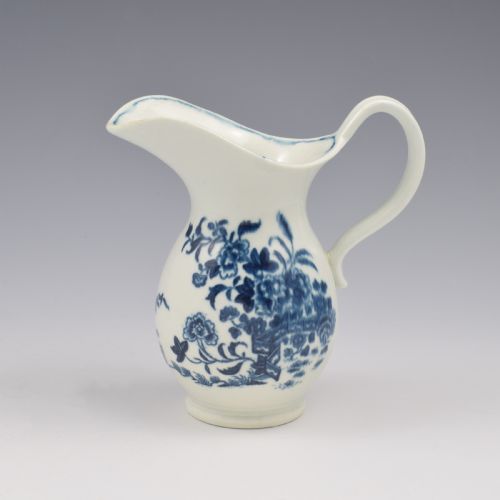
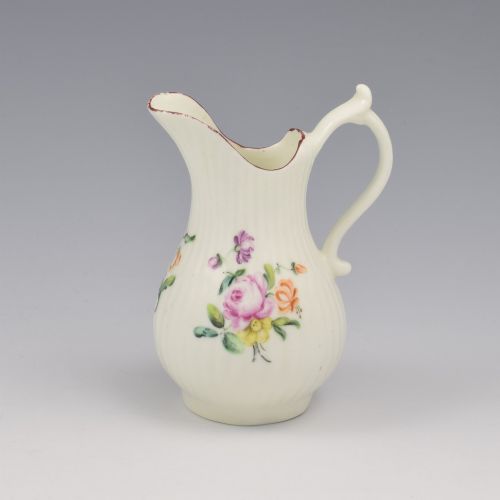
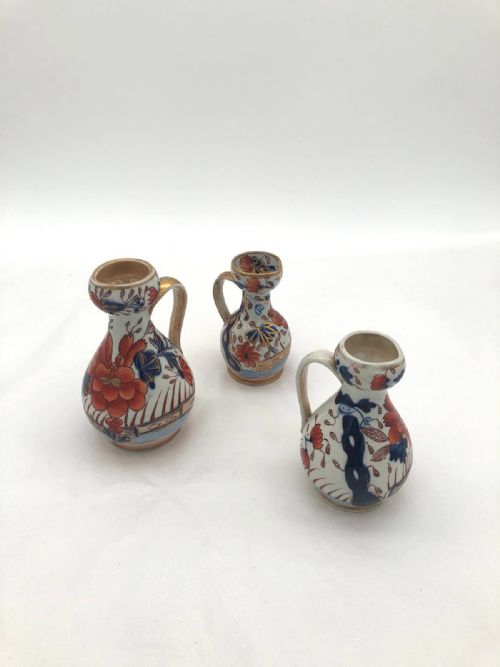
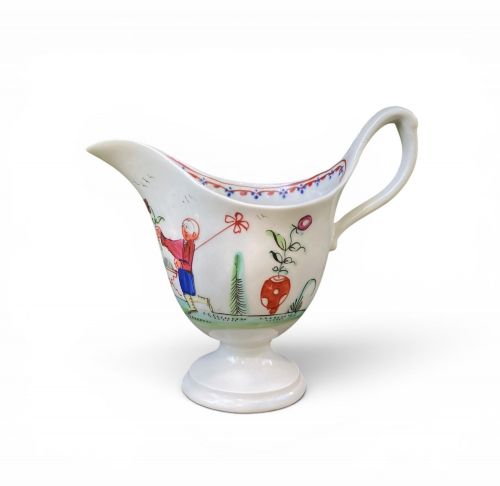
The jug you are most likely to meet is a single small ceramic one of the 19th century. Porcelain leads the bodies, with pottery and earthenware behind it. Two clusters stand out: Gaudy Welsh named-pattern pottery, nearly all labelled Victorian, and early porcelain cream jugs with the narrow sparrow beak lip. Staffordshire lustre and earthenware make up another group, and a handful of solid silver jugs sit apart from the rest.
Dating is loose. The dealers' own range runs 1750 to 1960, but only 21 of 93 listings carry a clean year, and the rest are given as a century or a reign. A jug listed as 19th century may sit anywhere between about 1800 and 1899, and the title text often carries a circa year the date field does not.

What Sets Them Apart
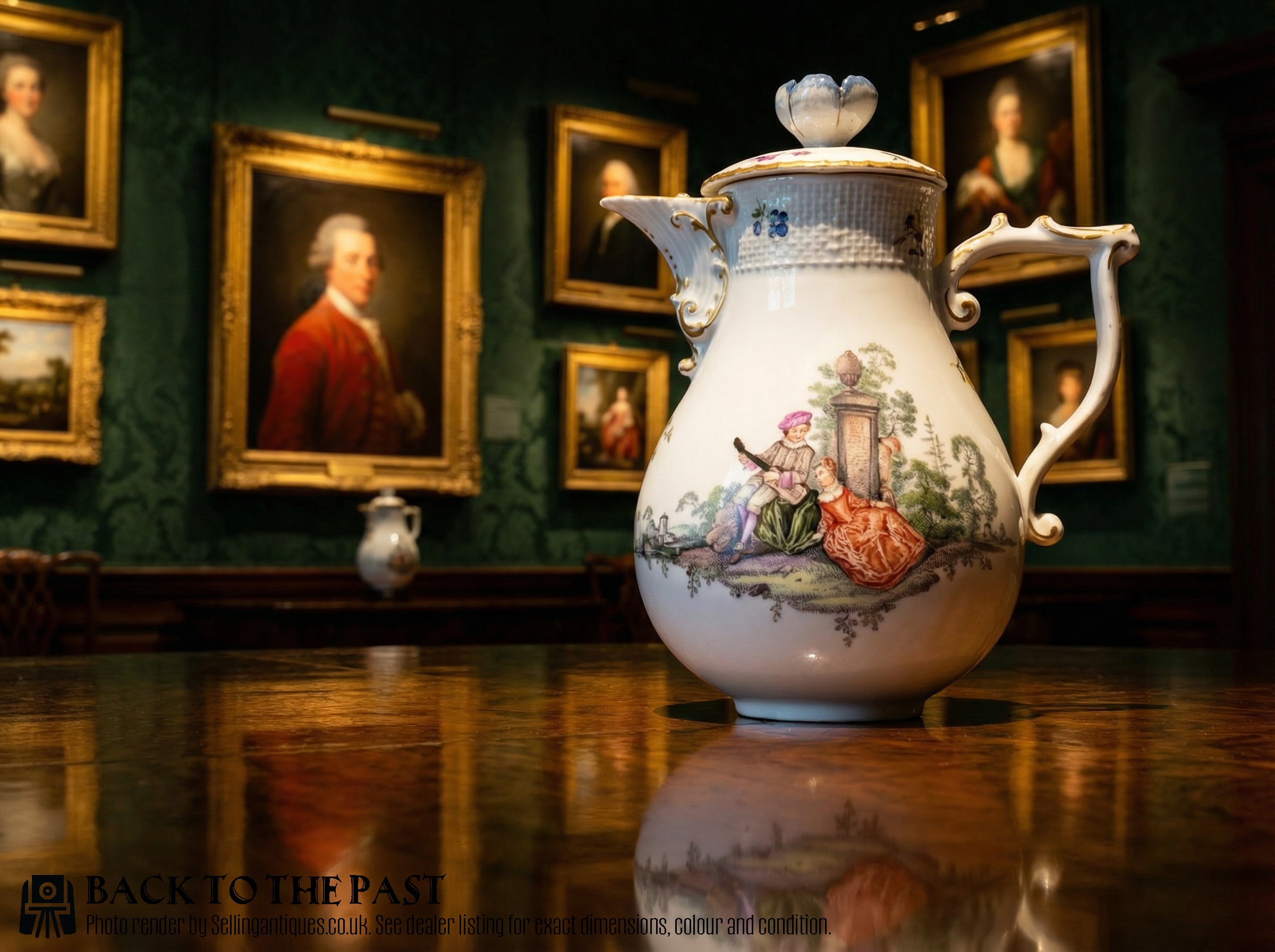
Age and attribution do most of the work. Attributed 18th- and early 19th-century porcelain, English and Continental, sits at the top of the sampled range, with a Continental milk jug and cover of about 1760 at the very top. A jug titled only as a decorated 19th-century jug, with no factory and no date, sits at the bottom.
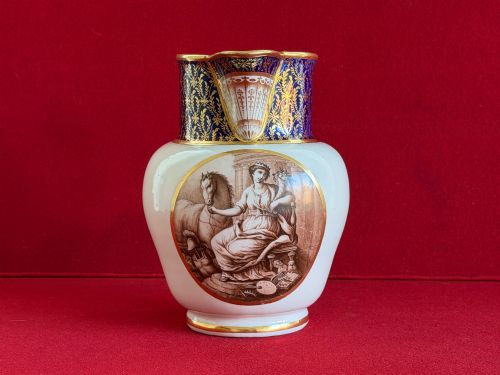
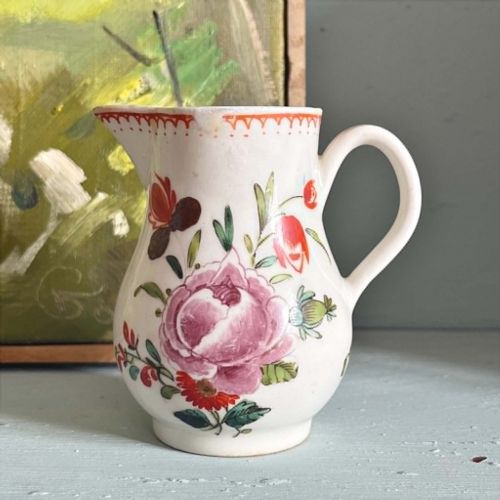
After that it comes down to how the decoration was put on. Handpainted work, painted fruit, armorial crests and gilding push a jug up; transfer printing and moulded lustre sit lower. Naming the pattern matters too, since the higher-priced porcelain carries a specific pattern name or number while the cheapest examples name nothing.
Material and quantity fill in the rest. Porcelain and solid silver occupy the middle and upper part of the range, copper lustre and general pottery cluster near the bottom, and graduated sets of three or four price above a single jug.
Antique Milk Jugs Retail Price Guide 2026
Typical UK retail prices for milk jugs, calculated from the Sellingantiques database of over a million retail prices indexed since 2003. This retail price guide relies exclusively on Sellingantiques data; no external sources or auction records are used, so the figures do not describe the wider market.
The latest is a solid silver one-pint milk jug dated 1960, one of only a handful of 20th century entries on Sellingantiques.
The Antique Milk Jugs Glossary
- Sparrow beak
- The narrow, sharply pointed triangular lip on many 18th-century porcelain cream jugs. Named in eight titles here.
- Pattern name or number
- The identifier most listings hang on, given either as a name such as Pagoda, Fisherman or Mandarin, or as a number: 121, 421, 4003, 2/1215.
- First period
- Shorthand for the earliest phase of a factory's output. It appears in eight titles, almost always of one Worcestershire porcelain works.
- Gaudy Welsh
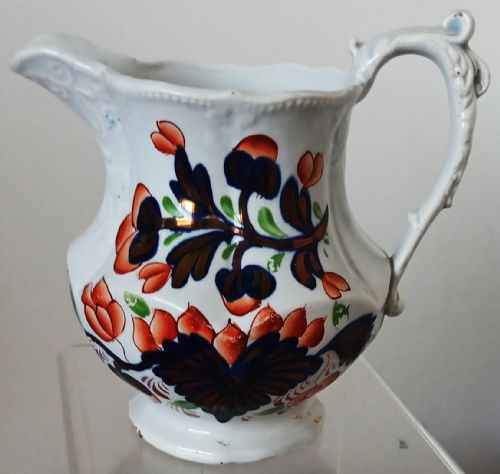
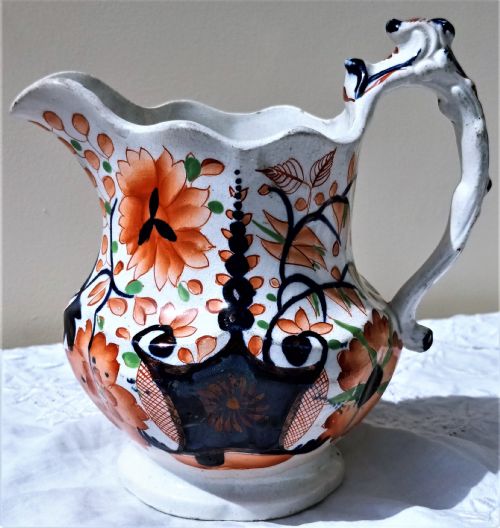
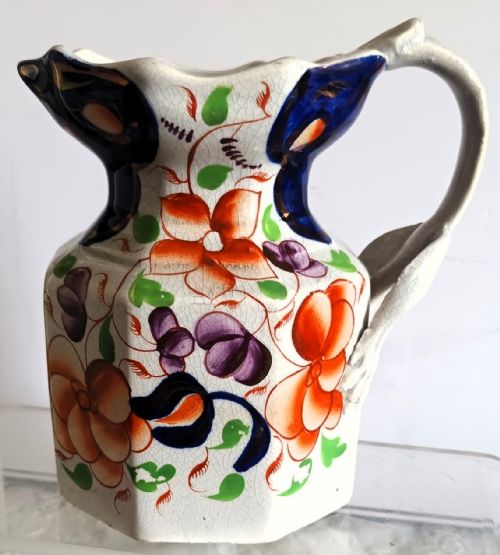
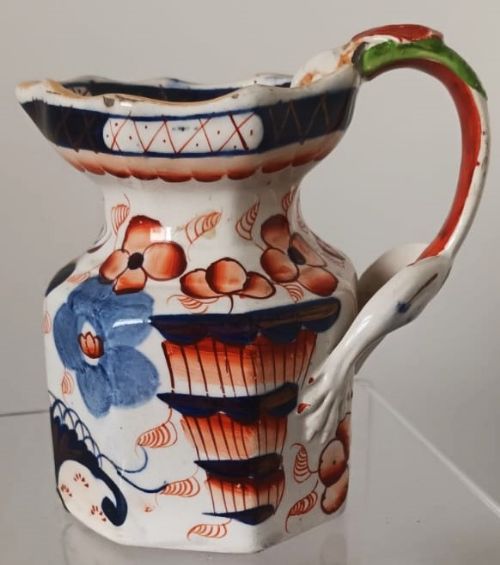
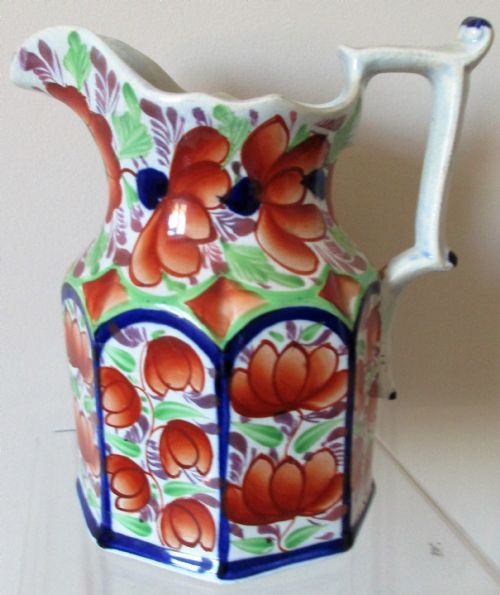
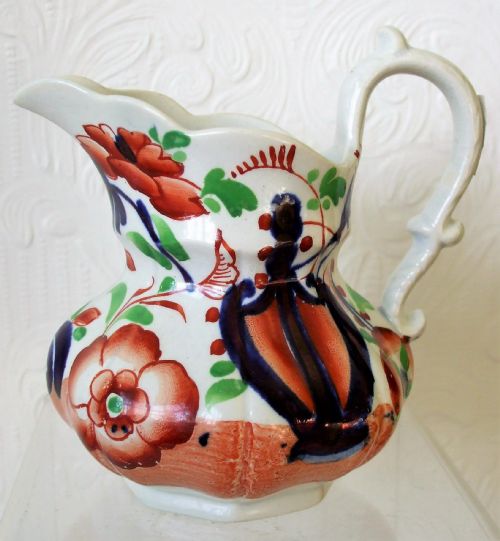
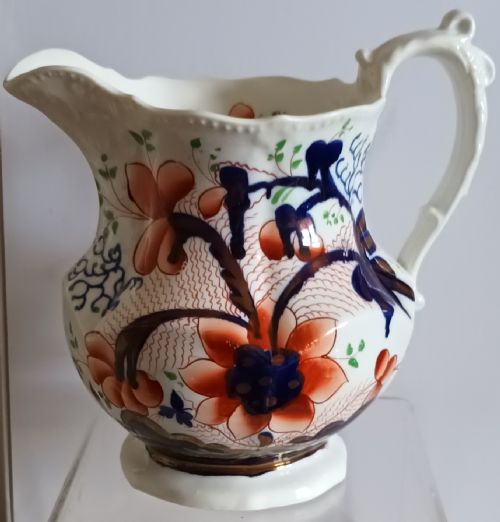
- Boldly painted and lustred earthenware sold under pattern names, among them Gwent, Gower, Conwy, Harlech and Bethesda. Nearly every one here is labelled Victorian.
- Lustre
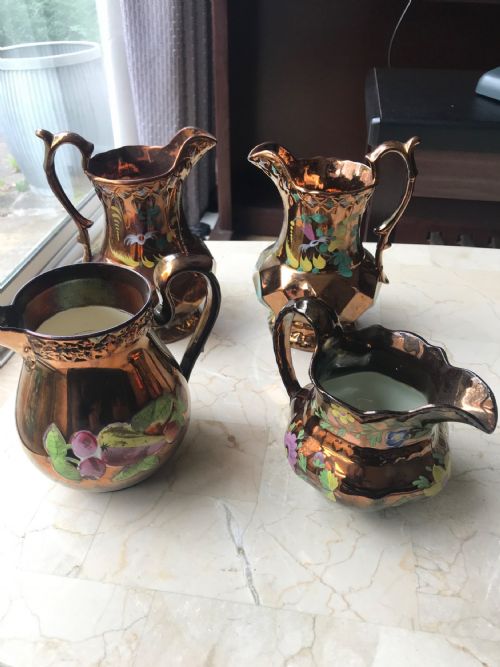
- A thin metallic film over the glaze, copper, silver or blue, named in nine titles and usually on Staffordshire earthenware.
- Hydra jug
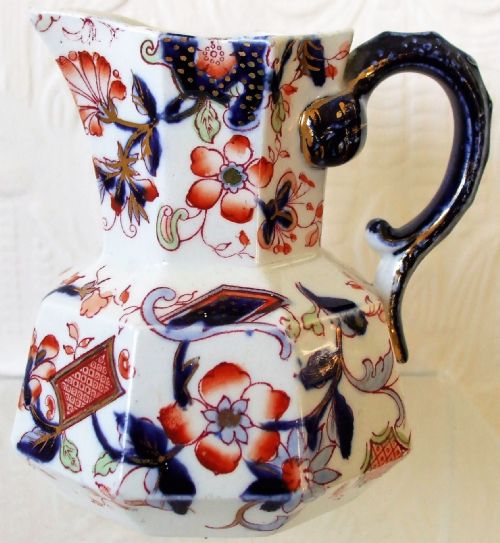
- A jug shape with a serpent-form handle, turning up in both ironstone and porcelain.
Antique Milk Jugs: Frequently Asked Questions
What is the difference between a milk jug and a cream jug?
On Sellingantiques, very little. Dealers use the two words interchangeably, and cream or creamer appears in around a quarter of titles, frequently alongside milk in the same description.
Both describe the same thing: a small pouring vessel for the tea or coffee table, generally holding well under a pint.
How old are most of these jugs?
Nineteenth century is the commonest dated value, with thirty listings against thirteen for the 18th century and nine given as Georgian. Style labels like Georgian, Victorian and Regency overlap the centuries rather than narrowing them.
Twentieth-century entries are thin, clustered in the 1900s, 1920s and 1930s. The latest piece in the samples is a solid silver one-pint jug of 1960.
Why do so many titles give a pattern name?
Because pattern is how this category identifies itself. The word appears in about a fifth of titles, and buyers more often meet a jug named by its printed or painted pattern than by its shape.
Gaudy Welsh pottery arrives labelled by pattern rather than maker, with Pagoda, Gwent, Gower, Conwy, Grape, Harlech, Aberaeron and Bethesda across eleven listings. Pattern numbers such as 121, 421 and 2/1215 belong mainly to the early porcelain end.
Are they sold singly or in sets?
Singly, for the most part. Ten titles are plural, though, which is more than you might expect.
Those include sets of three, a graduated set of four blue and white jugs and a suite of four serpent-handled jugs. Sets price above the single-jug median.
Which materials turn up?
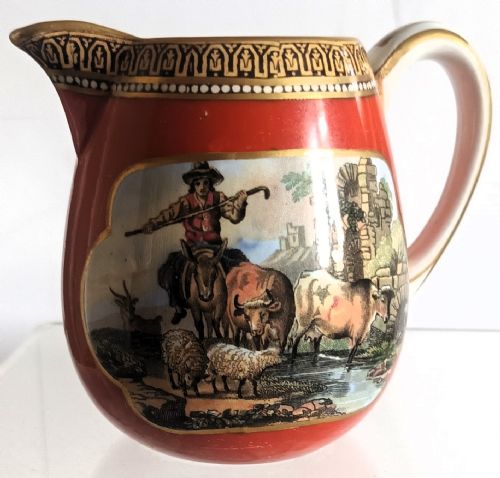
Porcelain dominates, named in twenty-nine of ninety-three titles, with pottery and earthenware in thirteen. Within the earthenware there is copper and silver lustre, pearlware, creamware, black basalt and Pratt-ware.
Silver accounts for only a few listings, but they carry the widest date spread of any material: 1802, 1822, the Victorian period and 1960.
Do foreign jugs appear alongside the English ones?
Occasionally. The samples include a Chinese famille rose cream jug put at about 1750, an Old Paris gilded milk jug of the 1830s, a French cream jug of around 1900 and two German porcelain examples.
Continental porcelain also stands at the top of the sampled range, in the shape of a milk jug and cover of about 1760.