

Antique Cream Jugs
A cream jug is a small table jug, usually only a few inches high, made to pour cream or milk alongside a teapot and sugar bowl.
Antique Cream Jugs
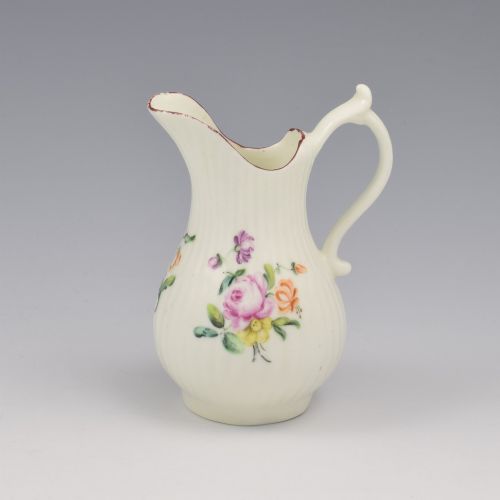
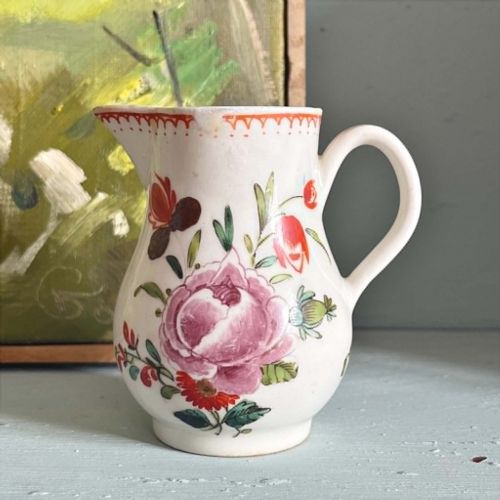
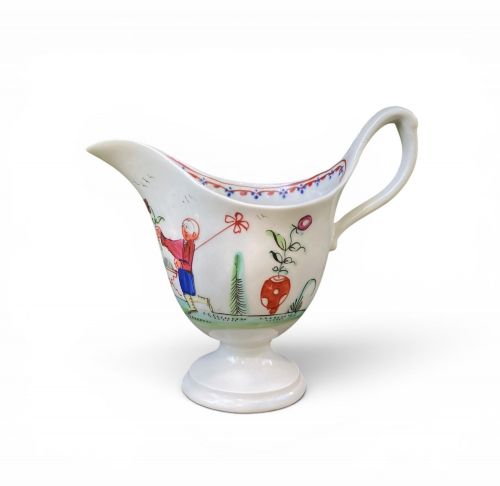
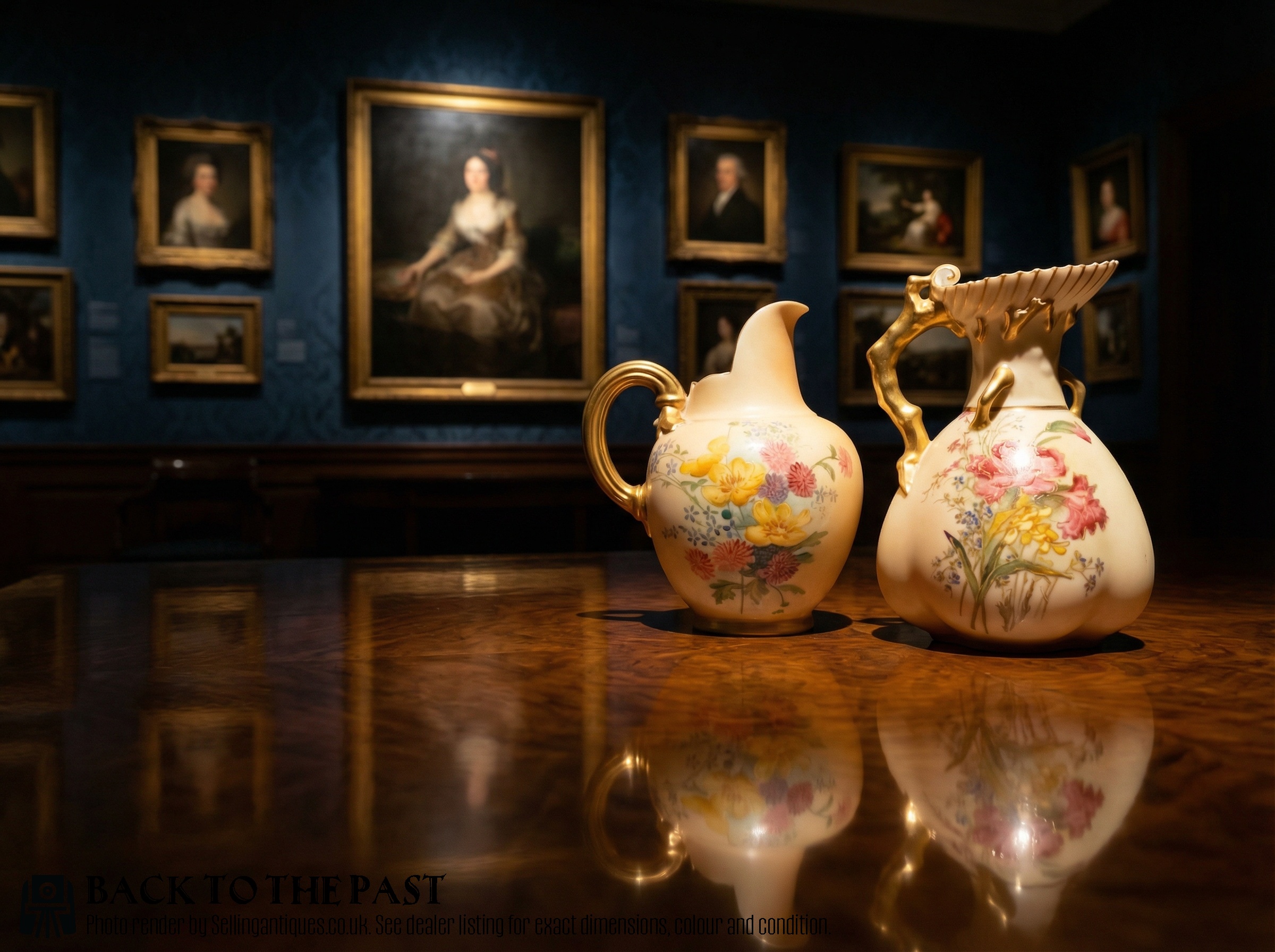
Small jugs for cream or milk became a standard part of English tea and coffee services from the early 18th century. As tea drinking spread, pots, sugar bowls and cream jugs were made together, in ceramic and in silver alike. The little sparrow-beak and helmet shapes belong to the tea table, not to any dairy work.
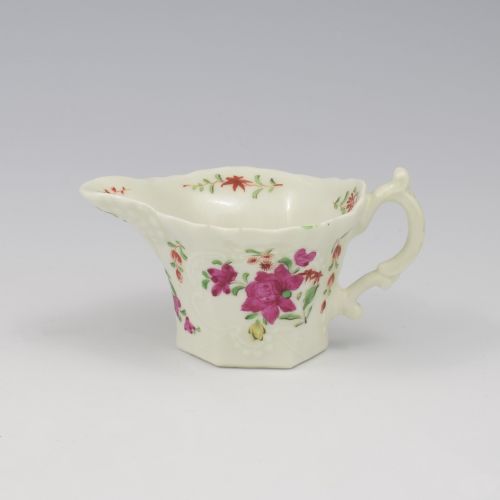
English porcelain dominates the heading, and Worcester is the name that recurs most: porcelain appears in 34 of 112 titles and Worcester in 30 of them. Identification tends to hang on two things. One is the spout, the sharp triangular sparrow beak of early English jugs. The other is a factory pattern number, quoted in titles from two digits up to four and beyond, so a jug can often be matched to a service by number alone.
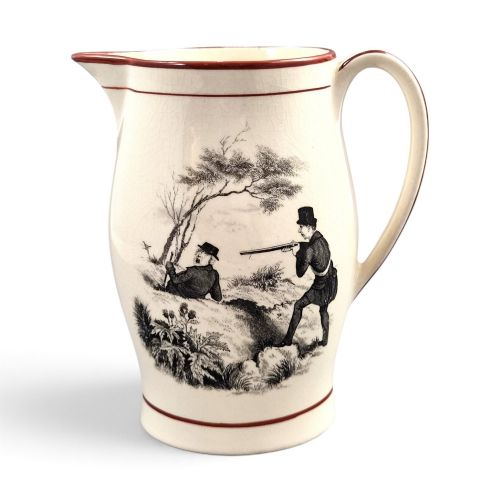
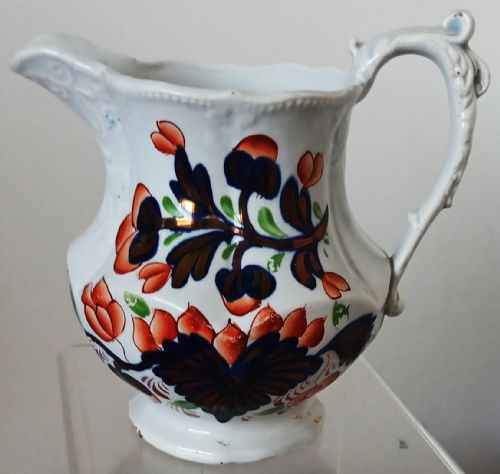
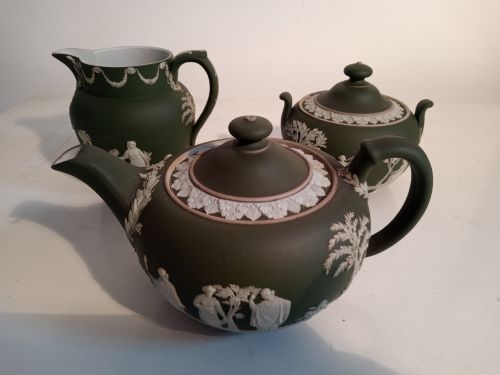
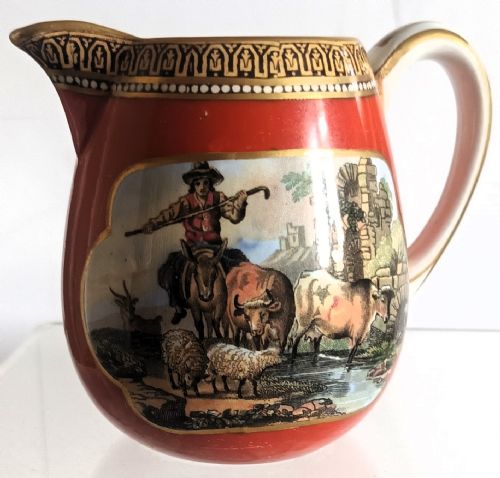
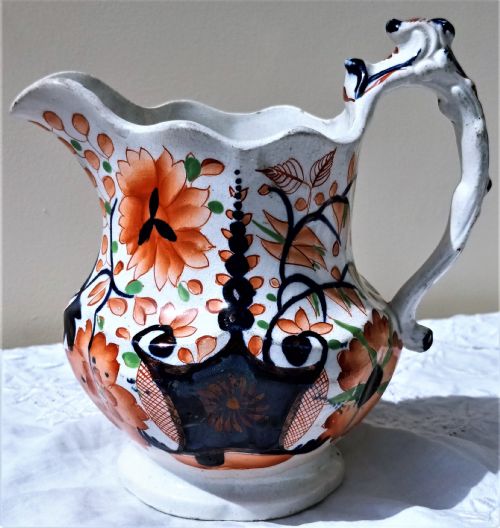
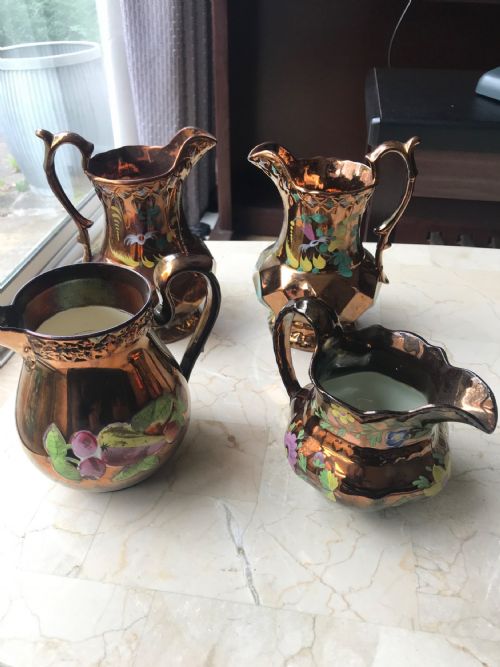
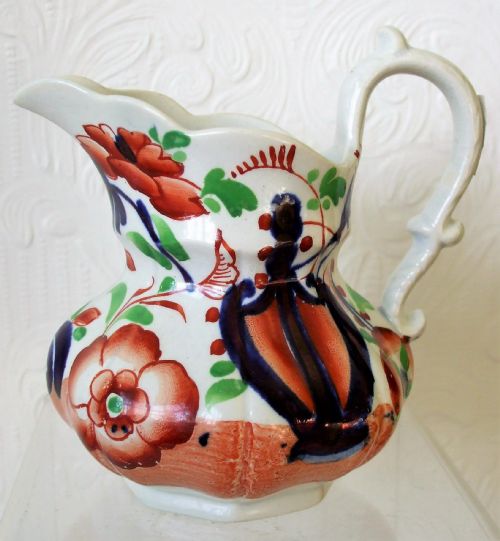
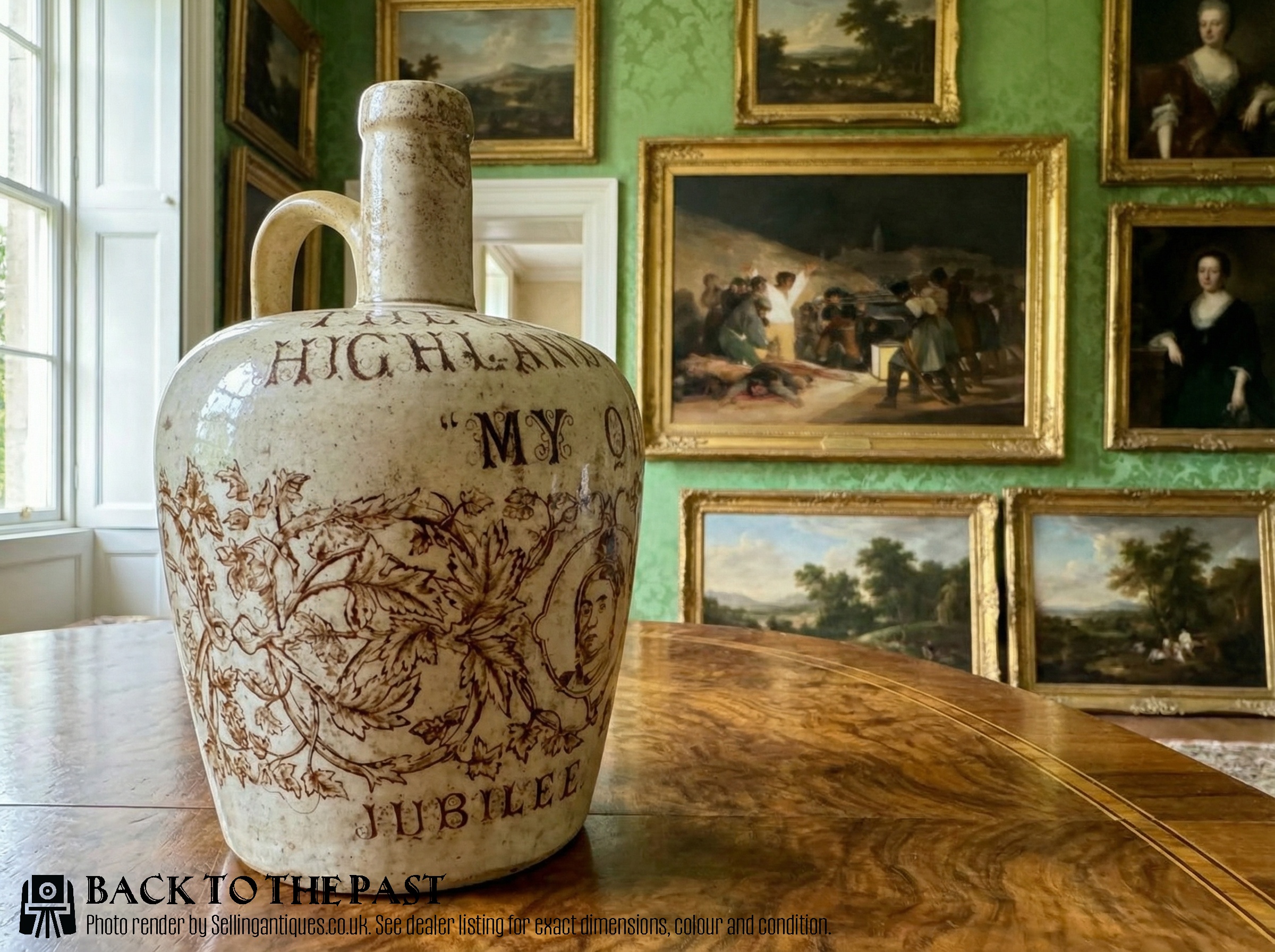
Beyond the 18th-century porcelain, three groups turn up throughout. Royal Worcester painted-fruit and signed-artist jugs of roughly 1900 to 1960, hallmarked silver from Georgian pedestal and bright-cut forms to Edwardian and later, and Staffordshire pottery in copper lustre, pearlware, creamware, Prattware and Gaudy Welsh. Continental and Chinese pieces make up a smaller share.
Dates in the archive run from 1750 to 1960, a long span for one small object, and only 30 of the 112 listings carry a clean year. Many say just 18th Century or 19th Century, or use a style label like Georgian or Regency. Sharper decade tags cluster in the 20th century, where marks and hallmarks make a year easy to state. The same heading also gathers close relatives: sauce boats, cream boats, ewers, and larger relief-moulded or stoneware jugs.
Where The Range Widens
Painting decides a great deal at the Royal Worcester end. Jugs with cattle by Harry Stinton, fruit by Townsend, and rope-edge examples described as artist signed sit at the top of the sampled range, while unattributed painted fruit sits below them. A named hand and a named subject carry the piece.
With early porcelain it is attribution and period precision that lift a jug. Titles that pin a piece to First Period or Dr Wall Worcester, to Bow, early Derby, Caughley or Liverpool and Herculaneum sit high; those offering only "stoneware jug" sit low. Rarity language in the title tracks the same climb, on things like a Caughley Rock Strata Island pattern or a Worcester dolphin ewer with lamprey handle.
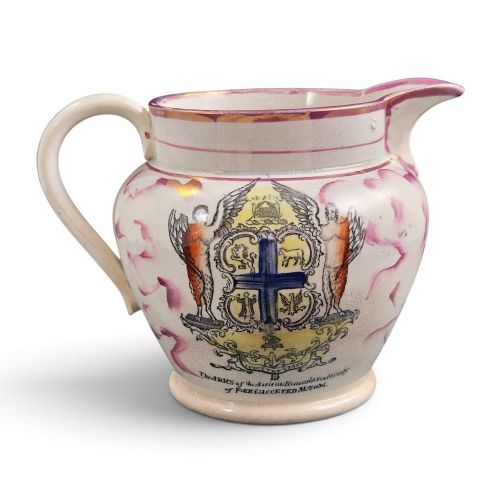
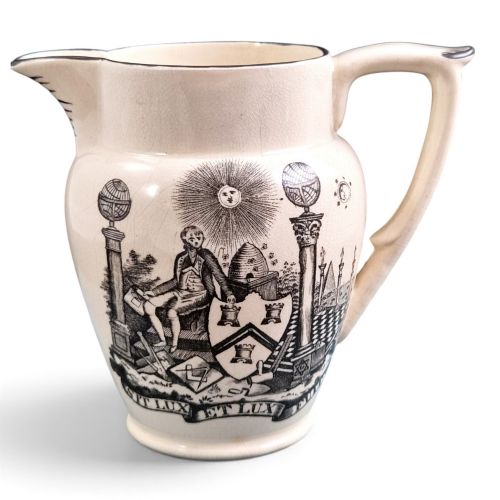
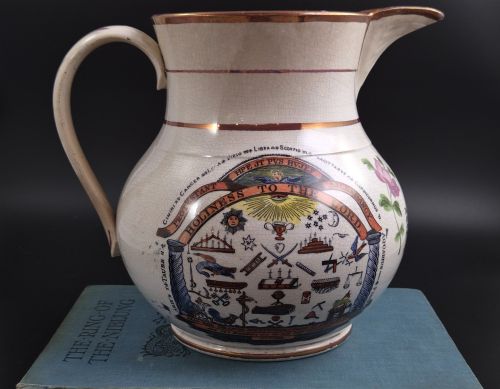
Two other things push upward. Completeness, in cream-and-sugar pairs, a set of three graduated Victorian jugs, a pair of helmet-shape jugs, a bachelor teaset. And scale in pottery, where an exhibition salt-glazed sprigged stoneware jug and a very large Oddfellows creamware jug top their group, and a small copper lustre jug sits at the bottom of it.
Antique Cream Jugs Retail Price Guide 2026
Typical UK retail prices for cream jugs, calculated from the Sellingantiques database of over a million retail prices indexed since 2003. This retail price guide relies exclusively on Sellingantiques data; no external sources or auction records are used, so the figures do not describe the wider market.
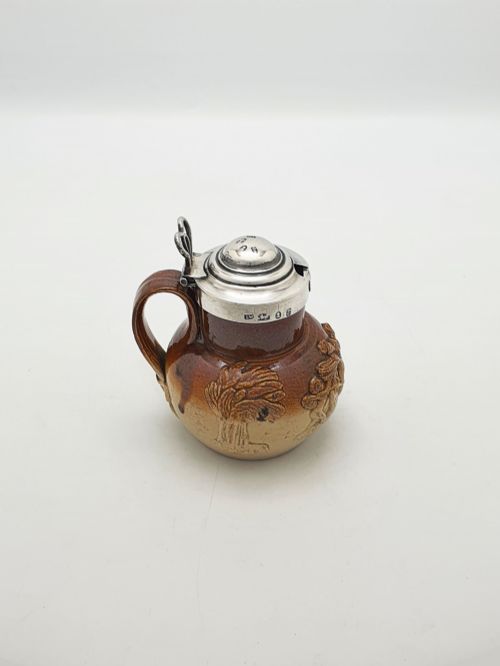
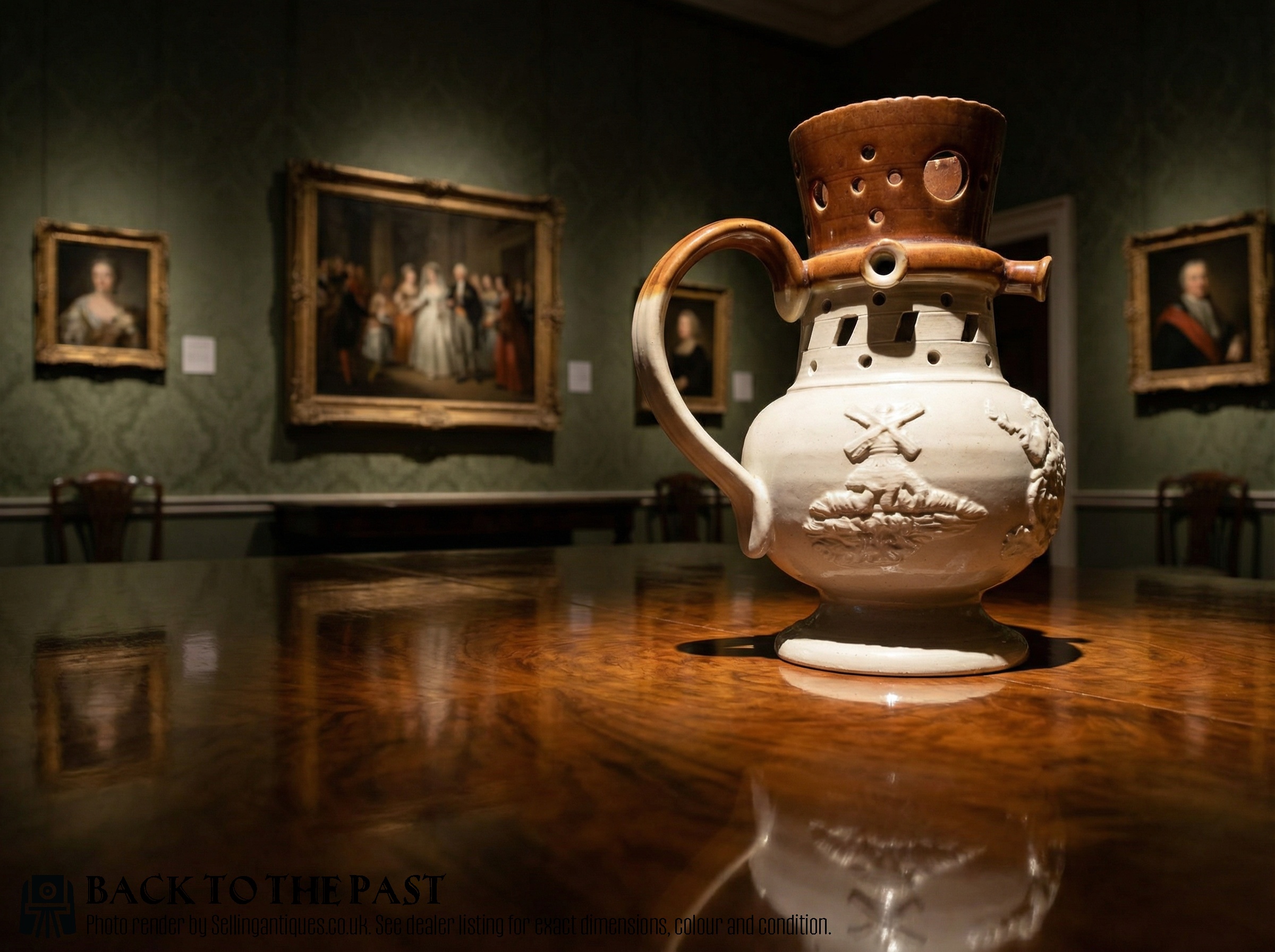
One-offs that have passed through the archive include a dolphin ewer with a lamprey handle, a stoneware puzzle jug and a pouch jug.
The Antique Cream Jugs Glossary
- Sparrow beak
- The small, sharp, triangular spout on early English porcelain cream jugs. It is the single most repeated identifying word in the category, recurring across Worcester, Bow and Chinese examples.
- Pattern number
- The factory's own decoration reference, quoted in titles as 121, 173, 421, 4003 or 2/1215. Pattern appears in 18 of 112 titles.
- First Period / Dr Wall
- The earliest Worcester porcelain phase, the two terms used interchangeably in titles to place a piece before about 1776. Flight Period follows it, appearing with dates around 1785.
- Cream boat
- An oval, low-sided pourer, close kin to the cream jug and listed alongside it under the same heading, as sauce boats are.
- Clip handle
- A handle form named in New Hall porcelain titles of the 1780s and 1790s.
- Rope edge
- A twisted moulded rim found on 20th-century Royal Worcester painted-fruit jugs. Blush ivory, the softly tinted ivory ground, belongs to the same factory a little earlier.
Antique Cream Jugs: Frequently Asked Questions
Why is Worcester mentioned so often?
Worcester appears in 30 of 112 titles, more than any other name. Fifteen of those are Royal Worcester and ten are earlier Worcester porcelain.
The factory made cream jugs across the whole span the archive covers, from First Period sparrow-beak forms through to painted-fruit jugs of the mid 20th century. That gives it a longer run under this heading than any other maker.
What does sparrow beak mean on a cream jug?
It describes the spout: a small, sharp, triangular point rather than a rounded lip. It belongs to early English porcelain jug forms.
In this archive it turns up on Worcester, Bow and Chinese famille rose examples, which is why it works as a shape term rather than a factory one.
How old are most of these jugs?
The dated field runs from 1750 to 1960. Twenty-six listings say only 18th Century and twenty-one only 19th Century, with a further handful labelled Georgian, Victorian or Regency.
Only 30 of the 112 listings carry a clean year. Those that do cluster in the 20th century, where factory marks and silver hallmarks make a date straightforward to state.
The earliest dated piece is Continental rather than English, set at 1750.
Are silver cream jugs common in this category?
Silver appears in 15 of 112 titles, so roughly an eighth of the heading. The sampled pieces run from a George III pedestal jug of 1767 and a bright-cut example of 1802 through Sheffield jugs of 1893, 1900 and 1913, to an Arts and Crafts jug dated 1920.
Porcelain and pottery together account for a good deal more.
Do larger jugs get listed under this heading too?
Yes. Sauce boats, cream boats, ewers and bigger relief-moulded or stoneware jugs all appear alongside the small tea-table forms.
The largest things sold under the heading are not cream jugs at all: an exhibition salt-glazed sprigged stoneware jug and a very large Oddfellows creamware jug, both near the top of the range.
How often do cream jugs come up for sale?
Only about ten a year are listed on Sellingantiques, so it is not a form you see in quantity.
Spread thinly, too: 49 different dealers have offered one, meaning almost no dealer carries the form twice. Odd shapes appear once and nowhere else, among them a stoneware puzzle jug, a pouch jug, and an ice water jug made for hotel use.