





Cobalt Blue Stoneware Vessel
A cobalt blue stoneware vessel brings deep mineral richness to a room, holding form and glaze through centuries of quiet use.
Cobalt Blue Stoneware Vessel
A cobalt blue stoneware vessel encompasses a diverse group of hard, vitrified ceramic pieces created across the seventeenth, eighteenth, and nineteenth centuries. These utilitarian and decorative objects range from German salt-glazed beer jugs and tankards to Victorian art pottery ewers, jardinieres, and vases.
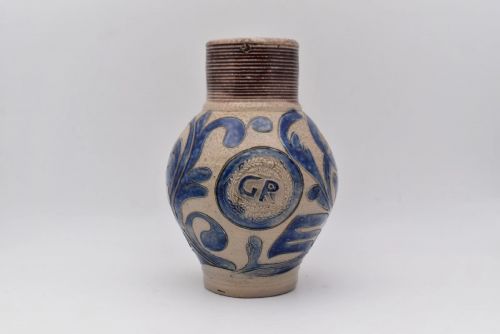
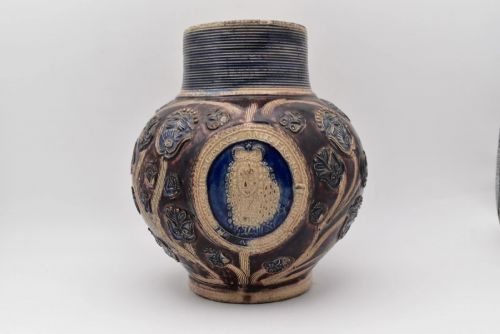
The version most commonly encountered on this page is the Victorian Doulton Lambeth creation, alongside earlier German Westerwald specimens bearing royal ciphers and portraits. Forms shift from robust drinking vessels to expansive jardinieres and slender decorative vases, reflecting evolving domestic tastes.
Origins span European kilns, notably English and German workshops, with occasional Chinese ceramic bowls entering the mix. Each piece showcases the robust qualities of stoneware combined with the striking visual impact of cobalt decoration.
Materials and construction
Makers produced these vessels using dense, impermeable stoneware clay fired at high temperatures until vitrified. This process rendered the body impervious to liquids without requiring interior glazing.
Cobalt oxide provided the stable blue pigment applied beneath or over the glaze before firing, yielding rich tones that react differently depending on the kiln atmosphere. Salt-glazing introduced sodium chloride into the kiln during the peak of the burn, creating a characteristic orange-peel texture on the surface of early pieces.
Subsequent Victorian works frequently incorporated applied enamel and gold leaf accents over the fired stoneware body. Some pieces also integrated fine slip-cast detailing or hand-incised foliage characteristic of the Arts and Crafts movement.
Cobalt Blue Stoneware Vessel Retail Price Guide 2026
Typical asking prices for cobalt blue stoneware vessel among the pieces listed under this phrase on Sellingantiques today, from the lower quarter to the upper quarter. They describe what is for sale here now, not the wider market.
Listings feature periods spanning from the seventeenth century through the Victorian era, utilising stoneware, ceramic, salt-glaze, enamel, and gold leaf.
Judging the range
The division between standard production ware and the top of the range rests on the crispness of the cobalt brushwork and the precision of the incised or moulded decoration. Pieces bearing distinct historical ciphers or attributed to named artists demonstrate superior execution.
Surface finish dictates value, with evenly distributed salt-glaze pitting or smooth, unblemished enamel applications marking superior kiln control. Lesser examples exhibit muddy cobalt bleeding or indistinct relief ornament resulting from worn moulds.
Doulton Lambeth·Royal Doulton·Ethel Beard·William Adams And Sons
The Cobalt Blue Stoneware Vessel Glossary
- Stoneware
- A dense, heavy ceramic fired at high temperatures until vitrified and non-porous. It resists chipping and holds liquids safely without absorbing them.
- Salt-glaze
- A glossy, slightly textured finish achieved by throwing common salt into the kiln at the height of the firing. The sodium reacts with the silica in the clay to form a durable glassy coating.
- Westerwald
- A historic German region renowned for producing salt-glazed stoneware vessels decorated with cobalt blue and manganese purple. These wares often feature stamped rosettes and royal ciphers.
- Jardiniere
- A large ornamental pot or stand designed to hold a live potted plant. They appear frequently in nineteenth-century ceramic production.
- Ewer
- A large jug with a wide spout and a curved handle, traditionally used for holding water or wine. In later periods, they served primarily as decorative display items.
Cobalt Blue Stoneware Vessel: Frequently Asked Questions
What is a cobalt blue stoneware vessel?
A cobalt blue stoneware vessel is a durable ceramic container fired at high temperatures and decorated with rich blue cobalt oxide pigments. These items encompass historic German drinking jugs, English jardinieres, and decorative vases.
They reflect centuries of kiln technology, combining utilitarian strength with striking cobalt ornamentation that remains vibrant over time.
How were these vessels used historically?
Earlier examples like tankards and jugs served functional daily roles in taverns and households for storing and serving liquids. Later Victorian pieces transitioned into purely decorative objects, such as mantle vases and jardinieres meant for displaying plants.
Their robust construction allowed them to withstand heavy daily handling before evolving into treasured display pieces.
How do I care for antique stoneware?
Antique stoneware requires gentle cleaning with a soft cloth and mild warm water to preserve fragile surface enamels and gold leaf. Avoid harsh chemical detergents or abrasive scrubbers that might damage the historic salt-glaze texture.
Keep pieces away from sudden thermal shocks and display them on stable surfaces where they will not be knocked.
How do I tell an 18th century piece from a Victorian one?
Eighteenth-century pieces typically display salt-glazed surfaces with cobalt brushed designs, often featuring German Westerwald grey bodies and royal ciphers. Victorian items frequently showcase denser, more refined art pottery bodies with incised floral patterns and artist monograms.
Examining the base and the glazing technique helps reveal the distinct manufacturing period of each vessel.