


Hand Painted Glassware
Hand painted glassware brings vibrant enamels and rich glass bodies together, offering collectors brilliant colour and intricate historical detail.
What hand painted glassware is
Hand painted glassware encompasses decorative and functional vessels adorned with enamel, polychrome designs, and gold leaf. The pieces span Georgian, Victorian, Art Nouveau, and Jugendstil periods, running from 1800 to 1910.
Buyers encounter forms such as cream jugs, sugar bowls, cordial glasses, champagne coupes, roemers, pitchers, and vases. Origins represented in the evidence include Bohemia alongside British production.
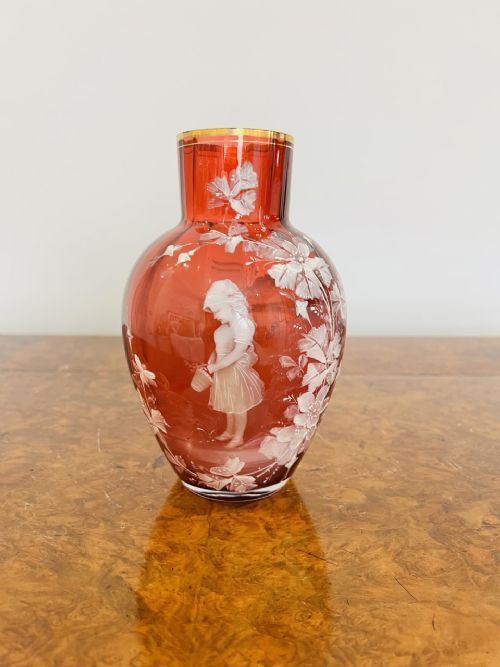
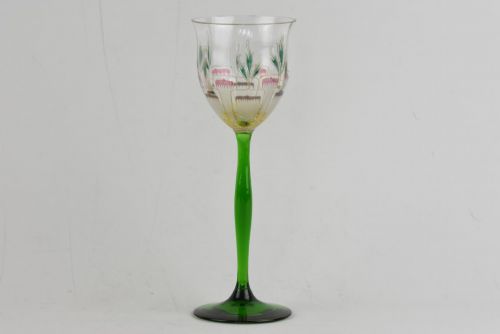
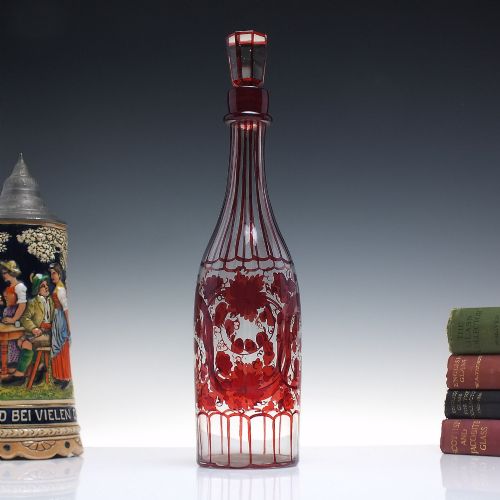
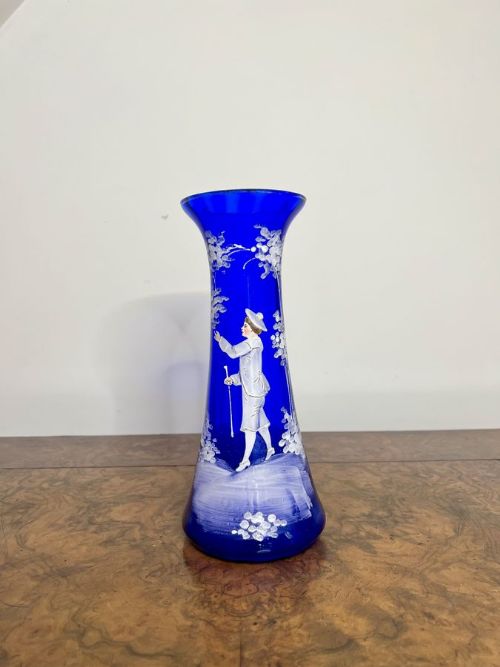
Victorian Mary Gregory items appear alongside pieces from makers such as Fritz Heckert, Theresienthal, and Harrach. Clear glass, cranberry glass, pale green glass, and Bristol blue form the foundational bodies for these painted works.
How they were made
Artisans utilised blown glass techniques to shape the vessels, creating clear, coloured, or opaque glass bases like cranberry and pale green. These forms provided the canvas for subsequent surface decoration.
Craftsmen applied white enamel, polychrome enamel, and gold leaf by hand to the glass surface. Firing fixed the pigments and metals permanently onto the blown glass bodies.
Retail Price Guide 2026
Typical UK retail prices for hand painted glassware, calculated from the Sellingantiques database of over a million retail prices indexed since 2003. This retail price guide relies exclusively on Sellingantiques data; no external sources or auction records are used, so the figures do not describe the wider market.
Materials recorded include clear glass, cranberry glass, pale green glass, gold leaf, and polychrome enamel.
What varies in quality
The sophistication of the enamelwork and the precision of the hand painting distinguish standard production from exceptional pieces. Artisans achieving fine detail and complex figurative or botanical scenes elevate the status of the glassware.
The quality of the underlying glass body, whether cranberry, pale green, or Bristol blue, contributes significantly to the overall presence of the object. Master glasshouses achieved superior weight, clarity, and form compared to lesser workshops.
Fritz Heckert·Theresienthal·Harrach
The Hand Painted Glassware Glossary
- Enamel
- Opaque glass-based pigment applied to the surface of a vessel. This material fuses during firing to create raised, colourful designs.
- Polychrome
- The use of many colours in a single painted decoration. This technique allows for detailed figurative and naturalistic scenes on glass.
- Roemer
- A traditional Germanic drinking vessel with a large bowl and a studded stem. These glasses frequently feature extensive enamelling.
- Cranberry glass
- Transparent red glass produced by adding gold chloride to the molten batch. It serves as a striking backdrop for white enamel decoration.
- Bristol blue
- Deep cobalt-blue glass historically produced in the English port city. Georgian makers often paired this intense colour with painted cream and sugar sets.
Frequently Asked Questions
How do I care for hand painted glass?
Hand painted glassware requires gentle manual washing in lukewarm water with mild soap. Avoid abrasive sponges and harsh detergents to protect the delicate enamel and gold leaf.
Store pieces away from direct sunlight to prevent fading of the polychrome pigments over time. Display them safely in stable cabinets away from edge risks.
What is Mary Gregory glass?
Mary Gregory glass refers to Victorian glassware decorated with white enamel silhouettes, usually depicting children in natural settings. The style gained immense popularity during the late nineteenth century.
While named after an American decorator, much of this distinctive glassware originated in Bohemia and British factories. The white painted figures stand out sharply against cranberry or tinted glass bodies.
How are different periods identified?
Identifying periods relies on recognising distinct styles, colour palettes, and glassmaking techniques. Georgian pieces often feature simple functional forms like cream jugs, whereas Victorian items showcase romantic white enamel silhouettes.
Art Nouveau and Jugendstil periods introduce organic motifs, fluid vase shapes, and naturalistic fish or plant themes. Makers from around 1900 embraced painterly freedom inspired by contemporary artistic movements.
Were these pieces used daily?
Many items, such as cordial glasses, champagne coupes, and cream jugs, served practical functions at the dining table. Enamelled vessels added colour and prestige to formal gatherings and household tea services.
Other forms like vases and large roemers existed purely for decoration and display. Their survival in good condition suggests owners treasured them as decorative art objects.