
19th Century Glass
When evaluating 19th century glass, buyers encounter diverse forms ranging from ruby scent bottles and overshot water jugs to lead-glass rummers and apothecary jars.
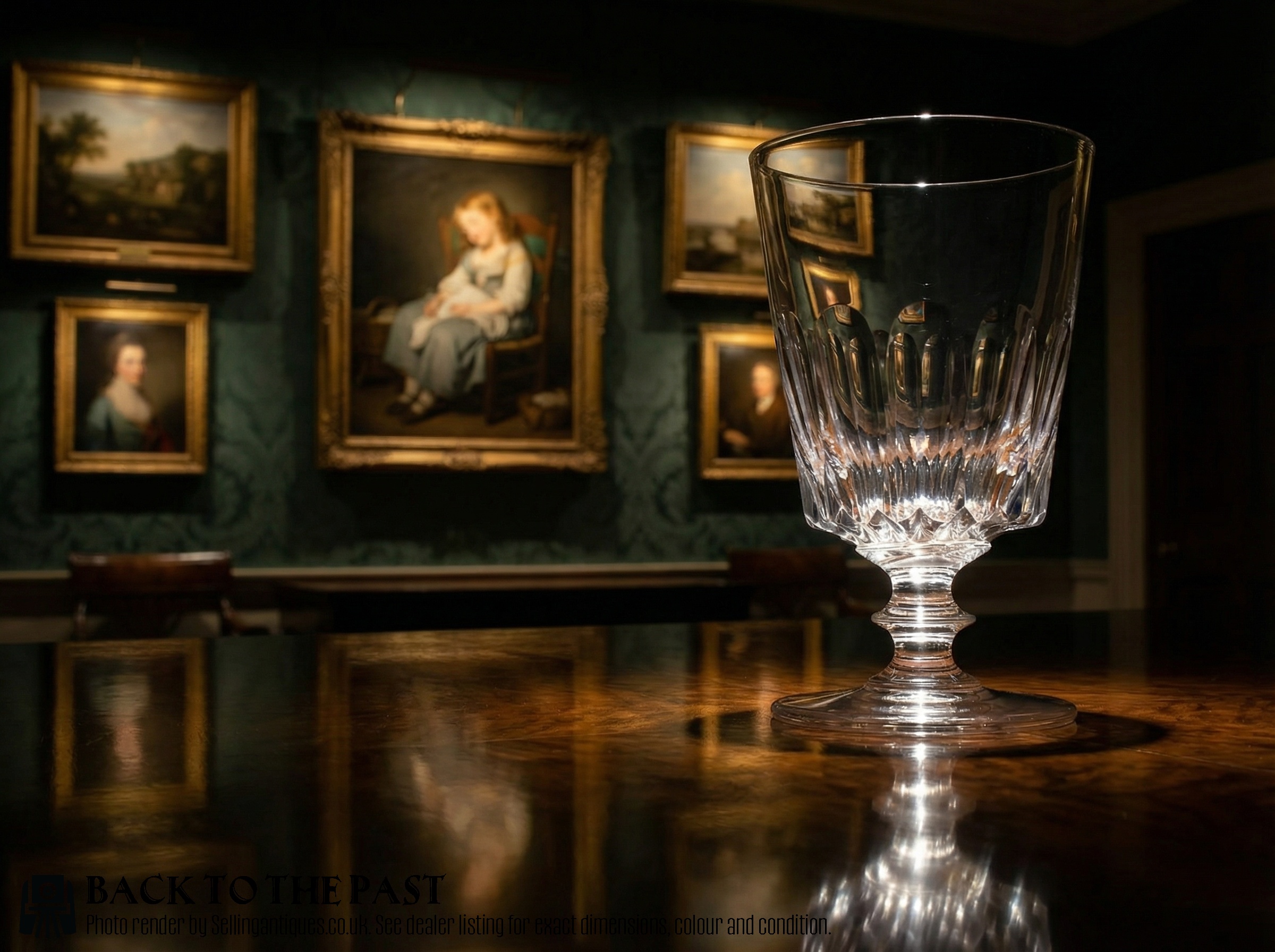
19th Century Glass
Collectors browsing 19th century glass encounter an array of utilitarian and decorative domestic objects spanning the Victorian and Georgian eras. The inventory comprises tablewares such as decanters, wine glasses, and water jugs alongside personal accessories like silver-mounted scent bottles and trinket boxes.
Larger decorative items also feature prominently, including mercury glass candlesticks, etched table lamps, and coloured glass cornucopia vases. Pieces manifest distinct regional and stylistic traits, connecting everyday domestic life of the period directly to modern interiors.
How they were made
Glass production relied heavily on free-blowing and mould-blowing techniques, frequently incorporating hand-applied gilt rims, enamel painting, or delicate overshot trails. Artisans combined molten lead-glass or coloured glass bodies with silver mounts, brass hardware, and painted details.
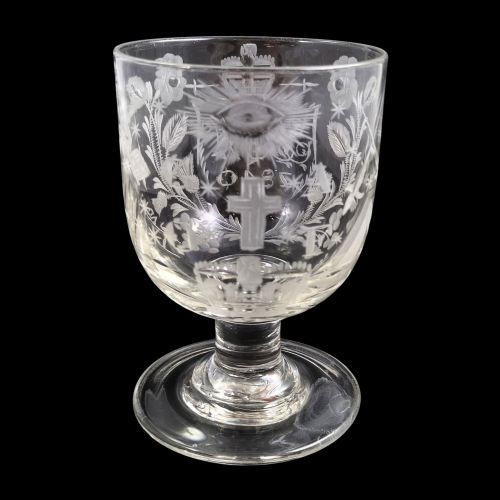
Engraving and wheel-cutting added surface ornamentation to rummers and decanters, while specialised glass recipes yielded distinct hues such as Bristol blue, cranberry ruby, amethyst, and opaque milk glass.
19th Century Glass Retail Price Guide 2026
Typical asking prices for 19th century glass among the pieces listed under this phrase on Sellingantiques today, from the lower quarter to the upper quarter. They describe what is for sale here now, not the wider market.
A Victorian taxidermy nightjar gazes out eternally from its glass display case, bearing witness to a century of parlour natural history.
What varies in quality
Quality diverges according to the crispness of wheel-cut facets, the purity of the metal, and the dexterity demonstrated in hand-painted enamel or gilded embellishments. Superior items display balanced proportions, clean pontil marks, and robust weight in the hand.
The refinement of accompanying metalwork, such as hallmarked silver mountings or finely chased brass fittings, elevates the standard of individual vessels and scent containers.
Gabriel Viardot
The 19th Century Glass Glossary
- Rummer
- A large drinking glass with a thick stem and robust bowl, commonly utilised for ale or wine during the Georgian and Victorian periods.
- Pontil mark
- The rough scar left on the base of a blown glass object where the pontil rod was snapped away after shaping.
- Overshot glass
- A technique where fine threads of molten glass are trailed haphazardly across the surface of a blown vessel to create a textured, icy finish.
- Lithyalin glass
- An opaque, marbled type of glass developed in Bohemia that imitates hardstones like jasper and agate.
- Mary Gregory glass
- Coloured glass decorated with hand-painted white enamel silhouettes, typically depicting Victorian children amidst foliage.
19th Century Glass: Frequently Asked Questions
How do I identify a genuine 19th century rummer?
Examine the base for a polished or rough pontil mark and check the weight and lead content of the metal. Genuine examples exhibit hand-blown irregularities and period-appropriate wheel-engraved motifs.
Examine the stem construction, as earlier Georgian and Regency specimens often feature distinct knops and thicker feet compared to later Victorian iterations.
What is Mary Gregory glass?
Mary Gregory glass refers to coloured glassware hand-painted with white enamel figures, usually children playing in natural settings. These decorative pieces became popular during the late Victorian period.
Despite the traditional attribution, most pieces were produced in Bohemia and various European glasshouses rather than by the American artist whose name became attached to the style.
How should I clean antique glass?
Wash pieces gently by hand using lukewarm water and mild, non-abrasive detergent. Avoid sudden temperature changes to prevent thermal shock and potential cracking of fragile antique metal.
Dry the items immediately with a soft, lint-free cloth, taking particular care around fragile silver mounts, painted enamel surfaces, and delicate gilded rims.
What is overshot glass?
Overshot glass is created by rolling a hot blown glass vessel over fine threads of molten glass, leaving a textured, frosted surface resembling spun ice. This decorative technique appeared on water jugs, pitchers, and decorative bowls.
The tactile finish provides both a secure grip and a distinctive aesthetic popular during the latter half of the nineteenth century.