




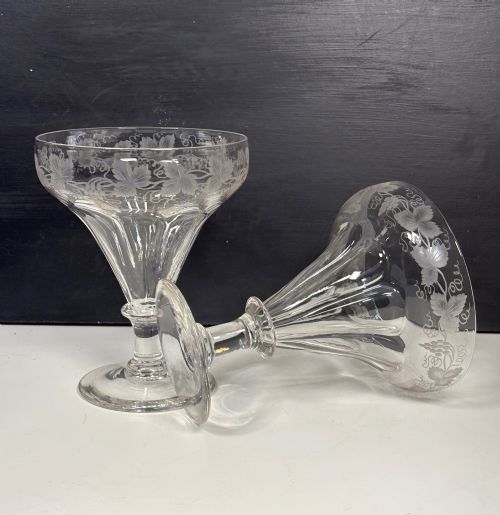



Large Glass Rummer
A large glass rummer is a heavy drinking vessel designed for spirits and wine, offering substantial heft and capacity for the table.
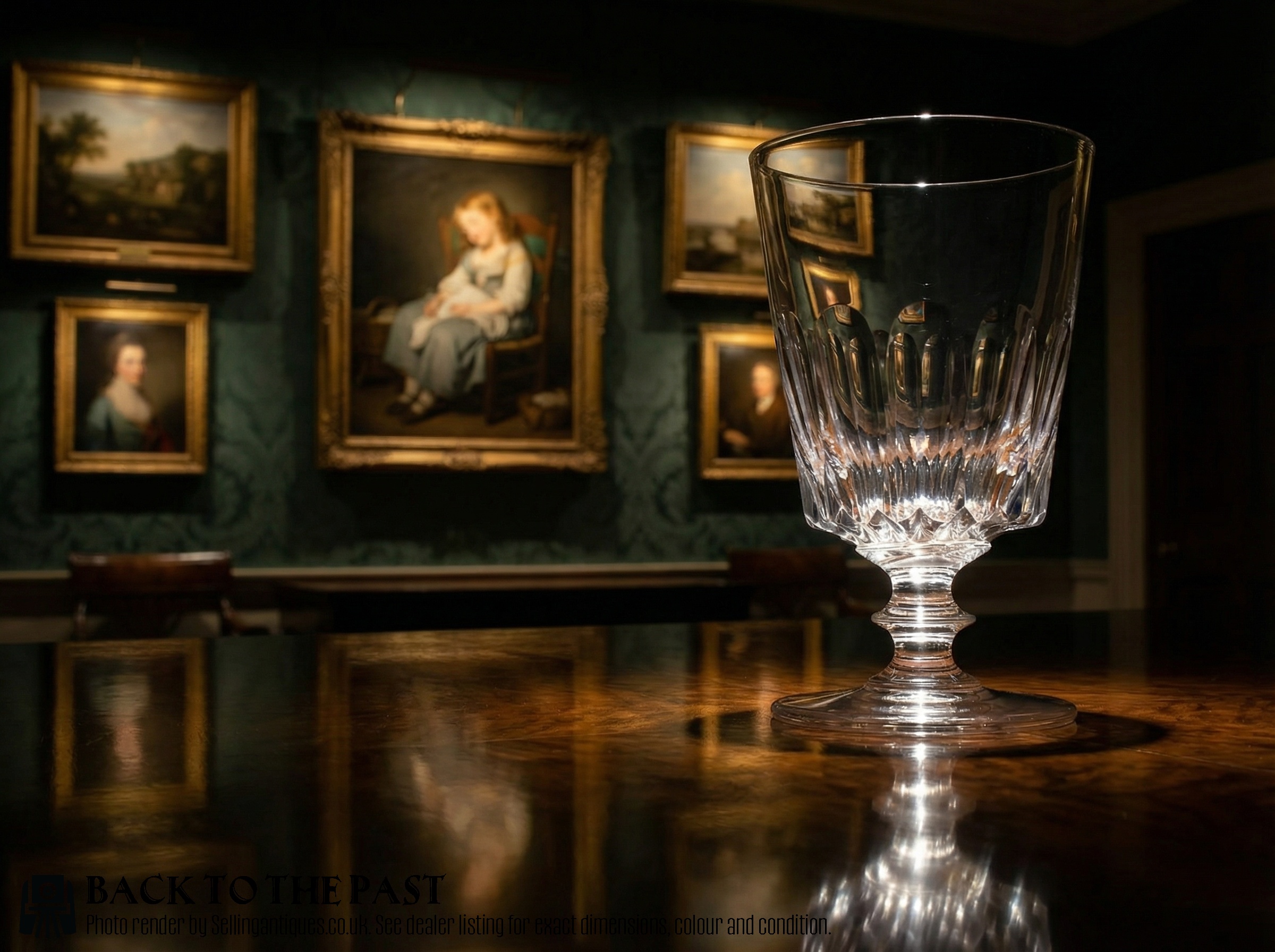
Large Glass Rummer
When you examine a large glass rummer, you see a robust drinking vessel that emerged primarily during the Georgian, Regency, and Victorian periods. These pieces serve wine, punch, or ale, carrying a substantial presence on the dining table.
The versions most likely to meet you on this page include Georgian bucket bowl examples, Regency cut glass designs, and Victorian pub goblets. Makers shaped these vessels to hold generous measures, often pairing wide bowls with sturdy stems and heavy feet.
Materials and Techniques
Makers utilised lead glass, flint glass, and clear lead crystal to achieve the brilliant refractive quality expected in a large glass rummer. This heavy material allowed artisans to cut deep facets into the bowl without compromising the structural integrity of the vessel.
Workshops employed free-blowing and mould-blowing techniques, frequently adding wheel-engraved motifs such as hops, barley, or monograms. Basal fluting and cut facets were worked by hand while the glass was cold, creating tactile surfaces that catch the light.
Large Glass Rummer Retail Price Guide 2026
Typical asking prices for large glass rummer among the pieces listed under this phrase on Sellingantiques today, from the lower quarter to the upper quarter. They describe what is for sale here now, not the wider market.
Some nineteenth-century drinkers needed a vessel so heavy and wide it earned the specific title of a pub goblet.
The Measure of Quality
The distinction between an average vessel and a superior large glass rummer lies in the clarity of the metal and the crispness of the cutting. Deeper, sharper facets and heavier lead content produce a resonant ring and a superior brilliance.
Proportion and balance also divide the range, separating standard workshop output from exceptional pieces with finely engraved decoration, balanced stems, and heavy, stable feet.
Frits Hechert
The Large Glass Rummer Glossary
- Bucket bowl
- A bowl shape that curves slightly outward towards the rim, resembling an inverted bucket. This form provides exceptional stability and strength.
- Basal fluting
- Vertical grooves cut or moulded around the lower portion of the bowl. This technique adds texture and reflects light through the thick glass.
- Lead crystal
- Glass containing a high proportion of lead oxide, increasing the weight, refractive index, and musical ring of the vessel.
- Flint glass
- A clear, heavy glass type historically utilised for high-end tableware and drinking vessels. It offers exceptional transparency.
- Roemer
- A continental European drinking glass with a wide bowl resting on a cylindrical stem decorated with prunts. This form appears alongside traditional British shapes.
Large Glass Rummer: Frequently Asked Questions
What were large glass rummers used for?
These vessels served strong alcoholic drinks such as rum punch, ale, and wine during the Georgian and Victorian eras. Their generous capacity made them popular in both domestic dining rooms and public taverns.
Their heavy construction helped prevent accidental tipping during lively social gatherings. People utilised them as everyday dining goblets rather than purely decorative items.
How do I tell Georgian and Victorian rummers apart?
Georgian examples often feature simple ovoid or bucket bowls with plain stems and heavy kick-ups in the base. They tend to exhibit a softer grey tone in the metal.
Victorian pieces frequently display heavier cut patterns, sometimes with more pronounced optical distortion in the glass. Pub goblets from the later nineteenth century are particularly thick-walled and sturdy.
Can I use these glasses for daily dining?
These sturdy vessels were built for regular use and remain remarkably resilient today. Hand washing in lukewarm water preserves the historic surface.
Avoid sudden temperature changes to protect the old lead glass from thermal shock. Their substantial weight makes them well-suited for serving modern drinks.
Why do some rummers have engraved hops and barley?
Engravings of hops and barley directly reference the ingredients used to brew beer and ale. This decoration indicates that the vessel was intended for malt beverages or punch.
Such motifs were commonly applied by wheel engraving during the manufacturing process. They offer a direct clue to the original drinking customs associated with the piece.