



Bohemian Enamelled Glass
Bohemian enamelled glass brings together rich coloured vessels and painted detail, offering collectors a striking record of Central European craftsmanship across multiple periods.
Bohemian Enamelled Glass
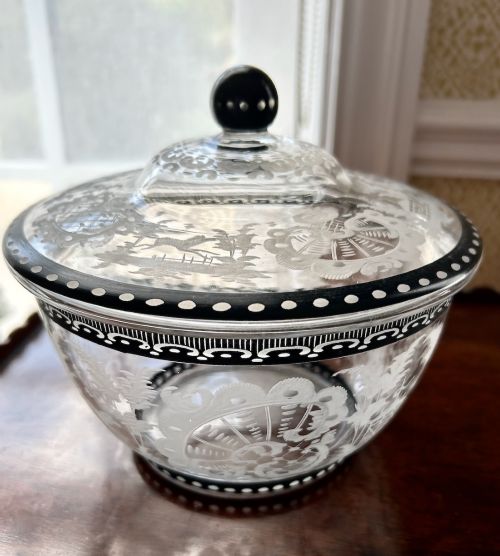
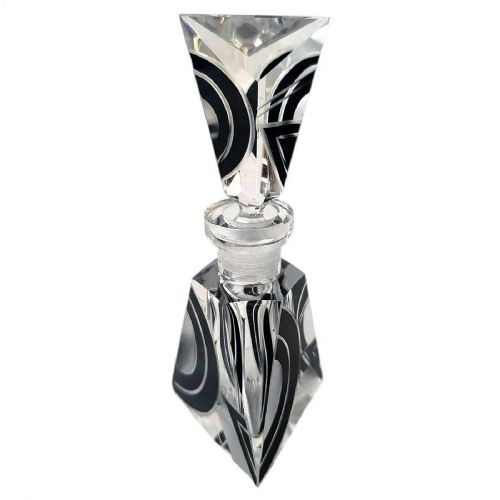
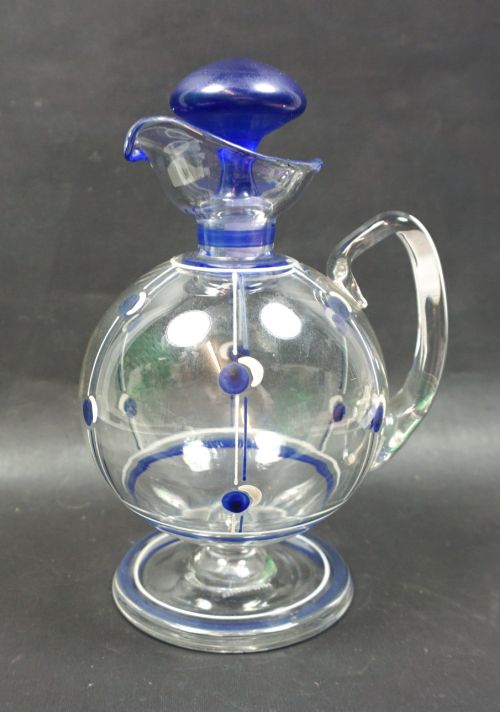
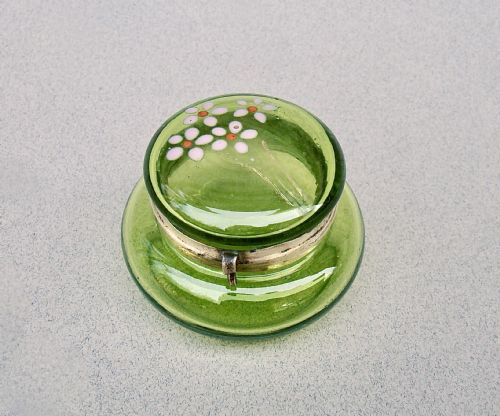
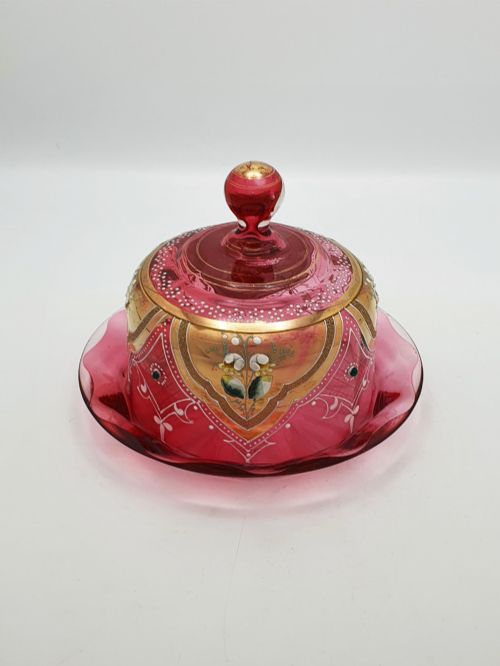
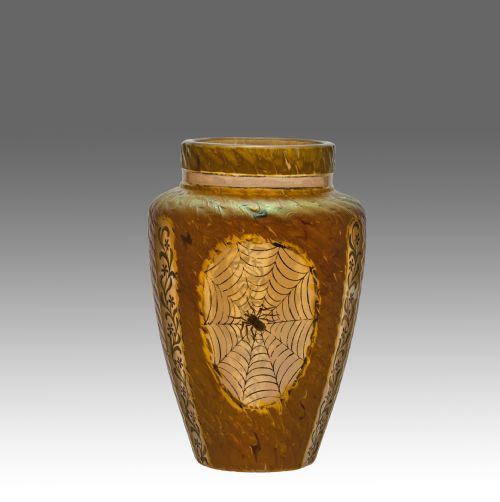
The objects themselves take various forms, most commonly vases, decanters, perfume bottles, and matching glassware sets. Mantel lustres, decorative bowls, and trinket boxes also appear frequently, often displaying vibrant shades of cranberry, cobalt, green, and ruby glass.
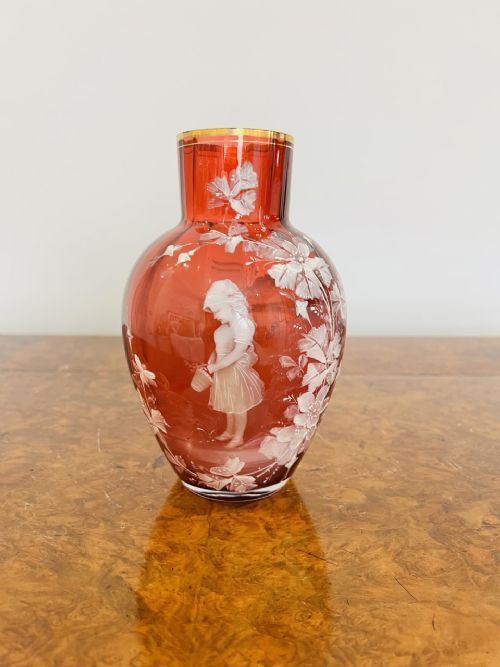
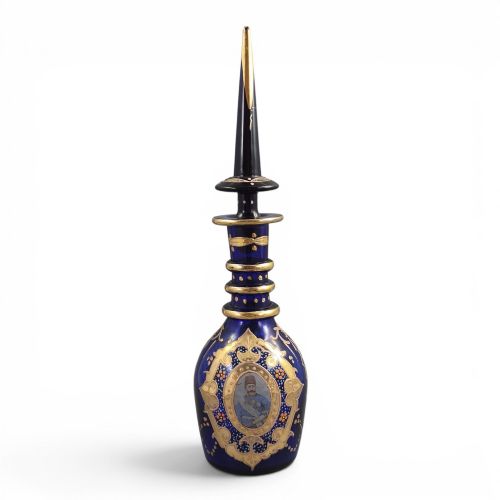
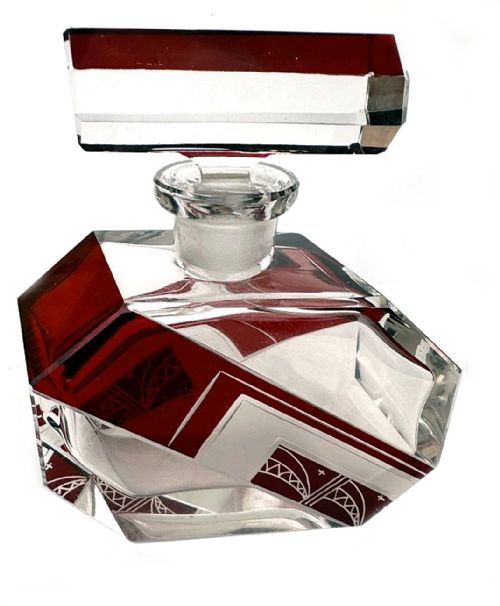
Many of these pieces bear traditional influences including Victorian historicism and the Qajar export market, alongside sleek geometric cuts from later decades. Buyers often meet items finished with hand-painted scenes, armorial details, and gilt work.
How they were made
The makers utilised blown glass, crystal, and cut glass as the primary foundations for their decorated vessels, frequently applying layers of coloured glass or overlay techniques. Molten metal was shaped by hand into ewers, goblets, and decanters before undergoing surface refinement.
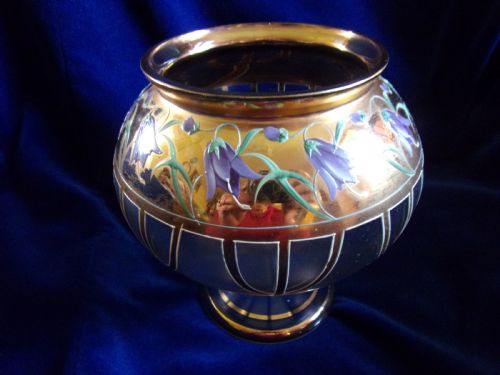
Enamel decoration was then applied by hand, often in combination with gold leaf, gilt accents, and etched patterns. Artisans fixed the opaque and translucent enamel colours through firing, ensuring the painted scenes, geometric motifs, and portraits adhered permanently to the glass surface.
Bohemian Enamelled Glass Retail Price Guide 2026
Typical asking prices for bohemian enamelled glass among the pieces listed under this phrase on Sellingantiques today, from the lower quarter to the upper quarter. They describe what is for sale here now, not the wider market.
The documented objects include functional tableware, scent bottles, and large display items decorated for both European and Persian export markets.
What varies in quality
Quality in these pieces is dictated by the precision of the glass cutting and the delicacy of the enamel work. Superior examples display crisp facets, balanced proportions, and finely detailed hand-painted scenes rather than heavy or hurried brushwork.
The integration of gold leaf and the depth of the coloured glass ground also distinguish finer items. Pieces carrying documented attribution to notable makers or specific export markets often show a higher standard of artistic execution.
Karl Palda·Kralik Glass·Fritz Heckert·Moser·Meyr s Neffe·Salviati
The Bohemian Enamelled Glass Glossary
- Cranberry glass
- A rich pinkish-red glass created by adding gold chloride to the molten batch. It became exceptionally popular during the Victorian period for decorative tableware and vases.
- Mantel lustre
- A decorative ornamental vase hung with cut glass prisms or droppers, designed to catch and reflect candlelight from a fireplace mantel.
- Enamel
- A powdered glass paste applied to the surface of a vessel and fired at high temperatures to melt into a permanent, colourful decoration.
- Historismus
- A nineteenth-century artistic style that drew inspiration from historical periods, particularly Renaissance and medieval glass designs.
- Overlay glass
- A technique where a layer of coloured glass is cased over a clear or contrasting body, then partially cut away to reveal the different colour underneath.
Bohemian Enamelled Glass: Frequently Asked Questions
What is bohemian enamelled glass?
These items are decorative glass vessels produced primarily in Central Europe, featuring hand-painted enamel decoration over coloured or clear glass grounds. They encompass a wide variety of domestic and ornamental objects.
Production spans from the nineteenth century into the Art Deco period, incorporating styles ranging from ornate Victorian historicism to sleek geometric designs.
How were glass decanters used?
Decanters served a practical role in serving wine and spirits at the dining table, often accompanied by matching glasses or housed within fitted liquor sets.
Beyond utility, these vessels functioned as decorative statement pieces on sideboards, reflecting light through coloured glass and gilt detailing.
How do I care for enamelled glass?
Enamelled and gilded surfaces require gentle cleaning with lukewarm water and a soft cloth to preserve the fragile painted details. Avoid harsh abrasives and soaking.
Displaying pieces away from direct, prolonged sunlight helps protect the integrity of the coloured glass and gold leaf over time.
How do I identify Victorian pieces?
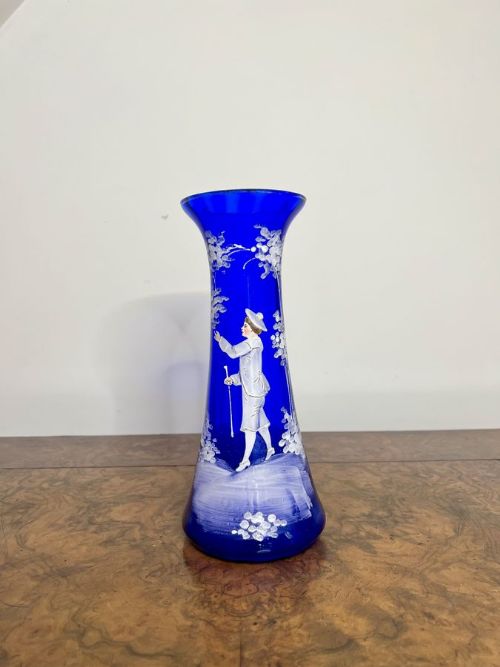
Victorian examples often feature rich cranberry or green glass bodies decorated with heavy gilding, floral motifs, or Mary Gregory style white enamel figures.
Stylistic markers include romantic subjects, armorial crests, and association with nineteenth-century revival movements rather than the clean lines of later decades.