


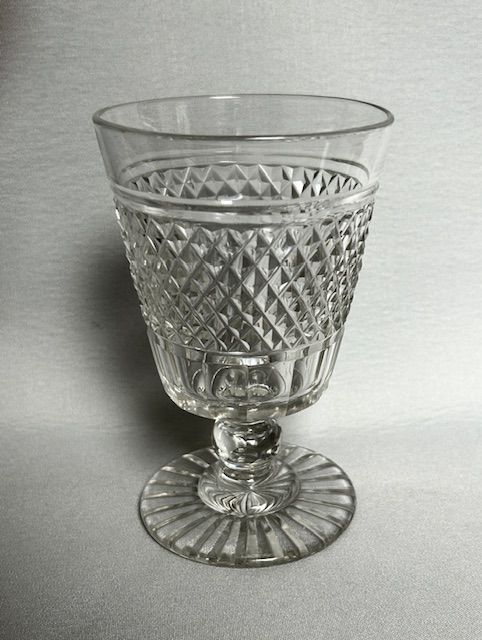

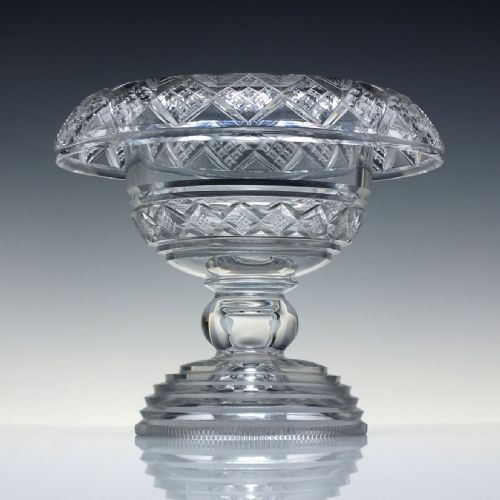


Antique Glass Chalice
An antique glass chalice brings solid weight and historical glassmaking craft to a table, spanning Georgian balusters to Victorian cut lead crystal.
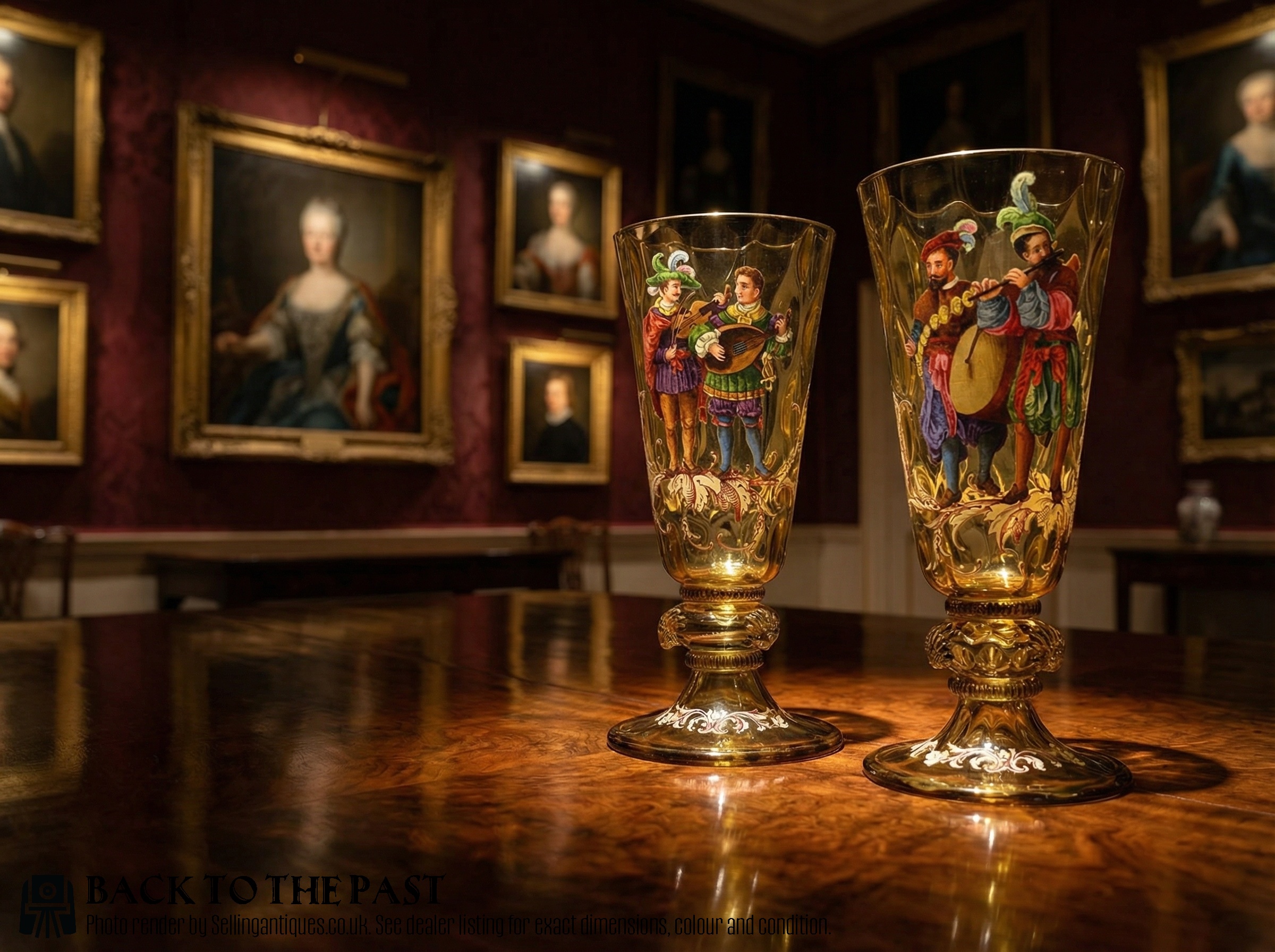
Antique Glass Chalice
The term antique glass chalice encompasses heavy drinking vessels, rummers, and stemmed goblets produced across British and continental workshops from the late seventeenth century through the early twentieth century.
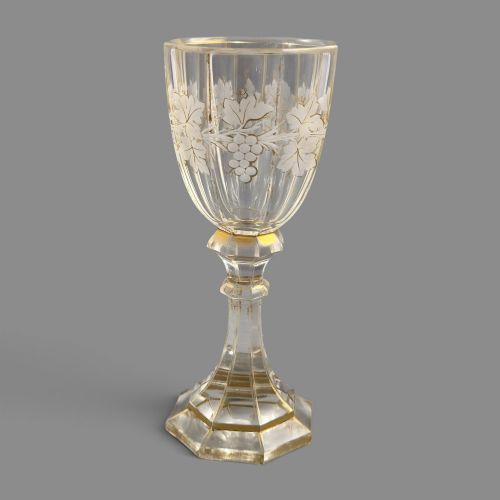
Buyers frequently encounter Georgian plain stem and baluster drinking vessels alongside nineteenth-century Bohemian enamelled cordials and large English serving rummers.
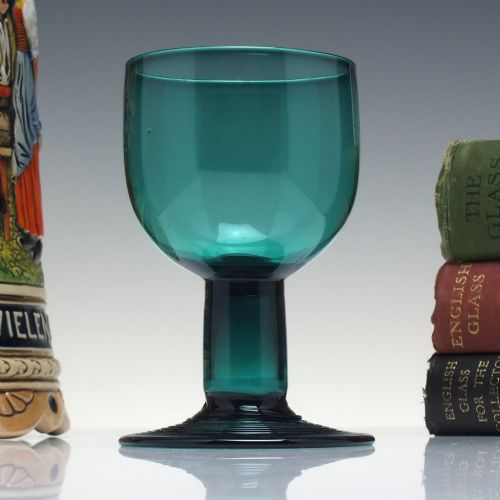
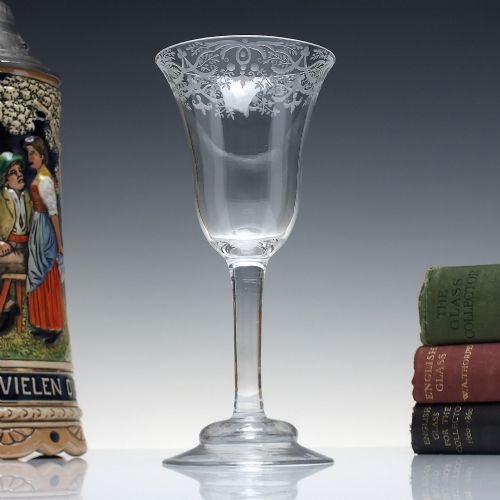
The selection ranges from early lead glass drinking vessels with engraved hops and barley to Edwardian turquoise wine glasses and Jugendstil chalices.
Materials and methods
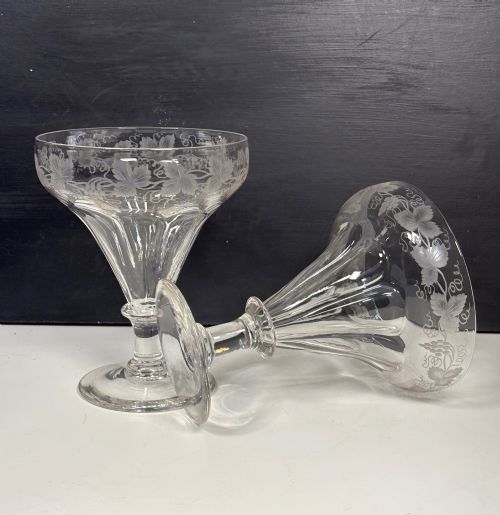
Makers utilised clear lead glass, heavy lead crystal, and coloured glass substrates, frequently combining blown forms with wheel-engraving, hobnail cutting, and honeycomb moulding.
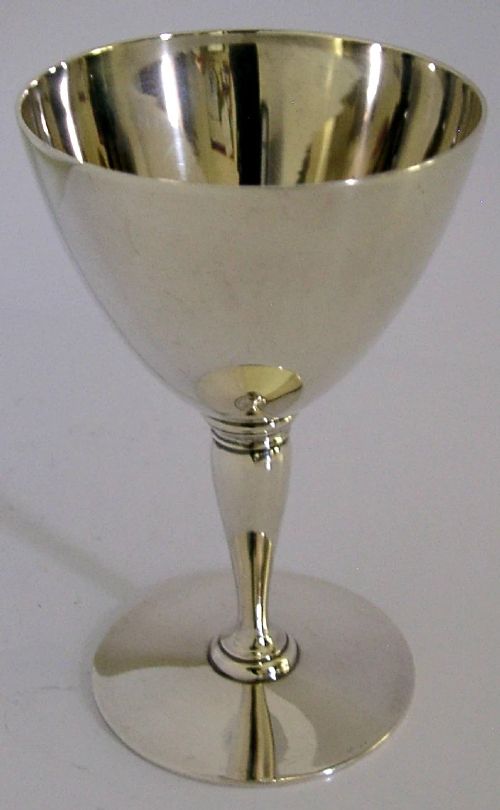
Decoration often involved gold leaf, polychrome enamel, sterling silver mounts, and parcel gilding applied to cased or flashed glass surfaces.
Antique Glass Chalice Retail Price Guide 2026
Typical asking prices for glass chalice among the pieces listed under this phrase on Sellingantiques today, from the lower quarter to the upper quarter. They describe what is for sale here now, not the wider market.
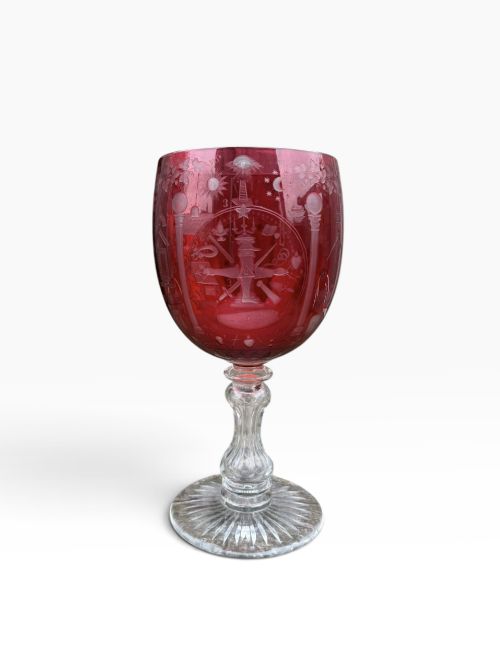
Recorded materials include clear lead crystal, gold leaf, sterling silver mounts, and coloured glass bodies in cranberry, turquoise, and green.
Assessing the standard
Quality rests upon the clarity and weight of the lead glass, the precision of the wheel-engraving or cutting, and the crispness of moulded details.
Pieces bearing signatures or attributions to recognised workshops like Lobmeyer, Moser, or Frits Hechert demonstrate superior execution in enamelling and gilding.
Tiffany and Co·Moser Bohemian·Lobmeyer·Frits Hechert·Makeig-Jones Wedgwood·Adelbert Niemeyer
The Antique Glass Chalice Glossary
- Rummer
- A large, heavy drinking glass with a capacious bowl popular in the Georgian and Victorian periods. These vessels were primarily utilised for ale, wine, or punch.
- Baluster stem
- A thick, swelling stem form found on eighteenth-century English drinking glasses, often containing internal air bubbles or tears. This construction provided necessary weight and balance.
- Cased glass
- Glass composed of two or more distinct layers of different colours fused together before blowing. Artisans then cut through the outer layer to reveal the contrasting colour underneath.
- Roemer
- A traditional continental European stemmed drinking glass featuring a wide bowl and a cylindrical prunt-studded stem. They frequently appear in green glass with enamelled armorial decoration.
- Intaglio engraving
- A technique where the design is carved into the surface of the glass rather than raised above it, creating a sunken frosted relief.
Antique Glass Chalice: Frequently Asked Questions
How do I distinguish Georgian from Victorian chalices?
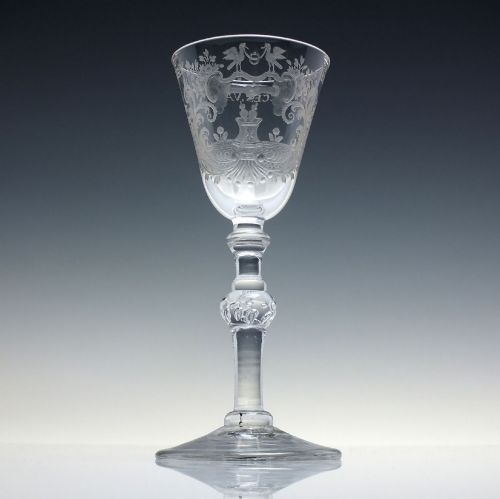
Georgian pieces often display simpler lead glass forms, plain stems, or air twists, accompanied by understated wheel engraving like hops and barley.
Victorian examples tend to be heavier, utilising deep hobnail cutting, coloured glass bodies, and intricate enamel or gilt decoration.
What were glass chalices originally used for?
These vessels served various functions, from formal dining and toasting at banquets to commemorative toasts for royal coronations.
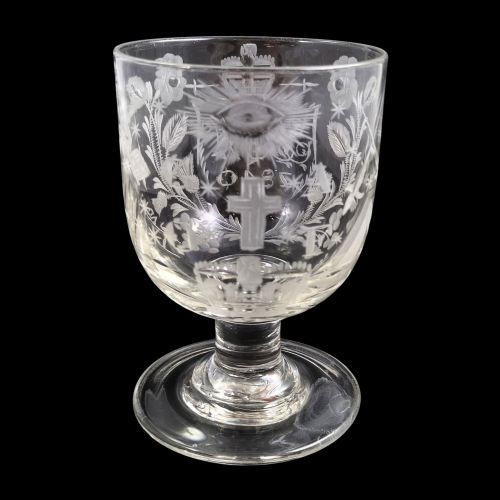
Larger rummers and goblets held ale or punch, while specialised forms acted as Masonic vessels or marriage goblets.
How should I clean and display an antique chalice?
Wash glass chalices by hand in warm water using mild soap, avoiding sudden temperature changes that can stress old lead glass.
Display them away from direct sunlight in secure cabinets to protect delicate gilding and thin enamel work.
Are all antique chalices made of lead glass?
Many English examples from the eighteenth and nineteenth centuries utilise heavy lead crystal or clear lead glass for brilliance and durability.
Continental pieces from Bohemia and Liege often employ potash-lime glass or coloured cased glass instead.