



Engraved Glass Chalice
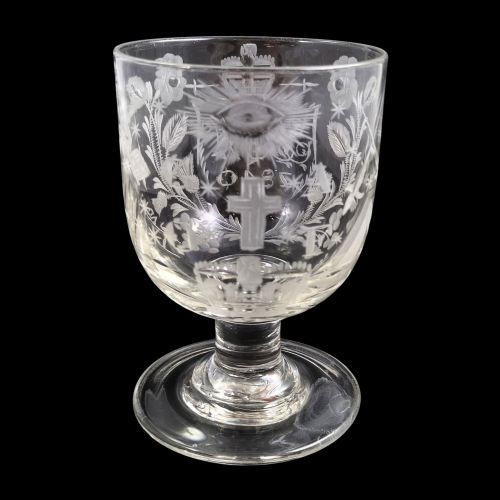
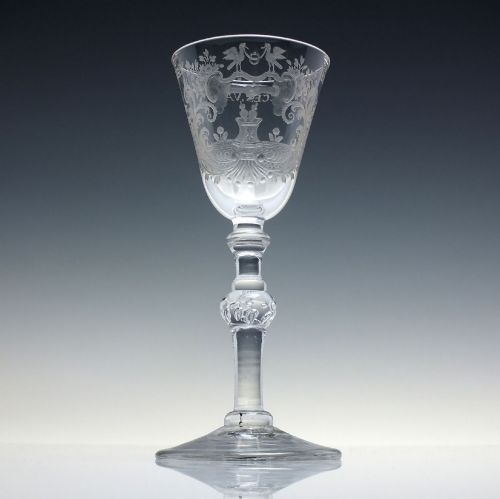
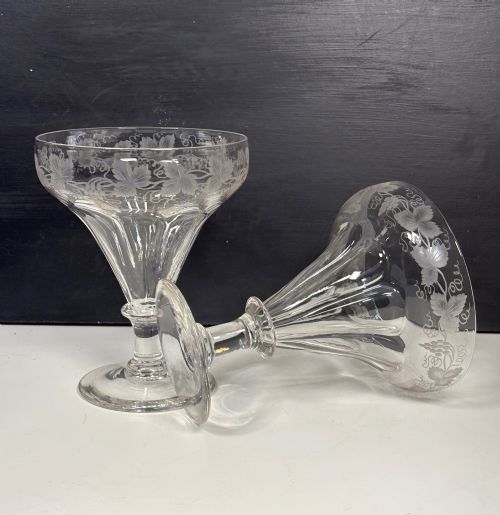
These engraved glass chalice pieces are heavy drinking vessels and commemorative goblets, offering substantial lead crystal forms that suit collectors of historical glassware.
Engraved Glass Chalice
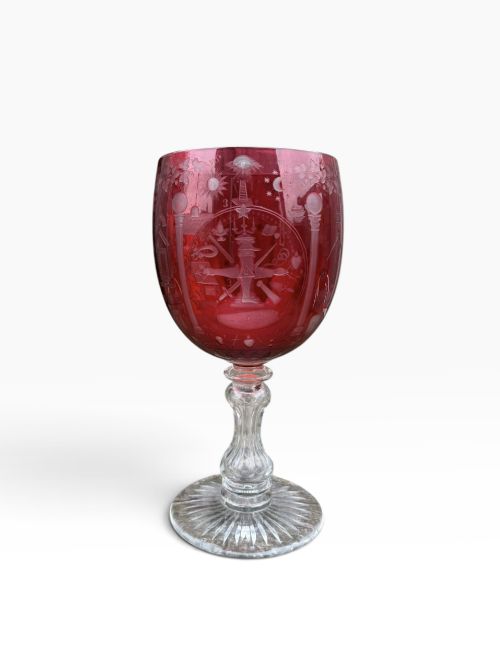
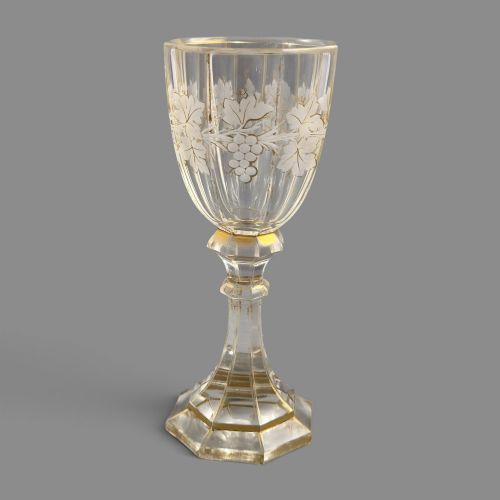
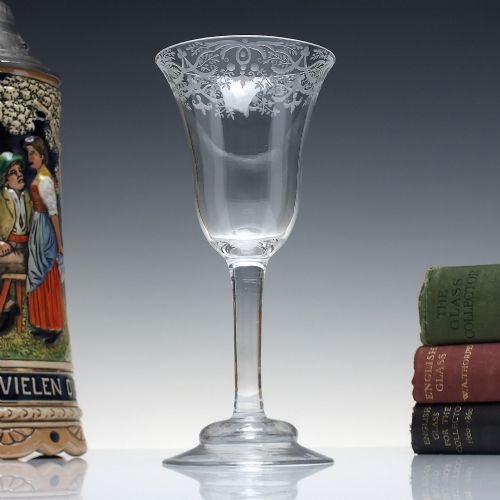
When you search for an engraved glass chalice, you encounter heavy drinking vessels, large rummers, and tall goblets dating from the seventeenth century through to the Edwardian period. The selection includes English lead glass alongside Bohemian crystal and occasional sterling silver mounted pieces.
You are most likely to meet Georgian plain stem wine goblets and nineteenth-century table rummers decorated with hops and barley, initials, or commemorative scenes. Forms range from broad ovoid bowls to towering römer goblets.
Origins span English provincial workshops and Bohemian centres, reflecting diverse uses from celebratory toasts and Masonic gatherings to coronation commemorations.
What varies in quality
The clarity of the metal separates standard production from superior pieces, with fine lead crystal displaying weight, resonance, and freedom from cloudiness. Early metal often contains characteristic tiny air bubbles trapped during the historic melting process.
The depth, crispness, and artistic execution of the wheel engraving determine distinction, ranging from simple monograms to elaborate intaglio hunting scenes or architectural commemorations.
Engraved Glass Chalice Retail Price Guide 2026
Typical asking prices for engraved glass chalice among the pieces listed under this phrase on Sellingantiques today, from the lower quarter to the upper quarter. They describe what is for sale here now, not the wider market.
Listings span the Georgian, Victorian, and Edwardian eras, featuring clear lead glass, cranberry glass, and sterling silver components.
Moser Bohemian
The Engraved Glass Chalice Glossary
- Rummer
- A large, heavy drinking glass with a short stem and ovoid or bucket-shaped bowl popular in the Georgian and Regency periods. These vessels typically served ale, cider, or wine at tavern and dining tables.
- Römer
- A traditional Germanic or Bohemian stemmed drinking goblet featuring a wide foot and a raspberry prunt or decorated bowl. This form frequently exhibits deep wheel engraving and gilding.
- Intaglio
- A technique where the design is carved into the glass surface rather than left in relief. This method creates sunken details that catch the light from behind.
- Lead glass
- Glass containing lead oxide, which increases brilliance, weight, and the working time available to the glassblower. It provides the ideal medium for deep cutting and fine engraving.
- Plain stem
- A straight, unornamented glass stem typical of mid-eighteenth-century English wine glasses and goblets. This minimalist form lets the engraved bowl remain the visual focus.
Engraved Glass Chalice: Frequently Asked Questions
What were glass chalices used for?
These vessels served ceremonial, commemorative, and social functions, ranging from tavern toasts involving hops and barley to Masonic gatherings and royal coronations. Households also utilised large rummers for everyday dining and special family occasions.
Some specialised examples, such as travelling communion sets, fulfilled religious duties for individuals moving between locations. Their robust construction allowed them to survive centuries of handling.
How do I date an engraved glass chalice?
Dating relies upon evaluating the metal composition, stem formation, bowl profile, and engraving style. Eighteenth-century pieces often display plain stems and heavy lead metal, whilst Victorian examples introduce cranberry glass, parcel gilt silver mounts, and heavier cut decoration.
Historical subjects and specific commemorative events, such as the coronation of George V, provide firm terminus post quem dates for later nineteenth and early twentieth-century items.
How should I display a glass goblet?
Display these pieces in well-lit cabinets away from direct sunlight and sources of vibration to protect their heavy crystal structures. Adequate spacing prevents accidental contact between delicate rims and neighbouring glassware.
Interior shelf lighting enhances the wheel engraving and intaglio details by passing light through the clear lead crystal and coloured glass bodies.
Are eighteenth-century glasses safe for use?
Whilst structurally sound, antique drinking vessels require careful hand washing in warm, soapy water without harsh abrasives or mechanical dishwashers. Sudden temperature changes can fracture historic glass.
Many collectors prefer to keep them for display or occasional celebratory toasts rather than daily dining use due to their age and historical significance.