




Cut Crystal Wine Goblet
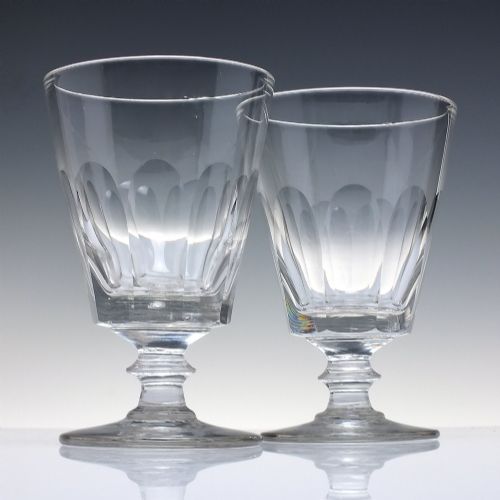
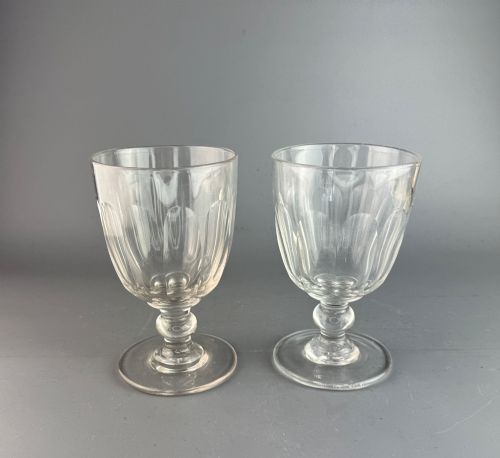
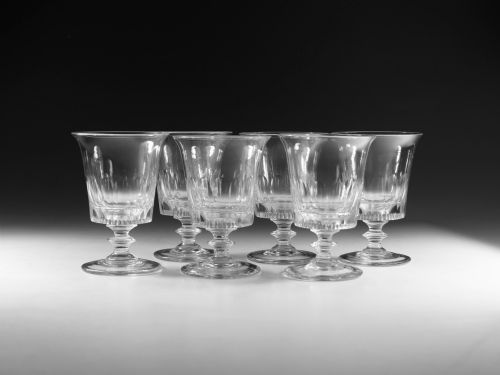
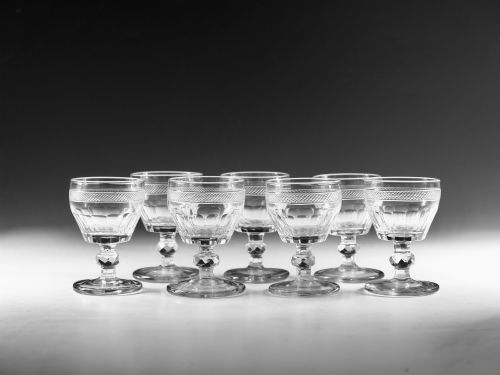
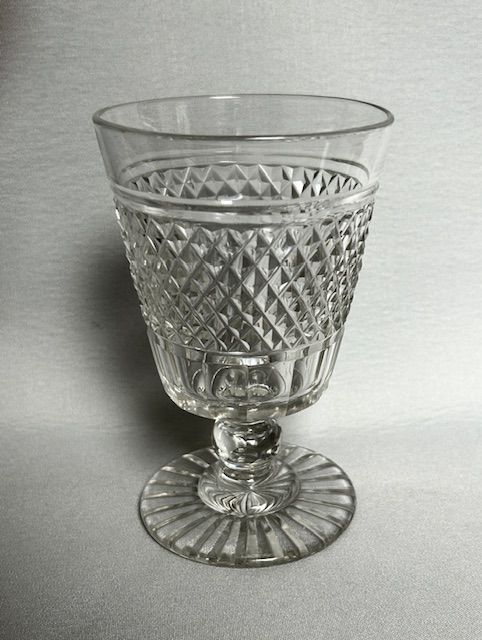
These cut crystal wine goblet examples bring heavy lead glass and sharp wheel-cut facets directly to the table.
Cut Crystal Wine Goblet
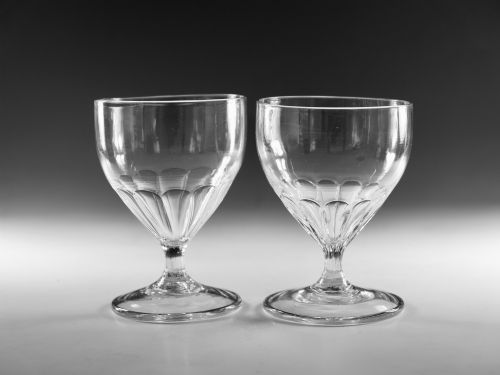
A cut crystal wine goblet sits among drinking vessels spanning the Georgian, Victorian, Regency and Edwardian eras, taking forms from tall rummers and hock glasses to port glasses.
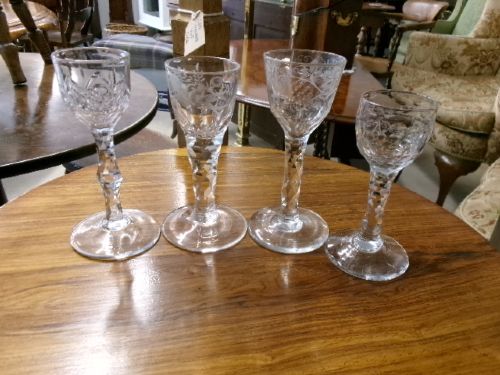
Most pieces seen here appear in lead crystal, clear glass or heavy flint glass, often shaped with square lemon squeezer feet or faceted stems.
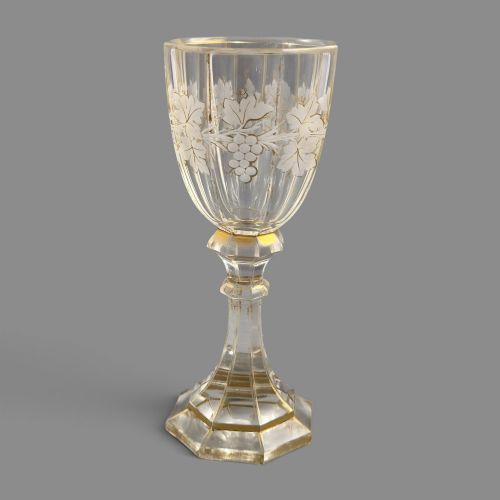
The selection includes English, Irish, French and Bohemian pieces, ranging from eighteenth-century facet-cut stems to twentieth-century coloured hock glasses.
Materials and cutting techniques
Craftsmen shaped lead glass and flint glass using heavy wheel-cutting techniques to achieve deep hobnail patterns, flutes and crisp facets across the bowl and stem.
Makers added surface decoration through acid-cutting, intaglio engraving, gilding and frosting, combining brilliant clarity with textured relief.
Listings span Georgian, Victorian, Regency and Edwardian periods, featuring materials such as lead crystal, flint glass and cut glass.
Distinguishing finer examples
Quality rests on the crispness of the wheel-cut facets and the depth of the metal, where heavier lead crystal gives a resonant ring and greater weight in the hand.
Finer specimens display precise symmetry in the cutting and careful proportions between the bowl, stem and wide foot base.
Moser·Baccarat·Webb Corbett·St Louis Massenet·Stevens and Williams·Otto Prutscher·Meyr s Neffe·James Giles
The Cut Crystal Wine Goblet Glossary
- Rummer
- A large, sturdy drinking glass popular in the Georgian and Victorian periods, often featuring a cut bucket bowl and a stout stem.
- Facet cut
- Geometric planes ground and polished onto the surface of the glass to reflect light and create sharp edges.
- Lemon squeezer base
- A square, pressed glass foot with sloping sides resembling a nineteenth-century citrus juicer.
- Flint glass
- An early brilliant glass containing lead oxide that increased clarity, weight and refractive index.
- Intaglio
- A design carved into the surface of the glass so that the motif sits below the outer plane.
Cut Crystal Wine Goblet: Frequently Asked Questions
What is a rummer?
A rummer is a heavy, capacious drinking glass designed for ale, wine or punch during the Georgian and Victorian eras. They typically sit on short, thick stems with wide foot bases for stability.
These pieces served everyday dining and tavern use before evolving into more decorative glassware found on nineteenth-century tables.
How do I date a cut crystal wine goblet?
Dating relies on combining the form of the bowl, the shape of the stem, and the style of the cutting. Eighteenth-century pieces often feature plain or facet-cut stems with engraved bowls, while Victorian examples lean towards heavier hobnail cutting and frosted finishes.
Examining the pontil mark on the underside and the weight of the lead glass helps confirm the period of manufacture.
What is lemon squeezer base?
A lemon squeezer base is a distinctive square foot moulded with sharp sloping corners that mimic the appearance of a kitchen lemon squeezer. This form appears frequently on Georgian rummers and decanter stands from the early nineteenth century.
Glassmakers formed these bases using a combination of blowing and pressing techniques into a square mould.