


Victorian Crystal Stemware
Victorian crystal stemware brings brilliant nineteenth-century table craft into modern rooms through heavy lead crystal and bright wheel-engraved bowls.
Victorian Crystal Stemware
Victorian crystal stemware consists of nineteenth-century drinking vessels shaped for wine, champagne, and dessert service across the Victorian period. These pieces span standard wine glasses, rummers, and wide champagne coupes alongside substantial goblets.
Most examples found here date from the middle to late decades of the nineteenth century, including English and Bohemian production. Makers utilised clear lead glass alongside coloured overlays in cranberry, ruby, and emerald hues.
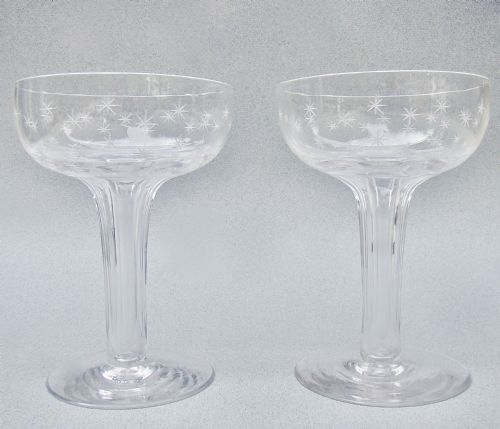
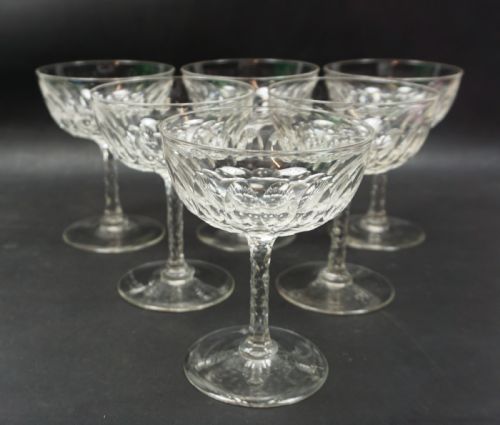
Forms range from hollow-stem champagne glasses to facet-cut bowls and heavy engraved rummers. Buyers encounter matching sets, harlequin collections, and disciplined pairs designed for formal dining.
What varies in quality
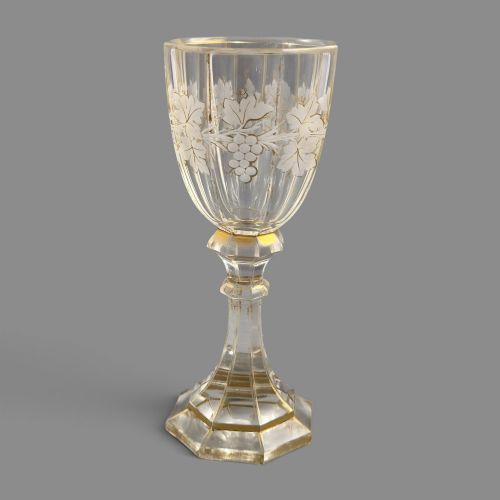
Quality separates simple moulded pieces from heavy lead crystal shaped with crisp wheel-engraving and deep facet cutting. The clarity of the metal and the precision of the engraved foliage or fruit motifs dictate the grade of the glass.
Consistency across a set shifts the standing of the pieces, particularly where coloured overlays or opaque twists require exacting handwork. Fine glass shows balanced proportions between the bowl, stem, and foot.
Convolvulus vines and forest fruits crawl across nineteenth-century crystal bowls, proving Victorians liked their table wine accompanied by a small thicket.
Moser Bohemian·Stevens & Williams
The Victorian Crystal Stemware Glossary
- Lead crystal
- Glass containing lead oxide to increase weight, refractive index, and brilliance. This material allows for deeper cutting and sharper engraved edges than standard soda glass.
- Champagne coupe
- A shallow, broad-bowled stemmed glass designed for sparkling wine. Victorian versions often feature heavy facet-cutting or engraved floral bowls.
- Rummer
- A large, sturdy stemmed drinking glass common in the nineteenth century. These pieces usually feature thick bowls and short stems for everyday wine or ale.
- Overlay
- A technique where a layer of coloured glass is fused over a clear crystal body. Cutting through the top layer exposes the contrasting clear crystal beneath.
- Intaglio
- A method of engraving where the design is carved directly into the glass surface rather than left in relief. This creates sunken patterns that catch the light from within the bowl.
Victorian Crystal Stemware: Frequently Asked Questions
Can I use Victorian crystal stemware daily?
These nineteenth-century pieces handle regular use provided you wash them carefully by hand rather than placing them in a dishwasher. The lead crystal is robust, but thermal shock and harsh machine detergents can damage delicate engraving and gilding.
Store them securely on stable surfaces with adequate clearance between stems to prevent chipping the rims. Gentle handling preserves the clarity and surface finish of the glass for everyday dining.
How do I date Victorian stemware?
Dating relies on stylistic shifts, cutting techniques, and pontil marks left on the underside of the foot during manufacture. Mid-nineteenth-century examples often display deeper colour overlays and heavy facet cutting, while later decades favoured delicate star-etching and acid cameo work.
Matching the form to documented production periods helps narrow down the decade of manufacture. Examining the weight and the method of stem attachment provides further clues to the age.
What is a harlequin set?
A harlequin set brings together matching forms in varied colours or coordinating patterns rather than a uniform single batch. This approach reflects historical dining practices where matched suites were supplemented by diverse vessels.
Such collections offer a lively table display while maintaining consistency in size and period style. Each glass contributes a distinct hue or engraving detail while sharing the same nineteenth-century silhouette.
Why are some stems hollow?
Hollow stems lightened the weight of large champagne glasses while maintaining an impressive visual presence on the Victorian table. This technique allowed makers to form taller vessels without adding excessive heavy glass to the lower section.
Crafting these stems required precise glassblowing skill to seal the channel securely between the bowl and the foot. They remain a distinctive feature of specific nineteenth-century champagne services.